Representative End User Clients







Representative Automation Clients







Representative Software Clients








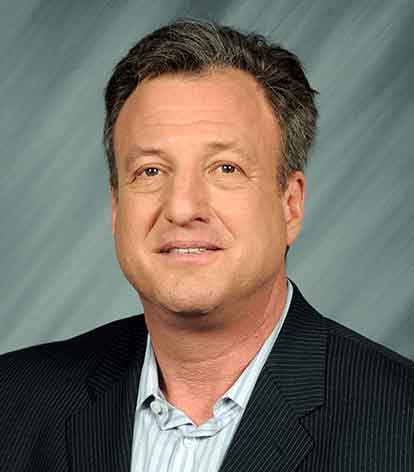

In this ARC Advisory Group podcast, Transforming Industrial Automation: The Strategic Imperative of Open Software-defined Systems, Craig Resnick speaks with Hany Fouda, Senior Vice President, Process Automation, Industrial Automation Business, at Schneider Electric, about how open software-defined automation (SDA) is reshaping industrial operations.
Listen to the full conversation below or on Buzzsprout:
Hany Fouda described the industrial landscape as one defined by “speed, agility, intelligence, and adaptability.” Companies today must respond to disruptions in global trade, energy security, and supply chains while addressing labor shortages and evolving regulations. Open SDA, he said, is the mechanism that enables this shift.
“Control is no longer tied to the hardware, but abstracted at a higher level with the software,” Fouda explained. “It’s about interoperability, collaboration, and choice—moving away from vendor lock-in and toward innovation.”
By decoupling control logic from proprietary hardware, open SDA allows manufacturers to scale, adapt, and innovate faster—transforming automation from a closed system into an evolving, software-driven ecosystem.

Schneider Electric, a $38 billion global manufacturer operating over 180 factories, has been both a developer and user of software-defined systems. Many of its own facilities—some decades old—have adopted open SDA to modernize without full system replacement.
Fouda likened this transformation to the evolution of the music industry:
“We moved from the cassette tape to Spotify. The music industry democratized access—people can play music anywhere on any device. That’s what we envision for industrial automation: openness, flexibility, and continuity across platforms.”
Schneider’s approach emphasizes modularity, abstraction, and hardware independence—ensuring that a plant’s intellectual property resides in its software layer, not in any specific physical controller.
Transitioning to open SDA requires a fundamental mindset shift. Many customers, Fouda noted, are accustomed to fixed hardware and user interfaces, along with spare-parts inventories that reinforce traditional approaches.
To ease this shift, Schneider Electric encourages a gradual adoption model, starting with familiar applications and expanding based on the ISA-106 asset-centric framework.
“It’s not a huge learning curve,” Fouda said. “It’s about looking at your plant differently—seeing assets rather than tags, and building applications around those reusable models.”
Through collaboration under universalautomation.org, Schneider and its partners provide customers with tools, guidance, and shared runtime environments to help manage this change.
Fouda described open SDA as the foundation upon which emerging technologies—such as artificial intelligence (AI), augmented reality (AR), and edge computing—can thrive.
By breaking down data silos between control systems and analytics tools, SDA democratizes industrial data, enabling AI-driven insights and real-time decision support.
“Open SDA allows you to couple AI and AR with edge compute,” he said. “That’s how we move toward intelligent, autonomous operations—where decisions can be made closer to where the action happens.”
This architecture supports faster production changeovers, such as shifting an automotive line from EV to hybrid models in days rather than months, while maintaining safety, efficiency, and reliability.
Both speakers emphasized that AI is not meant to replace people. Instead, it augments their intelligence and productivity.
“As Craig Resnick noted, AI should be the worker’s best friend—not their competition,” and Fouda agreed:
“We’re enriching human intelligence. Open SDA’s digital continuity enables today’s digitally native workforce to connect design, operation, and integration seamlessly.”
This digital continuity integrates operations technology (OT) and information technology (IT) while keeping control rooted in OT’s priorities: reliability, safety, and productivity.
Open SDA, supported by Schneider’s EcoStruxure Automation Expert, acts as the orchestration layer that unifies data across control, enterprise, and energy systems.
“OT will always focus on reliability and safety,” Fouda explained. “IT handles integration and analytics. Open SDA provides the glue that connects them.”
Resnick summarized this evolution as moving from convergence to fusion—a seamless, interoperable framework that defines the next generation of industrial automation.
In closing, Resnick highlighted that open software-defined automation represents more than a technology shift—it’s a strategic mindset:
“By embracing hardware independence, distributed intelligence, reusable applications, and digital continuity, companies can achieve greater agility, innovation, and operational resilience.”
Schneider Electric’s leadership and partnerships in open SDA are setting the foundation for a more adaptive, collaborative, and sustainable industrial future.