Representative End User Clients







Representative Automation Clients







Representative Software Clients









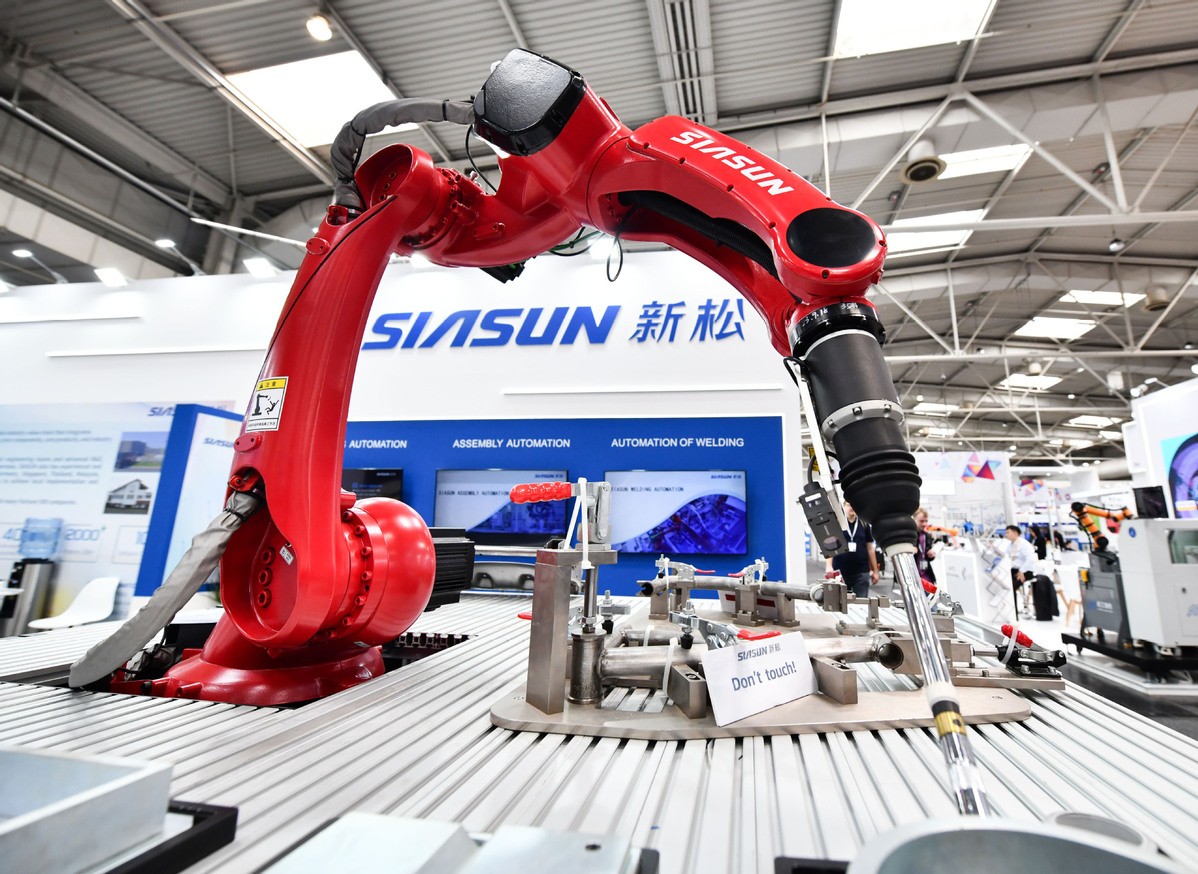
According to the General Administration of Customs, China’s industrial robot trade achieved a historic leap in 2025, with annual export volume surging 48.7 percent year on year in unit terms. Exports officially surpassed imports in scale, marking China’s transition to a net exporter of industrial robots and completing a key shift from “import dependence” to “global supplier.” This development is not accidental, but the result of reinforcing effects across policy support, technological breakthroughs, market demand, industrial chain collaboration, and global expansion. Together, these factors have formed a multi-level and mutually reinforcing growth dynamic for domestic manufacturers.
Core technological breakthroughs have been central to the rise of Chinese robot manufacturers. Domestic enterprises have moved away from short-term profit orientation, increased R&D investment, and completed a transition from “OEM assembly” to “independent R&D.” As a result, collective progress has been achieved across several core technology areas.
In upstream components, domestic enterprises have focused on specific segments, significantly increasing local market share. Cost advantages have become more pronounced, product performance has continued to improve, and domestic demand is increasingly being met by local suppliers. In drive and control systems, higher levels of integration have been achieved, further strengthening the core competitiveness of domestic robots.
In robot manufacturing, leading domestic companies have addressed technological gaps through continuous R&D iteration and overseas mergers and acquisitions, building competitiveness across multiple robot categories. At the same time, robots are increasingly integrated with technologies such as AI, 5G, and big data. High-end products, including intelligent collaborative robots and humanoid robots, are gradually entering commercial deployment. 2026 is expected to be a key year for the commercialization of humanoid robots, with Chinese manufacturers advancing large-scale production to further narrow the gap with leading international brands.
As the world’s largest industrial robot application market, China’s scale of demand has provided a strong foundation for technological iteration among domestic manufacturers. On one hand, accelerating automation and intelligent upgrading in manufacturing have driven sustained demand for “machine replacement” in industries such as automotive, 3C electronics, and new energy. Against the backdrop of labor shortages and rising labor costs, enterprise demand for robots continues to grow, creating stable application scenarios for domestic products.
On the other hand, domestic demand is increasingly diversified and differentiated. Applications now range from traditional automotive welding and electronics assembly to specialized scenarios such as photovoltaics, lithium batteries, and the nuclear industry. These differences have encouraged manufacturers to focus on niche segments and develop differentiated strengths, such as robots designed specifically for nuclear and new energy applications, or robots dedicated to photovoltaic cleaning and installation.
Supported by higher cost efficiency and flexible scenario adaptability, domestic robots have steadily replaced imported products. In 2024 and 2025, the market share of domestic brands in China’s local market continued to increase, forming a virtuous cycle in which demand drives R&D, R&D expands production capacity, and production capacity meets demand.
After years of development, China has formed a relatively complete robot industrial chain spanning upstream components, midstream robot manufacturing, and downstream system integration. Industrial clusters have emerged in regions such as the Yangtze River Delta and Pearl River Delta, bringing together research institutions and leading enterprises. Close coordination across the value chain has significantly enhanced overall industry competitiveness.
Upstream component suppliers and midstream robot manufacturers collaborate closely to improve product compatibility and stability while reducing system-level costs. Downstream system integrators focus on specific application scenarios, accelerating deployment and feeding market feedback upstream to support product optimization and technological iteration.
This integrated industrial chain enables rapid response to market demand, flexible capacity adjustment, and lower barriers to core technology development. For example, harmonic reducers produced by Harmonic Drive Systems (China) are deeply adapted to the robot platforms of Estun Automation and Siasun Robot, improving system stability and cost efficiency. Servo systems from Inovance Technology are widely integrated with domestic robot manufacturers, enabling coordinated technology upgrades and supporting the formation of globally competitive industrial clusters.
Leading domestic manufacturers began global expansion early, extending their reach through overseas mergers and acquisitions, local subsidiaries, and service networks. Estun has established more than 75 service outlets worldwide, covering Europe, Southeast Asia, and the Americas, while Siasun’s mobile robots are exported globally, laying the groundwork for long-term international development.
Emerging overseas markets have provided additional growth opportunities. Manufacturing automation demand is rising rapidly in Southeast Asia, the Middle East, and Latin America. Leveraging cost advantages and application adaptability, Chinese robots have gained market share quickly. In 2025, Vietnam, Mexico, and Thailand became the fastest-growing destinations for China’s industrial robot exports.
Overseas deployment closely aligns with the industrial structures of destination markets, with a focus on automotive, electronics, new energy, and logistics, while gradually extending into high-end manufacturing and specialized applications.
Automotive: Robots cover multiple processes and have entered supply chains in Europe, Mexico, and other regions, replacing some international brands on cost and performance.
Electronics: Focused on 3C assembly and testing, particularly in Southeast Asia and Mexico, with collaborative and sorting robots widely adopted.
New Energy: A fast-growing segment, with photovoltaic robots deployed at scale in the Middle East and Latin America, and lithium battery-related robots expanding overseas alongside leading domestic enterprises.
Other Applications: Logistics mobile robots are entering Southeast Asian and European hubs, special-purpose robots are used in high-risk environments, and service robots are accelerating penetration into consumer markets.
Over the next three to five years, Chinese robot manufacturers are expected to enter a new phase focused on quality improvement, efficiency gains, and deeper global integration. Supported by continued innovation, industrial collaboration, and international expansion, the industry is likely to move toward higher-quality development.
Technology: Localization of core components will deepen, with potential breakthroughs in high-precision reducers and advanced servo systems. Humanoid and intelligent collaborative robots are expected to remain R&D priorities, alongside deeper integration with AI, 5G, and big data.
Market: Domestically, adoption will expand among small and medium-sized enterprises and into central and western regions, while applications extend into healthcare and eldercare. Internationally, manufacturers will strengthen localization in Southeast Asia, pursue higher-end European and US markets, and optimize export product mix.
Industry Structure: Collaboration across the value chain will intensify, industry concentration will increase, and leading players are likely to pursue mergers and acquisitions, while smaller firms focus on specialized niches.
Branding: Chinese robot manufacturers are expected to move beyond a pure “cost-performance” image, positioning themselves as technology-driven and high-end brands through participation in global standards, international exhibitions, and improved product and service quality.
Taken together, these shifts point to a maturing phase for China’s robot industry, where scale-driven growth is increasingly complemented by technological depth and ecosystem strength. How effectively manufacturers execute across technology, markets, and branding will shape their ability to compete sustainably on the global stage.