Representative End User Clients







Representative Automation Clients







Representative Software Clients








KEYWORDS: Rockwell Automation Fair 2025, Software Defined Automation (SDA), Robotics, AI, Autonomy, Autonomous Automation
Rockwell Automation Fair 2025 brought together over 15,000 attendees from across the globe. The event featured more than 250 educational sessions spread across seven industry tracks that included Automotive & Battery, Food & Beverage, Life Sciences, Metals & Mining, Energy, OEM/Machine Builders, and Water & Wastewater. The theme, “Create What’s Next,” underscored the urgency for manufacturers to embrace digital transformation amid global volatility in supply chains, labor markets, and regulations.
“The way we harness autonomous operations today will define the world we live in tomorrow. We’re placing a bet on our home field and our capabilities—investing $2 billion over the next five years and building a one-million-square-foot greenfield plant in Wisconsin—to show that with the thoughtful application of technology and talent, we can compete and win globally.”
Blake Moret, Chairman and CEO, Rockwell Automation
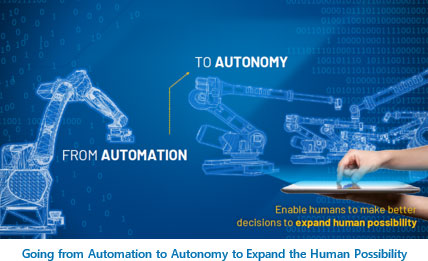
At the Rockwell Automation Fair 2025 keynote session, leaders emphasized that the industry is entering a new era—shifting from traditional automation to autonomy. This change is driven by rapid technological evolution and global complexity. The keynote session set the tone for Rockwell Automation’s vision—moving beyond traditional automation toward fully autonomous industrial systems. Rockwell emphasized a shift toward software-defined automation, AI-driven decision making, robotics, and autonomous material movement. These technologies aim to reduce downtime, accelerate product launches, and enable adaptive, resilient factories. The technologies are no longer futuristic concepts; and are practical tools reshaping operations today. Intelligent ecosystems, seamlessly connecting machines, processes, and people, promise unprecedented agility, resilience, and efficiency.
Blake Moret, Chairman and CEO, Rockwell Automation highlighted the critical role of manufacturing in delivering essentials like clean water, energy, and life-saving medicines. He said that in an era of volatility, simplifying complexity is key. He also announced that Rockwell is investing $2 billion over five years in talent, digital infrastructure, and a new 1-million-square-foot greenfield plant in Wisconsin, emphasizing their usage of advanced technologies along with workforce integration and training to compete globally.
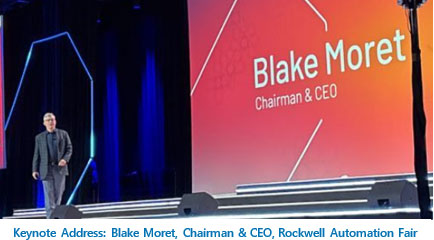
The keynote address reinforced that autonomy is not a distant goal, it’s happening today. Rockwell’s strategy combines technology innovation with human-centric design, ensuring factories evolve from programmed systems to learning environments.
Cyril Perducat, Chief Technology Offer, summarized the current situation when he said, “The world is changing the past. In every disruptive moment lies an opportunity to reinvent yourself.”
He said that this transformation is not incremental, it is a reinvention of industrial operations. Rockwell’s vision centers on creating systems that learn and adapt, powered by software-defined architectures, artificial intelligence, and robotics.
Mr. Perducat captured the essence of this shift when he said:
“We’re moving from factories that follow predetermined instructions to factories that learn and adapt.”
These technologies work together to simplify complexity, maximize flexibility, and enable continuous optimization.
Mr. Perducat outlined three pillars enabling autonomy:
These technologies are converging to create self-organizing, self-optimizing systems that adapt continuously, reducing friction and empowering human operators.
“We’re not just adding AI to automation—we’re reinventing industrial operations. The future lies in systems that learn and adapt, powered by software-defined architectures, artificial intelligence, and robotics working together to create flexibility, scalability, and resilience.”
Cyril Perducat, Chief Technology Officer
Real-world examples with AI and SDA in action were showcased at:
As Mr. Perducat noted, decisions made today—architecture, partners, and workforce readiness—will define success in the next era of industrial operations.
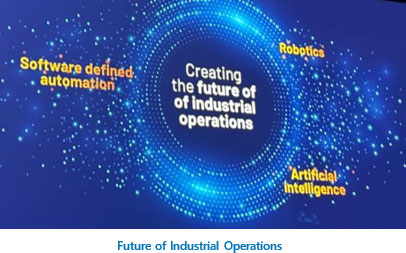
Matheus Bulho, Sr. Vice President of Software and Control highlighted practical applications already in use, such as cloud-native design tools with generative AI, software-defined control systems that integrate safety and motion, and AI-driven optimization embedded across control and visualization layers. Robotics and autonomous mobile systems are transforming material movement and production logistics, creating smarter, more efficient factories.
Matheus Bulho, Senior Vice President of Software & Control, reinforced that autonomy is not a distant goal: He said “Autonomy isn’t a distant vision—it’s here today. With software-defined automation, AI, and robotics, we’re enabling systems that are more agile, resilient, and always optimized.”
This evolution empowers manufacturers to simplify complexity, accelerate innovation, and enhance workforce engagement. Decisions made today—choosing the right architecture, partners, and technology—will define competitive advantage for manufacturers and operations in the next era of industrial operations. Rockwell’s message was clear: the future of industrial autonomy is not tomorrow—it’s now.

Rockwell Automation is reshaping its operations by moving from traditional automation to autonomy, starting with disciplined continuous improvement and digital transformation. At the Singapore facility—already a world-class plant—Rockwell implemented digital twins for design, lights-out warehouses with autonomous mobile robots, and FactoryTalk Energy Manager, which delivered rapid ROI and reduced energy waste. These initiatives are now being scaled to Twinsburg, Ohio, with real-time digital twins and AI agents for continuous optimization.
Artificial intelligence is at the heart of this transformation, powering predictive maintenance, real-time quality analysis, and generative tools that simplify troubleshooting. As Bob Buttermore emphasized: “Technology is great, but without disciplined innovation and coordinated teams, you risk chaos. We pilot, then scale.” Fusion teams combining AI experts and domain specialists are driving this change, while structured innovation programs and talent partnerships ensure a pipeline of skilled professionals for the factories of the future.
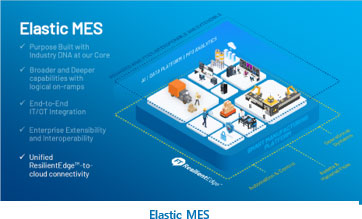
Rockwell Automation’s Plex Elastic MES redefines the traditional Manufacturing Execution System by stretching across execution, quality, business operations, IoT, and analytics. Built on a smart manufacturing platform, it delivers consistency and scalability while adapting to the unique, evolving needs of modern industry.
Unlike legacy systems, which often remain trapped in data silos, Elastic MES emphasizes real-time data, standardization, and flexibility. This makes it the operational core for intelligent, autonomous manufacturing, ensuring that data flows seamlessly from the shop floor to the executive suite.
A core tenet of the Elastic MES philosophy is that autonomy is not about replacing people; it is about empowering them. By shifting from reactive firefighting to proactive optimization, workers are freed to move "from working on the system to working in the system.” Michael Hart, Head of Industry Strategy and Growth, summarizes this shift: “Autonomy isn’t about replacing people. It’s about elevating them—moving from reacting to preventing, from firefighting to optimizing.” The goal is a smarter factory where human expertise and data intelligence work in tandem to make faster, more accurate decisions in the moments that matter most.
The strength of the platform is validated by the sheer volume of activity within the Plex community. Currently, the platform powers over 3,100 plants across the globe, supporting 6.1 million unique logins every month. The technical scale is staggering, with the platform handling 11.5 billion transactions every single day. Notably, 80 percent of these transactions are now driven by automated systems—PLCs and edge devices—totaling over 3 trillion points of context every year. This massive amount of data and knowledge creates a "system of autonomy" that never tires and continuously learns.
Despite significant global challenges, including inflation, supply chain disruptions, and labor shortages, manufacturers using Plex are delivering excellence. The platform has enabled users to decrease inventory by 3x while simultaneously driving revenue increases of 50 percent.
Beyond top-line growth, Plex is helping manufacturers increase margins and annual operating savings. By consolidating the system’s landscape and improving on-time delivery, companies are transforming their customer relationships and strengthening their market position.
One of the primary differentiators of Plex Elastic MES is that it is purpose-built with Industry DNA. It comes preconfigured for highly regulated sectors like automotive and food & beverage, featuring compliance-ready models and vetted execution rules.
Because these industry-specific workflows and data models are built-in, manufacturers do not have to build their systems from scratch. Instead, they can leverage two decades of proven best practices to ensure traceability and operational rigor from day one.
Elastic MES offers a broader and deeper scope than traditional systems, covering everything from finance and dock-to-dock shipping to quality and maintenance. However, the platform is designed for modular adoption, providing logical on-ramp for modernization.
This modularity allows companies to start where they find the highest value and scale as their business matures. It effectively removes the "Big Bang" risk associated with large-scale MES projects, allowing for a phased, manageable digital transformation.
For operations to run intelligently, IT and OT cannot exist in separate worlds. Elastic MES sits in the flow of both, connecting shop floor execution with business tools like process control and warehouse management. This ensures that every decision is made with shared context rather than disconnected data.
The architecture is also built for extreme resilience. Using a unified edge-to-cloud design, the system ensures that even if the network flips, the production line keeps running. This provides the agility of the cloud without ever compromising local uptime or throughput.
The platform's capability is best seen through its customer success stories. For example, Mars Candy recently digitized their shop floor, moving from selection to "go-live" in under six months.
Other notable users include Lamb Weston, who uses the platform to visualize production stoppages and drive margin increases, and KTH Parts Industries Inc., an automobile supplier that is digitizing operations to be more productive. These examples demonstrate how the platform meets companies exactly where they are and grows with them.
Industry leaders shared how advanced automation and digital technologies are driving sustainability and decarbonization. Boulder Industries focuses on circular materials by transforming end-of-life tires into valuable products like carbon black and specialty oils, reducing waste and emissions. Utility Global tackles hard-to-abate sectors by converting industrial off-gases into clean hydrogen and capturing carbon dioxide without energy-intensive processes, offering a cost-effective alternative to traditional electrolysis. Circular enables supply chain transparency and compliance through digital traceability, ensuring responsible sourcing and reducing carbon footprints across industries.
Panelists emphasized that automation is critical for consistency, workforce training, and cost reduction, especially in complex processes like tire depolymerization and hydrogen production. Regulatory pressures in the EU and global markets are accelerating adoption of circular economy practices and carbon intensity reduction strategies. Beyond compliance, supply chain transparency delivers business benefits such as defect management, decarbonization, and marketing advantages. Together, these innovations support a low-carbon transition and create resilient, efficient energy systems worldwide.
“Consistency is key. In our business, quality equals consistency, and automation makes that possible.”
— Tony Wibbeler, CEO & Founder, Boulder Industries
Jordan Reynolds, VP of AI & Autonomy at Rockwell Automation, outlined how artificial intelligence and autonomy are redefining industrial operations. He explained that AI is not a “nice-to-have” but an essential capability for modern automation systems:
He added, “Nobody could program a full self-driving behavior the way you program a PLC today—it’s computationally intractable. Learning (using AI) is essential.” This shift mirrors advances in autonomous vehicles and robotics, where control systems now rely on sensory data, closed-loop feedback, and adaptive algorithms rather than rigid programming.
Mr. Reynolds emphasized a fundamental change in the human role. He said, “We’re moving from tactical manipulation of parameters to defining objectives and constraints. The system learns how to achieve those goals.” Operators will transition from hands-on parameter adjustments to supervising entire lines or plants, focusing on strategic oversight and goal decomposition. This evolution expands the scope of automation to processes previously considered too complex or variable for traditional control.
Rockwell’s strategy is to make AI-native automation, embedding machine learning and adaptive control directly into PLCs, drives, and MES systems. Rather than bolting on AI as an external platform, every layer—from sensing and actuation to operations management—will integrate predictive, prescriptive, and generative capabilities. “We’re not just improving what exists; we’re reinventing every function of the production system with AI in mind.”
This transformation demands new workforce skills. Traditional industrial engineering expertise—control theory, electrical and chemical engineering—must now combine with machine learning and data science. Mr. Reynolds noted: “The key knowledge asset is no longer just domain expertise—it’s high volumes of diverse data that train models to control complex processes.” Predictive maintenance, model-based control, and AI-driven scheduling are becoming standard, requiring operators and engineers to adapt quickly.
The Automotive Industry Summit focused on how policy shifts are reshaping automotive manufacturing and automation, underscoring the significant disruption facing global automakers as they respond to shifting policies, accelerating hybrid and EV adoption, economic pressure, and evolving customer expectations. A panel including Craig Resnick, Vice President, ARC Advisory Group; Mark Barrott, Partner, Plante Moran; James Glasson, Vice President, Global Industry Auto, Tire & Advanced Mobility, Rockwell Automation; and Bill Sarver, Global Director, Smart Manufacturing, Automotive/EV Battery & Tire, Rockwell Automation, provided perspectives on how the industry can adapt.
Craig Resnick outlined the broader industry challenges, emphasizing that rapid electrification, supply chain instability, regulatory uncertainty, and talent shortages are prompting automakers to redesign core operations. He noted that digital technologies—AI, analytics, and the digital thread—are now essential tools for improving quality, reducing variability, and identifying issues earlier. By connecting data across customer, dealer, design, and manufacturing systems, companies can reduce recalls, strengthen resilience, and protect brand reputation. These technologies, he added, deliver fast ROI and are foundational to navigating ongoing volatility.
Mark Barrott highlighted the financial and policy pressures reshaping the sector. Policy reversals, expiring EV incentives, tariffs, and regional investment shifts are driving companies to reduce complexity, consolidate parts, and pursue broad cost transformation. With affordability emerging as a critical concern and vehicle prices continuing to rise, he stressed that technology investments must align tightly with financial realities and that automakers must remain agile as market conditions evolve.
James Glasson reinforced the importance of the digital thread in building responsive manufacturing operations. While public attention focuses on autonomous driving, he noted that AI’s most significant near-term impact lies in engineering and factory processes—from optimizing production schedules to predicting equipment failures and improving throughput. Leading OEMs are already integrating ERP, MES, PLM, and supply chain systems to enable real-time visibility and faster, more informed decision making.
Bill Sarver expanded on the operational shifts required to support modern production models. As automakers move toward greater customization and “lot size of one” capabilities, flexible, connected, and automated systems are vital. He described how digital thread enabled factories can run multiple vehicle types on the same line, manage seamless model changeovers, and support global customization without sacrificing efficiency.
Collectively, the panel emphasized that the industry is at a decisive moment. Electrification is transforming the product, but digitalization is transforming how it is built. Amid policy uncertainty, economic pressure, and shifting consumer expectations, manufacturers that invest in connectivity, AI driven optimization, and flexible production systems will be best positioned to succeed.
The Purdue University Northwest (PNW) has emerged as a hub for the workforce-of-the-future training. Through a close collaboration with Rockwell Automation and a network of industrial partners, the university has built a modern training ecosystem that integrates advanced smart manufacturing, control systems, instrumentation and real‑world problem solving. Established through grant funding, the facilities were designed as a hands‑on learning environment where students, displaced workers, industrial workers, and veterans receive targeted upskilling across electrical, mechanical, automation, and machining disciplines. Rockwell Automation contributed significantly in equipping the center and ensuring that students learn on the same technologies deployed in industry.
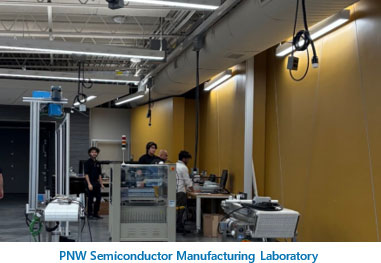
Walking through the PNW College of Technology labs reveals an atmosphere of energy and cross‑disciplinary collaboration. Students across mechatronics, mechanical engineering technology, electrical engineering technology, manufacturing, cybersecurity, and computer graphics contribute to projects that blend hardware, software, design, systems, and smart manufacturing.
The combination of Rockwell Automation technologies applied engineering education, and strong industry partnerships positions Purdue University Northwest as an example of how academia can work with industry and respond to workforce needs. The program demonstrates how universities can integrate smart manufacturing, automation, VR‑assisted training, simulation, hands‑on engineering and other state-of-the-art technologies to shape a skilled and adaptable industrial workforce.
Bob Buttermore, Senior VP and Supply Chain Officer at Rockwell Automation shared the company’s vision for creating resilient, growth-oriented supply chains and autonomous factories. He emphasized that this transformation begins with a disciplined continuous improvement program: “Operational excellence starts with structured discipline—optimizing end-to-end processes and building a Kaizen culture that creates a runway for long-term growth.”
Rockwell is reengineering its network and investing in new capabilities, including a greenfield plant in Wisconsin and advanced automation at its Milwaukee headquarters. The Singapore facility served as a proving ground for autonomy, delivering impressive results despite already being world-class. Key initiatives included digital design using digital twins, lights-out warehouses with autonomous mobile robots (AMRs), and energy optimization through FactoryTalk Energy Manager, which identified inefficiencies and reduced carbon footprint. Mr. Buttermore stated, “By moving from automation to autonomy, we’re not just improving processes—we’re reinventing them.”
AI is central to this transformation, powering predictive maintenance, real-time quality analysis, and generative tools for operators. Mr. Reynolds Vice President, AI & Autonomy, mentioned “AI is energizing our workforce—giving them tools to solve problems faster and making their jobs more productive. ”Examples include GenAI-powered maintenance copilots that provide instant troubleshooting guidance and agentic AI solutions that detect defects and take corrective actions automatically.”
Following success in Singapore, Rockwell is expanding these innovations to its Twinsburg, Ohio facility, introducing real-time digital twins and AI agents for continuous optimization. Mr. Buttermore stressed the importance of structured innovation and talent development: “Technology is great, but without disciplined innovation and coordinated teams, you risk chaos. We pilot, then scale.” Fusion teams combining AI experts and domain specialists are reshaping factory operations, while partnerships with universities and industry aim to attract and develop future talent.
To future-proof operations for the next 15 years, Rockwell is anchoring its strategy in five key investment pillars:
Rockwell Automation accelerates robotics innovation beyond traditional robotics focusing on software re-defined automation, unified robot control, and integration at scale. The company’s approach combines decades of expertise in safety and control systems with advanced software platforms to enable niche applications and faster deployment. As Ryan Garlepy, VP of Robotics, explained: “It’s not just about building the next smartest robot—it’s about solving production problems and integrating robots into industrial operations.”
Rockwell’s strength lies in ecosystem integration—connecting robots with MES systems, diagnostics, and asset tracking to fit seamlessly into existing industrial operations.
Ryan Gariepy, VP Robotics, Rockwell Automation) mentioned “You can have 1,000 robots in a factory, but if they can’t talk to each other or integrate with your systems, you’re not solving the real problem.” This integration, combined with Rockwell’s global presence and trusted platforms, positions the company to deploy robotics at scale while ensuring resilience and adaptability.
Rockwell Automation is at a pivotal moment, introducing Software Defined Automation (SDA) to transform plant-floor control systems into flexible, IT-friendly workloads. As Dan DeYoung, VP & GM of Design & Control, explained: “Logix itself is going to become a workload—managed in an IT-friendly way—while preserving the safety and security that have always been its foundation.” This evolution moves beyond hardware-centric control, leveraging modern IT concepts without compromising reliability or performance.
For decades, Rockwell has led in control systems and programming tools, from ladder logic to IEC 61131 languages. SDA builds on this heritage while integrating new silicon and architectures that enable advanced processing and workload management.
Mr. DeYoung emphasized “We’re not going to compromise the fundamentals of a logic system that is safe and secure—but we’re going to make it possible to open up new possibilities.” This approach allows Logix to straddle traditional industrial control and modern IT domains, creating a foundation for scalable, software-driven automation.
Alongside changes at the control level, Rockwell is investing heavily in the design environment to support SDA. Engineers will gain tools that bridge plant floor control with IT-centric concepts, accelerating innovation while maintaining rigor and reliability. The result is a system that supports secure control, flexible workloads, and future-ready automation, ensuring manufacturers can adapt quickly to new demands without sacrificing safety or performance.
Cybersecurity in industrial automation is no longer optional, it’s essential for business continuity and compliance. Rockwell Automation outlined a comprehensive strategy that spans network design, asset lifecycle management, vulnerability assessment, and rapid incident response. Their security platform provides real-time visibility into risks, enabling customers to prioritize actions based on asset criticality and business impact. As Maria Else emphasized: “Understanding your risk and managing vulnerabilities is absolutely critical—don’t spend money where you don’t need to.”
Rockwell’s approach combines proactive monitoring with governance and compliance support, including alignment with EU regulations and the upcoming Cyber Resiliency Act. Services such as risk scoring, dynamic dashboards, and customizable alerts help manufacturers stay ahead of evolving threats. The goal is clear: protect operations, maintain availability, and safeguard reputation. By leveraging structured programs and training, Rockwell empowers organizations to move from reactive defense to resilient, secure operations.
The Expo floor spanned over half a million square feet, showcasing 120+ interactive exhibits and hands-on demonstrations from Rockwell Automation and its Partner Network members. The exhibits highlighted Rockwell’s products, technology advances, partner products, and how autonomy and intelligent systems will define competitive advantage. Attendees explored innovations in AI, robotics, software-defined automation, cybersecurity, and industrial networking. The event also included eight exclusive off-site tours (including Purdue University Workforce Training Center) and 450+ hours of advanced training, reinforcing its role as a premier learning and networking hub for industrial automation professionals. Overall, the event emphasized Rockwell’s strategy to position manufacturers with the ability to thrive through adaptability, learning systems, and holistic approaches to industrial operations.
Rockwell Automation Fair 2025 showcased and illustrated their technologies from advancements in traditional automation to industrial autonomy, emphasizing software-defined architectures, AI-driven decision making, and robotics as the foundation for resilient, adaptive operations. Under the theme “Create What’s Next,” leaders highlighted autonomy as a present reality—not a distant vision—demonstrated through real-world applications like digital twins, autonomous material movement, and AI-native control systems. With a $2 billion investment and a new greenfield plant in Wisconsin, Rockwell reinforced its commitment to real world demonstration that combines advanced technology with workforce evolution, sustainability, and cybersecurity. The event’s message was clear: manufacturers must embrace learning systems, the workforces of the future, IT/OT convergence, human-centric design and autonomous technologies to thrive amid global complexity and accelerate the transition to factories that continuously optimize themselves.
ARC Advisory Group clients can view the complete report at the ARC Client Portal.
Contact Us if you would like to speak with the author.
Obtain more ARC In-depth Research Market Analysis.