Representative End User Clients







Representative Automation Clients







Representative Software Clients








“Software, not hardware”—this simple tenet is the basis of what AUDI AG calls “IT-based factory automation,” a concept that is turning the IT/OT convergence theory into practice at the premium automaker. Dubbed Edge Cloud 4 Production (EC4P), the concept is to replace thousands of decentralized industrial PCs with a much more efficient and flexible IT-like architecture of scalable local servers, effectively uniting the cloud and the edge on the shop floor.
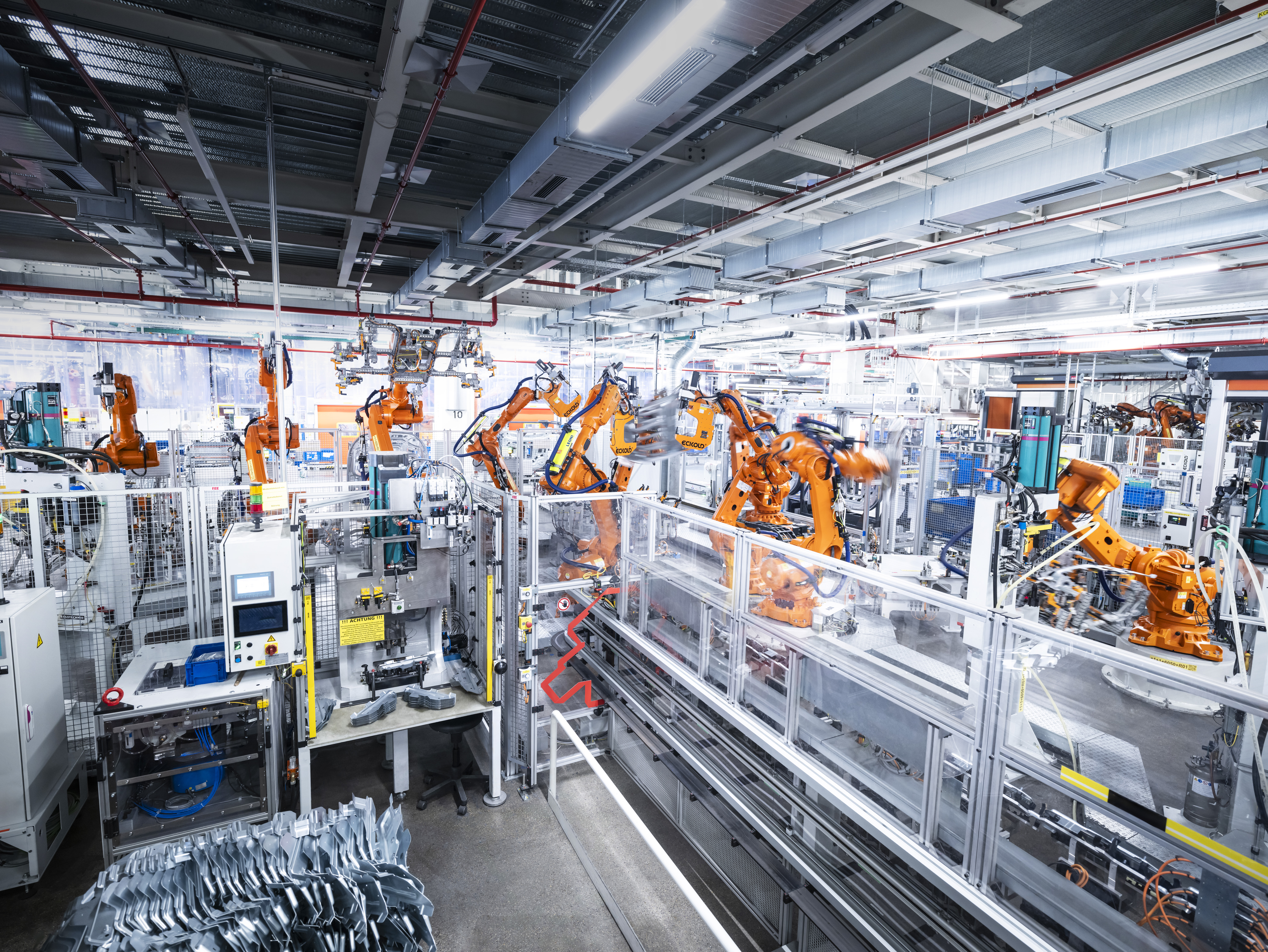
What motivated Audi to redesign its traditional shop floor architecture? The automotive industry is changing rapidly in the face of new cost structures driven by the electric vehicle transition and fierce competition from China. In Audi’s view, the traditional model of delivering production equipment is outdated, and the future is software-driven production.
Audi is part of Volkswagen AG, the world’s second largest carmaker that employs more than 600,000 workers. The implication is that a successful project can reverberate companywide with the potential to fundamentally change plant architectures in well over 100 plants worldwide, so a lot is riding on this project. This ARC paper looks at the origins, the motivation, the business drivers, the project goals, and the real outcome of EC4P.
Tenets of Audi’s IT-based factory automation:
Centralized, not decentralized.
Local servers instead of thousands of IPCs.
Solution delivery in software, not hardware.
EC4P is integral to Audi’s 360 factory vision, accelerating the shift to software-driven production.
By consolidating hardware into scalable, local servers within a unified edge-cloud framework over a high-speed, resilient enterprise network, EC4P streamlines shop floor operations, and enhances efficiency in routine OT tasks, such as equipment maintenance and software updates.
The server solution levels out spikes in demand across virtualized clients, speeding application deployment and recovery in case of failure, and ensuring more efficient use of resources.
Future production solutions will be delivered as software, optimized for seamless
integration with the EC4P platform.
The IT/OT convergence is a powerful force for change in the traditional world of manufacturing. As industrial companies adopt “IT-like” architectures, the potential for cost savings, efficiency gains, scalability and flexibility is enormous. Several years ago, Audi set out to create IT-based factory automation with its EC4P concept that consolidates compute and control hardware and applications over enterprise networks in a cloud-edge architecture. Now that the concept is shop floor-tested, Audi is extending its shop floor digital transformation to real-time control via the first virtual PLC.
Executive Overview
EC4P: Challenges and Business Drivers
The Reference Architecture
It Takes an Ecosystem
EC4P: How Did Audi Get It Done?
Conclusion
ARC Advisory Group clients can view the complete report at the ARC Client Portal.
Contact Us if you would like to speak with the author.
Obtain more ARC In-depth Research Market Analysis.