Representative End User Clients







Representative Automation Clients







Representative Software Clients









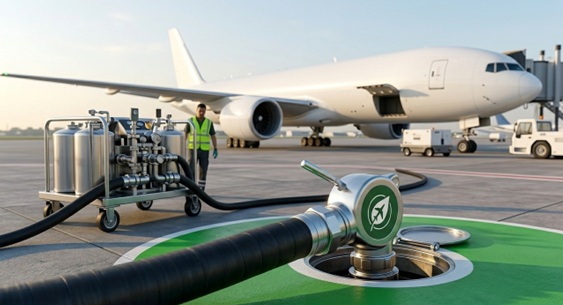
In recent months, sustainable aviation fuel (SAF) has seen renewed developments, with legislative mandates increasingly shaping how the aviation sector approaches decarbonization. In Europe, the ReFuelEU Aviation Regulation has set the pace, requiring a 2 percent SAF blend at EU airports starting in 2025, with the share expected to increase progressively over the coming decades.
In Southeast Asia, policy momentum is also beginning to emerge. Thailand has announced a 1 percent SAF mandate starting January 1, 2026, with the Department of Alternative Energy Development and Efficiency (DEDE) under the Ministry of Energy targeting an increase to 8 percent by 2036. Singapore has also finalized its own framework, introducing a 1 percent SAF requirement at Changi Airport. The initiative will be funded through a tiered passenger levy, ranging from about S$1 for economy class to roughly S$41.60 for premium cabins on long-haul flights.
These developments suggest that the region is gradually moving toward more structured aviation decarbonization policies. While sustainability discussions may appear less prominent than in earlier years, policy frameworks and industry initiatives continue to progress.
The policy push is notable because aviation remains one of the most difficult sectors to decarbonize. Before the COVID-19 pandemic, aviation accounted for roughly 2 to 3 percent of global CO₂ emissions. With air travel demand in Asia-Pacific continuing to expand, this share could increase further without mitigation measures.
A major constraint lies in the energy density requirements of aviation fuel. Aircraft rely on liquid hydrocarbon fuels capable of delivering high energy output while meeting strict safety, weight, and reliability requirements for long-distance operations. Any alternative propulsion system must meet similar performance thresholds while also complying with rigorous aviation certification standards.
Technologies such as battery-electric and hydrogen-powered aircraft are being explored, but these remain largely limited to short-haul routes or smaller aircraft due to the substantial energy-to-weight gap compared with conventional jet fuel. Commercial aircraft also have long operational lifespans—often 20 to 30 years—meaning fleet turnover occurs slowly and new propulsion technologies take time to scale.
Cost is another significant challenge. SAF currently carries a substantial price premium over conventional jet fuel due to limited production capacity and feedstock constraints. Expanding supply therefore depends not only on new production facilities but also on long-term offtake agreements from airlines, alongside supportive policy frameworks that help narrow the cost gap.
One factor supporting SAF adoption is its ability to function as a “drop-in fuel.” SAF can be blended with conventional jet fuel and used in existing aircraft engines and airport infrastructure without major modifications.
In Asia-Pacific, the transition is closely tied to regional feedstock availability. Current SAF production pathways rely primarily on used cooking oil (UCO), waste animal fats, and other bio-residues processed through hydrotreated esters and fatty acids (HEFA) technologies. The region’s large food and agricultural sectors provide a steady supply of such waste oils, making them an accessible starting point for SAF production.
Southeast Asia may also expand the feedstock base through agricultural by-products. Countries such as Indonesia and Malaysia are exploring pathways involving palm residues, coconut oil derivatives, and other biomass streams, drawing on established biofuel and oleochemical supply chains.
Beyond these conventional feedstocks, several alternative pathways are under development. These include alcohol-to-jet fuels derived from ethanol as well as processes that convert industrial waste gases or biomethane into synthetic aviation fuels. As these technologies mature, they could broaden the supply base and support larger-scale SAF production.
Across Southeast Asia and Australia, the first wave of SAF production facilities is beginning to appear, with additional projects planned over the coming decade. These initiatives include biorefineries using waste oils and residues as well as emerging pathways such as ethanol-to-jet and methanol-to-jet fuels, reflecting early efforts to establish domestic and regional production capacity.
Neste — Singapore: Operational since early 2023, producing up to 1 million tons per year from waste and residue feedstocks. Supplies regional airlines and logistics operators.
Pertamina — Indonesia: Operational since mid-2025 at the Cilacap refinery, producing SAF partially derived from used cooking oil, with deliveries to major airports including Soekarno-Hatta. Estimated production capacity is about 408,800 tons annually.
EcoCeres — Malaysia: Operational since October 2025 in Pasir Gudang, Johor, producing SAF alongside HVO and renewable naphtha, with total capacity of about 420,000 tons annually.
Bangchak — Thailand: Commissioned in March 2026, producing SAF from used cooking oil using HEFA technology. Initial commercial deliveries support Thailand’s early SAF blending mandate, with a production capacity of about 292,000 tons annually.
PETRONAS-Enilive-Euglena Biorefinery — Malaysia: Under construction in Pengerang, Johor, targeting about 650,000 tonnes per year of SAF, HVO, and bio-naphtha; commercial operations are expected in late 2028.
Aster — Singapore: Includes Project Beacon (demonstration scale, about 2,000 tons per year, biomethane feedstock) and the Jurong Island ethanol-to-jet facility (Aster commercial scale, about 100,000 tons per year, currently in the FEED stage).
HAMR Energy — Australia: Proposed SAF Energy Park in South Australia and Victoria, converting low-carbon methanol from forestry residues into SAF, with expected output of about 125 to 140 kilotons per year.
Expanding SAF production depends on sustained demand across the aviation value chain. Airlines, logistics operators, and corporate customers are increasingly securing SAF through offtake agreements and deployment commitments that help signal long-term demand to producers. Regional carriers such as Singapore Airlines have partnered with suppliers including Neste, while logistics companies like DHL Express have contracted a 7,400-tonne (9.5 million liter) supply from Neste Singapore through June 2026. This accounts for nearly 40 percent of the fuel used by its five Changi-based Boeing 777 freighters.
Logistics giants like FedEx have now operationalized blended SAF at five major US hubs, including JFK and DFW as of early 2026. Similarly, Bentley Motors transitioned from exploration to a full mandate in February 2026, switching to 100 percent SAF for all customer car airfreight worldwide. These commitments provide the critical demand visibility needed to scale production and move the industry beyond pilot phases.
The transition to sustainable aviation fuel is expected to unfold gradually. SAF will not replace conventional jet fuel in the near term, but it allows airlines to begin reducing lifecycle emissions while continuing to use existing aircraft and fueling infrastructure.
Investments in production capacity and early demand commitments from airlines, logistics operators, and corporate customers are helping the industry scale by providing visibility and stability. As the SAF sector grows, emerging digital technologies—including advanced process simulation, predictive modeling, and AI analytics—may increasingly be employed to address operational challenges such as coordinating multiple feedstocks, optimizing production pathways, and managing variations in supply.
For an industry that remains essential to global connectivity and challenging to decarbonize, SAF represents an incremental step toward lowering aviation-related emissions while offering a platform for continued operational and technological innovation.