Representative End User Clients







Representative Automation Clients







Representative Software Clients









Currently, humanoid robots remain in the technological breakthrough stage, with core bottlenecks—such as balance control and joint dexterity—yet to be fully resolved. As a result, large-scale commercialization continues to face significant short-term challenges.
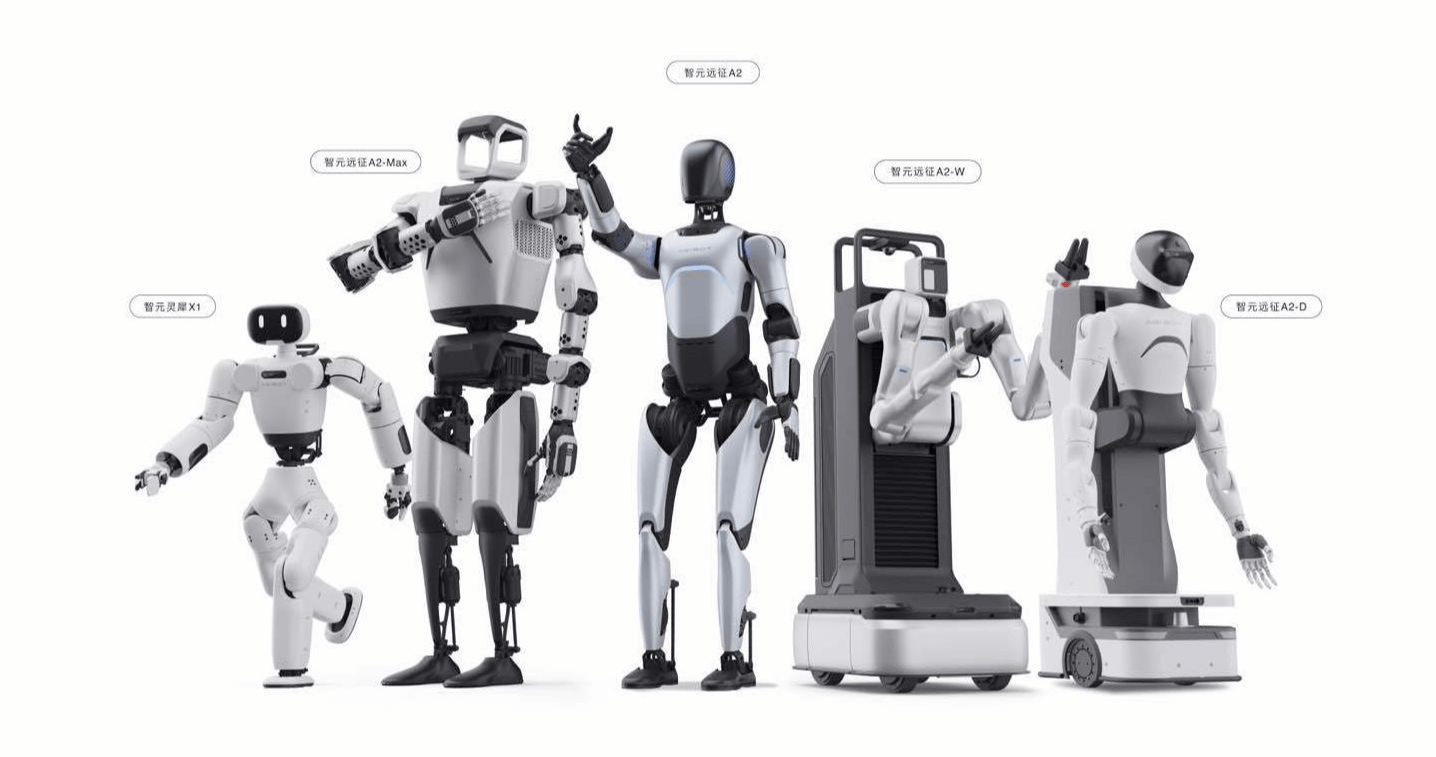
As a critical link connecting multiple industrial domains, investment is playing a central role in accelerating the deep integration of humanoid robots with industry. This shift is transforming investment logic from simple financial backing to a more integrated model combining capital, technology, scenarios, and supply chains. This evolving framework is creating a virtuous cycle of “investment – cooperation – implementation – data – reinvestment.”
Enterprises such as SAIC (Shanghai Automotive Industry Corporation Group), CATL (Contemporary Amperex Technology Co., Limited), and Huawei (Huawei Technologies Co., Ltd.) are enabling strong alignment between technology and real-world scenarios through strategic investment approaches. Their efforts provide valuable, practical reference models for the broader industry.
As a leader in the automotive industry, SAIC’s strategy in the humanoid robot space is built around scenario-driven implementation supported by full-chain synergy, forming a closed-loop model of “investment – cooperation – implementation.”
Currently, SAIC has invested in and developed multiple humanoid robot and core component companies, including Zhiji Dynamics Technology, Nuoshi Robotics, and Galaxy General Robotics, continuously strengthening its industrial ecosystem.
On one hand, SAIC is deeply integrating humanoid robot technology into its automotive manufacturing environments. This includes enabling robots to operate in production-line scenarios such as handling, sorting, and loading/unloading, thereby accelerating large-scale deployment and commercialization through its established manufacturing systems.
On the other hand, SAIC is enhancing cross-domain synergy between humanoid robotics and the automotive sector by enabling technology reuse across applications. For example, Nuoshi Robotics’ planetary ball screws are applicable not only to dexterous robotic hands but also to automotive components such as tailgate struts and steer-by-wire chassis systems.
Through this approach, SAIC leverages mass production experience and real-world operational data from industrial scenarios to accelerate core technological advancements in humanoid robotics. This reduces research and development costs, improves technological maturity, and strengthens its broader ecosystem. The result is a sustainable cycle in which industrial scenarios enable technological advancement, and technology, in turn, enhances industrial applications, offering a scalable model for integrating robotics with traditional industries.
Huawei’s approach centers on technology output and ecosystem co-development, adopting an asset-light strategy to drive industrial advancement in the humanoid robot space.
Rather than directly manufacturing robots, Huawei focuses on delivering foundational technologies such as computing power, large-scale models, and operating systems. Through Huawei Cloud, it has developed an integrated embodied intelligence platform that supports the full lifecycle—from data management and model training to deployment and operations—across the industrial value chain.
At the same time, Huawei is expanding its ecosystem by opening its OpenHarmony operating system to developers, fostering collaborative innovation and replicating the success of open ecosystems seen in other technology domains.
In terms of partnerships, Huawei has established an Embodied Intelligence Innovation Center with UBTech Robotics, combining its Ascend chips and Pangu large models with UBTech’s robotics capabilities to enable deployment across industrial and consumer environments. It has also collaborated with Leju Robotics to enhance the intelligence of its “Kuafu Robot,” enabling large-scale adoption in research and industrial manufacturing.
Additionally, Huawei is working with companies such as Suzhou Midi Medical Technology to develop task-driven group intelligence platforms for healthcare applications, further expanding the role of humanoid robots in specialized domains.
Through targeted investments in upstream technology companies such as Qianxun Intelligence, Huawei is strengthening foundational research and contributing to the development of a more resilient and self-sufficient supply chain. This dual strategy of technology enablement and strategic investment positions Huawei as a key enabler of ecosystem-driven growth in the humanoid robotics industry.
Leveraging its strong industrial base and capital resources, CATL is emerging as a key driver of humanoid robot development through a strategy centered on capital investment and scenario enablement. Its approach emphasizes co-development by providing both funding and real-world deployment environments.
At the investment level, CATL has pursued a broad, multi-stage strategy, investing in a range of embodied intelligence companies including Galaxy General, Songyan Power, Qianxun Intelligence, and Zhongqing Robotics. Galaxy General stands out as the only embodied intelligence company directly invested in by CATL’s listed entity. Additionally, CATL has supported early-stage companies such as Vita Power, enabling full value chain coverage from core technologies to applications.
From a deployment perspective, CATL is opening its global network of battery manufacturing facilities as real-world testing environments for robotics companies. These facilities provide complex, high-demand scenarios—including production-line testing, high-voltage operations, and precision assembly—that are highly suitable for humanoid robots.
For example, Galaxy General’s heavy-duty robot Galbot S1 has achieved fully autonomous operation within CATL’s battery factories. Similarly, Qianxun Intelligence’s Xiaomo Robot has been deployed in the world’s first large-scale humanoid robot-enabled battery PACK production line, achieving efficiency levels three times higher than manual operations.
These real-world applications not only generate stable demand for robotics companies but also provide critical operational data that supports product optimization and faster commercialization. At the same time, humanoid robots—given their high energy requirements—are expected to become a major new demand driver for the battery industry. By aligning early with key players across the robotics value chain, CATL is creating a model of mutual growth and long-term industrial alignment.
The approaches taken by SAIC, Huawei, and CATL demonstrate that collaboration is central to unlocking value in the humanoid robotics industry.
By integrating technology, real-world scenarios, and ecosystem partnerships, these companies are enabling meaningful industrial synergies. Each participant contributes its core strengths, shares resources and costs, and accelerates the transition of humanoid robots from research environments to industrial-scale deployment.
Through joint research, strategic investment, and ecosystem collaboration, barriers across the value chain are being reduced—paving the way for sustainable, large-scale adoption and shared industry growth.