Representative End User Clients







Representative Automation Clients







Representative Software Clients








KEYWORDS: DCS Lifecycle Services, Process Automation, Digital Transformation, IT/OT, Siemens
Distributed control systems (DCS) are the operational backbone of process-intensive industries such as oil & gas, refining, petrochemical, chemical, cement & glass, pharmaceutical, battery manufacturing, and hydrogen production. These systems manage critical control functions, ensuring safe, reliable, available, and efficient plant operations. However, as DCS architectures evolve - integrating IT/OT layers, cloud platforms, and advanced analytics—they become increasingly complex to maintain over their typical 15–20-year lifespan. One way to manage this growing complexity is through lifecycle services. This ARC View explores ways for process users to manage this growing complexity with the help of DCS lifecycle services and Lifecycle Service Contracts from Siemens.
Lifecycle services (LCS) for DCS play a vital role in ensuring the long-term performance and reliability of DCSs. LCS encompass structured service products, include modernization, and optimization activities that span the entire lifecycle of a DCS-operation system from the start of production. In today’s industrial landscape, shaped by digital transformation and increasing integration complexity, robust lifecycle services are no longer optional, they are essential. They empower organizations to manage system complexity, mitigate operational risks, and maximize the return on their automation investments.
The move to digital and modular DCS architectures in industries has improved scalability and efficiency. However, this move has also added significant complexity, challenging traditional operations and requiring standardized, interconnected systems across OT and IT.
Today’s DCS environments integrate SIS, PLC, IIoT sensors, and cloud platforms, often from different vendors with distinct protocols and lifecycle needs. The Open Process Automation Forum architecture illustrates how Distributed Control Nodes (DCN) interact across diverse platforms and data centers. Managing this fragmented ecosystem demands deep domain expertise and ongoing coordination, especially in brownfield environments where legacy and modern systems must coexist.
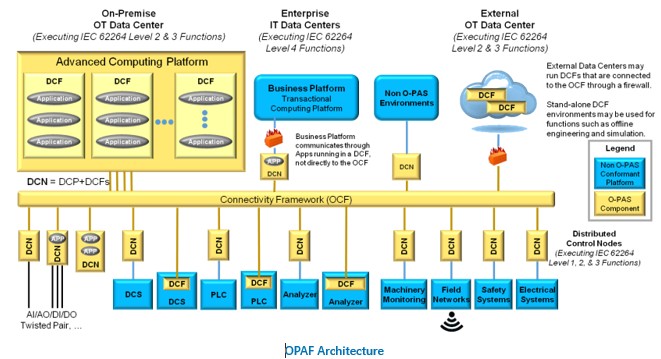
The convergence of IT and OT has introduced virtualization into industrial systems, offering scalability, cost savings, and centralized control. However, it blurs IT/OT boundaries, requiring professionals skilled in both—often a scarce resource. Virtualized control systems must deliver real-time, deterministic performance, posing challenges for traditional IT setups. Managing reliability, virtual machines, hypervisors, and network segmentation adds further complexity to this hybrid environment.
Modernizing legacy DCS infrastructures presents major challenges. Many older systems lack interoperability, rely on outdated protocols, and were not designed for cybersecurity or cloud integration. Upgrading to support edge computing or advanced analytics requires careful planning and entails operational risks.
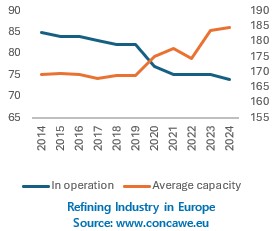
For example, in Europe, the number of refineries has declined, even as average capacity has increased—driven by digital upgrades and optimization—intensifying integration, compliance, and cybersecurity challenges for legacy systems.
As companies integrate advanced technologies into brownfield operations, they face growing compliance risks. Regulations like IEC 62443 (cybersecurity), ISA 84 (process safety), and environmental mandates impose strict requirements. Introducing cloud-based tools can conflict with data residency laws—for example, EU regulations often require that operational data remain within EU borders. Similarly, modifying control logic to support AI-driven decisions may unintentionally violate safety integrity levels (SIL) defined in existing SIS configurations. Ensuring compliance while modernizing legacy systems demands careful governance and cross-functional coordination.
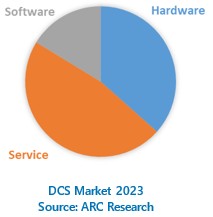
Managing DCS systems has become more complex due to the integration of safety systems, PLCs, IIoT sensors, and cloud technologies. This increased complexity often leads to additional operational and financial challenges. To tackle these issues, many organizations choose structured, long-term Lifecycle Service Contracts for DCS. These contracts are flexible and scalable, allowing them to meet different customer needs and system conditions. By offering tailored support throughout the system lifecycle, they help ensure consistent performance, lower risks, and build long-term value. Siemens has effectively applied this approach, helping customers maintain stability and efficiency as their automation environments change. According to ARC’s latest DCS market research, services represent the largest revenue share, highlighting their importance across the technology lifecycle.
Coordinating operations across different layers of an industrial facility, from field-level instrumentation to enterprise resource planning, has become essential for modern manufacturing. For customers, this broad coverage means fewer integration risks, faster deployment times, and better service across all operational levels, from sensors and controllers on the plant floor to enterprise-level planning and logistics systems. This unified approach simplifies decision making, reduces reliance on multiple vendors, and keeps both technical and business goals consistent throughout the system’s lifecycle.
On the production side, Siemens offers smart field devices, sensors, and actuators that monitor and control physical processes. These components work smoothly with Siemens’ automation platforms, including PLC, DCS, and SCADA systems, to ensure real-time process control.
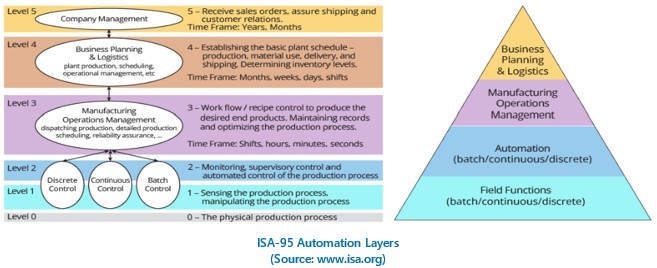
Above the control layer, Siemens provides robust manufacturing operations tools through its Opcenter MES suite. These solutions help coordinate workflows, track batches, ensure quality, and manage production execution, all of which are crucial for high-performance and compliance-focused environments.
For business-level integration, Siemens enables secure data flow between manufacturing systems and enterprise platforms, including ERP. This ensures real-time insights, reliable data exchange, and stronger connectivity between production operations and enterprise-level decision making.
This complete coverage means that lifecycle services from Siemens extend beyond equipment maintenance or system support. They are designed to ensure everything from production uptime to digital transformation stays on track, bringing consistency, speed, and simplicity to even the most complex operations.
Lifecycle Service Contracts offer clear and practical roadmaps for system modernization. Organizations can plan their hardware and software upgrades based on these guidelines. Siemens takes an "evergreen" approach by gradually implementing upgrades, which minimizes disruptions that usually come with large-scale projects. This incremental method helps customers understand timelines, expenses, and necessary actions, improving their ability to maintain stable and predictable operations in line with the Namur recommendation NE 121 “Quality Assurance of Control Systems.”
Throughout the Lifecycle Service Contract, Siemens conducts comprehensive annual reviews to evaluate and enhance maintenance strategies. These reviews focus on analyzing asset performance data, identifying areas for optimization, and implementing proactive measures to improve reliability
and efficiency. By continuously refining maintenance practices, Siemens ensures that the system operates at the required performance level, supporting long-term operational excellence and customer satisfaction. This ongoing improvement process is a key element of Siemens’ commitment to service quality.
Navigating regulations like IEC 62443, NIS 2 or the Cyber Resilience Act can be complex. Lifecycle Service Contracts handle these compliance needs through continuous patch management, vulnerability assessments, and regular cybersecurity audits. Siemens keeps customers informed about regulatory updates, helping their systems remain compliant and secure throughout the contract period.
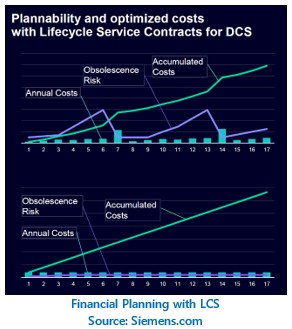
Structured Lifecycle Service Contracts offer long-term financial clarity and cost predictability for system owners. Siemens provides a variety of payment models to suit customer needs, including flat-rate pricing, staged payments, and subscription plans. These options allow organizations to spread their investment evenly over the entire contract period, which can last up to 15 years. This avoids sudden budget increases during major system upgrades. This method makes financial planning easier, supports transitions from CAPEX to OPEX, and gives customers greater control over managing lifecycle costs.
Industrial organizations today face a rapidly changing environment. New technologies, shifting regulations, and growing system complexity require companies to respond more quickly than ever. In this setting, lifecycle services are not just an extra feature; they are essential for building resilience, fostering innovation, and ensuring long-term competitiveness.
The value of lifecycle service contracts lies in their ability to turn complexity into clarity. With clear roadmaps, proactive compliance management, and ongoing updates, they help keep systems reliable, secure, and in line with the latest standards. This stability allows for safe operations while providing the flexibility to seize new opportunities without interruptions.
Lifecycle services play a key role in helping organizations remain competitive as industries continue to transform. By embedding adaptability into the heart of operations, they enable companies to navigate uncertainty with confidence, safeguard critical assets, and turn technological change into sustainable advantage.
ARC Advisory Group clients can view the complete report at the ARC Client Portal.
Contact Us if you would like to speak with the author.
Obtain more ARC In-depth Research Market Analysis.