Representative End User Clients







Representative Automation Clients







Representative Software Clients








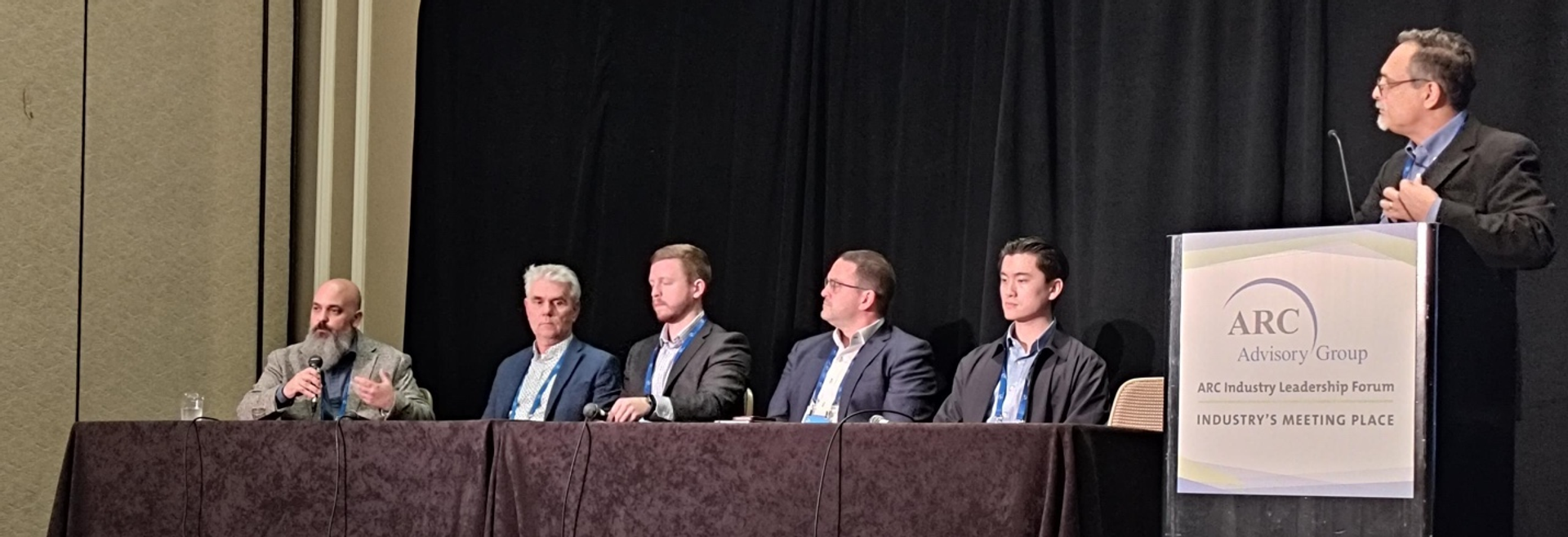
Earlier this year, leaders from across the global automation community gathered at the ARC Industry Leadership Forum 2026 in Orlando, Florida. The annual forum continues to serve as a platform where technology providers, industrial operators, and analysts assess the direction of industrial automation.
A central theme in this year’s discussions was the convergence of software-defined automation and Industrial AI, and how this combination is enabling more autonomous plant operations.
Huize Zhang, Vice President of Research and Development of SUPCON International Business, participated in a panel exploring what it will take to move from today’s automated plants toward more autonomous operations.
For decades, industrial automation has focused on stability, safety, and reliability. Distributed control systems have played a central role in achieving these goals. However, the next phase of industrial evolution requires systems that are not only stable but also adaptive, data-driven, and capable of continuous optimization.
Autonomous operations depend on the ability to interpret real-time industrial data, detect emerging patterns, and translate those insights into actions that improve performance. This requires tightly integrated architectures that combine control systems, optimization frameworks, and domain expertise.
As Zhang explained during the discussion, “Industrial AI refers to closed-loop optimization based on the mixture of machine learning and first principle optimizers like MPC.”
A major barrier to autonomy is the fragmented nature of existing industrial environments. Many plants operate with multiple generations of systems, often from different vendors, that were not designed to work together as a unified architecture.
This fragmentation affects both data and control layers. Without a consistent data foundation and a flexible control architecture that captures real-time process context, deploying advanced AI models becomes significantly more difficult.
Open, modular architectures are emerging as a key enabler of this transition.
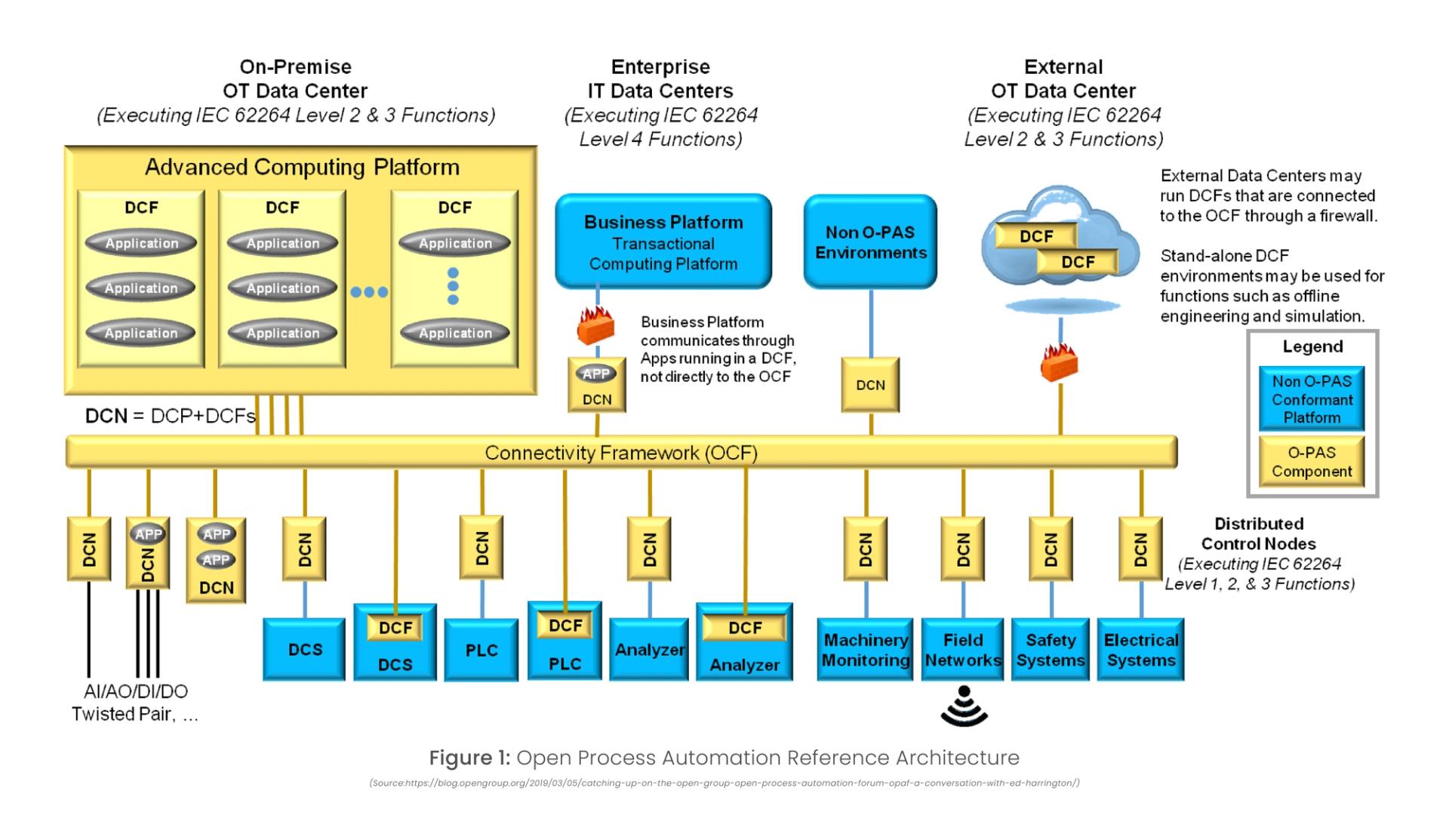
Frameworks such as O-PAS promote interoperability and allow different components to operate within a shared architecture rather than as tightly coupled proprietary systems.
This shift is closely linked to the rise of software-defined automation. Traditional automation systems bind software tightly to hardware, limiting flexibility. In contrast, software-defined approaches decouple control applications from physical infrastructure, enabling greater scalability and adaptability.
SUPCON’s Universal Control System (UCS) reflects this direction by enabling a more flexible environment where control, optimization, and AI-driven applications can coexist.
Zhang noted, “The best advantage that a virtualized software-based control system can bring to our end user is the computer power.”
SUPCON’s approach combines its UCS platform with AI-driven optimization to create a more integrated operational environment.
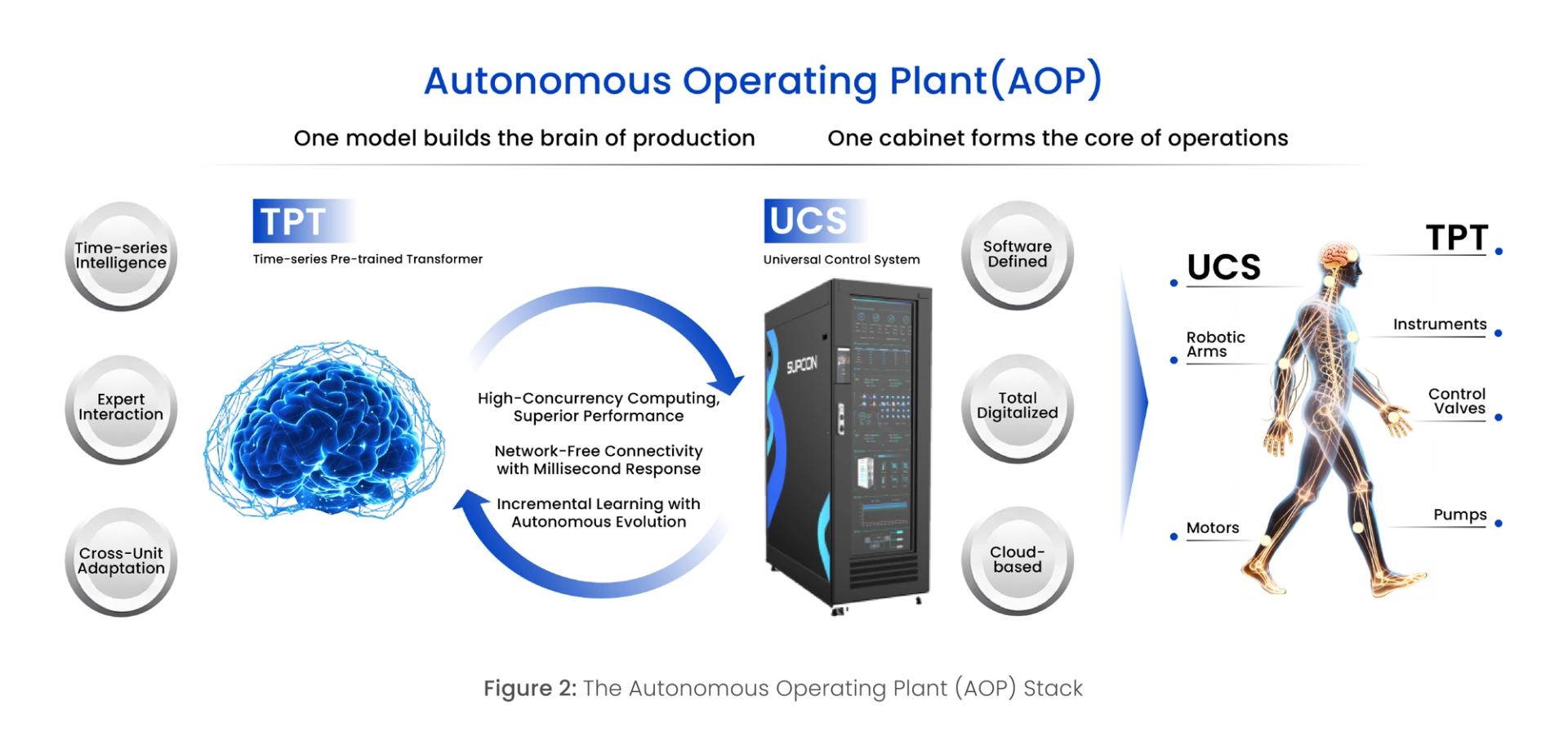
By separating control functionality from hardware and combining it with AI-based optimization, this architecture enables closer alignment between control and decision-making layers.
Industrial data presents unique challenges. Most industrial data exists as time-series data representing continuous physical processes.
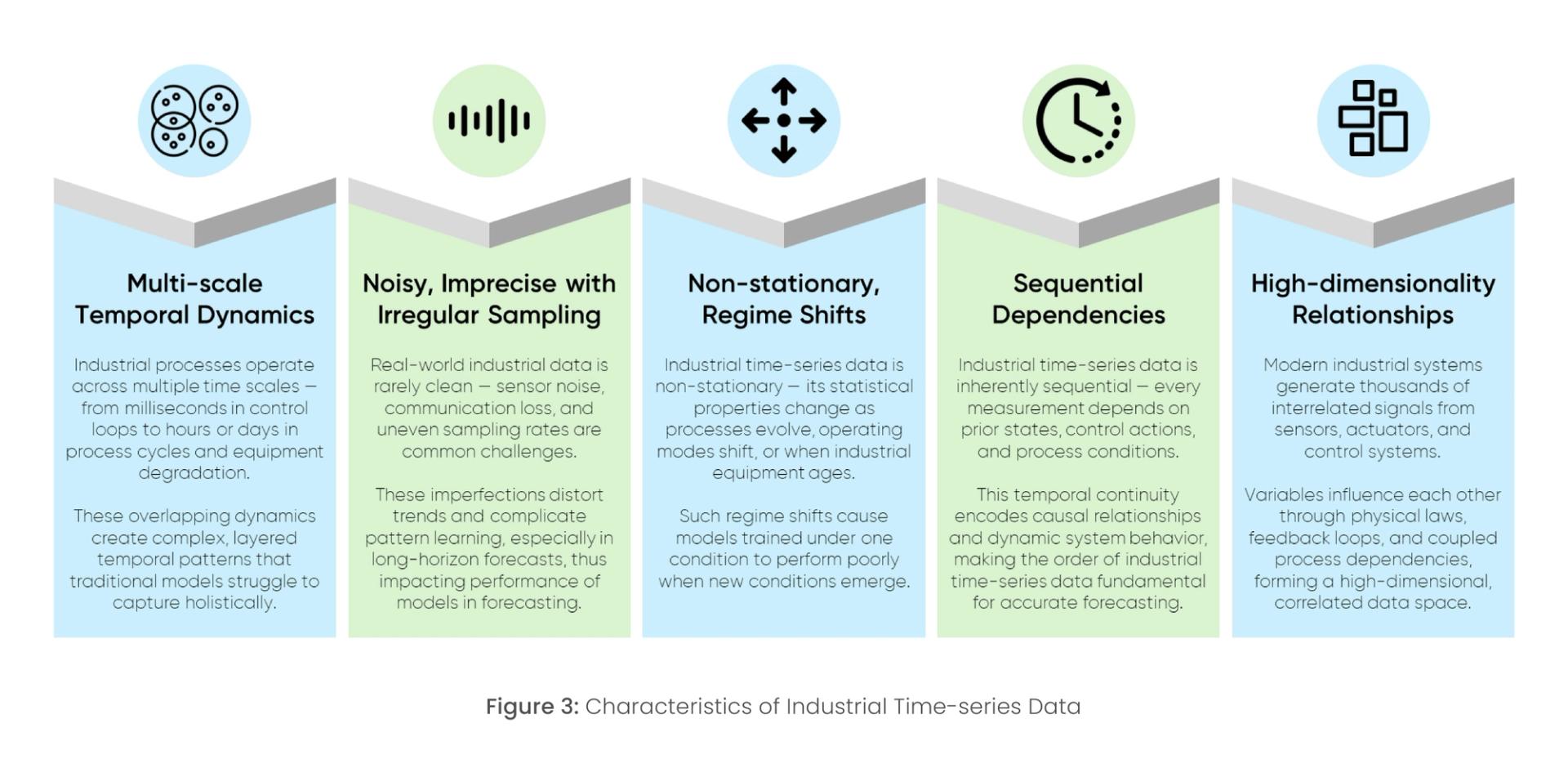
These datasets are often noisy, high-dimensional, and context-dependent, requiring models that can handle complex temporal relationships.
SUPCON’s Time-series Pre-trained Transformer (TPT) models are designed to address these challenges and support real-time optimization.
As Zhang noted, “We got more than 100 projects on the run… and we see those AI-based or machine learning-based algorithms really shine through their capability of handling uncertainties.”
The combination of AI models with control systems is beginning to show measurable impact in real-world applications.
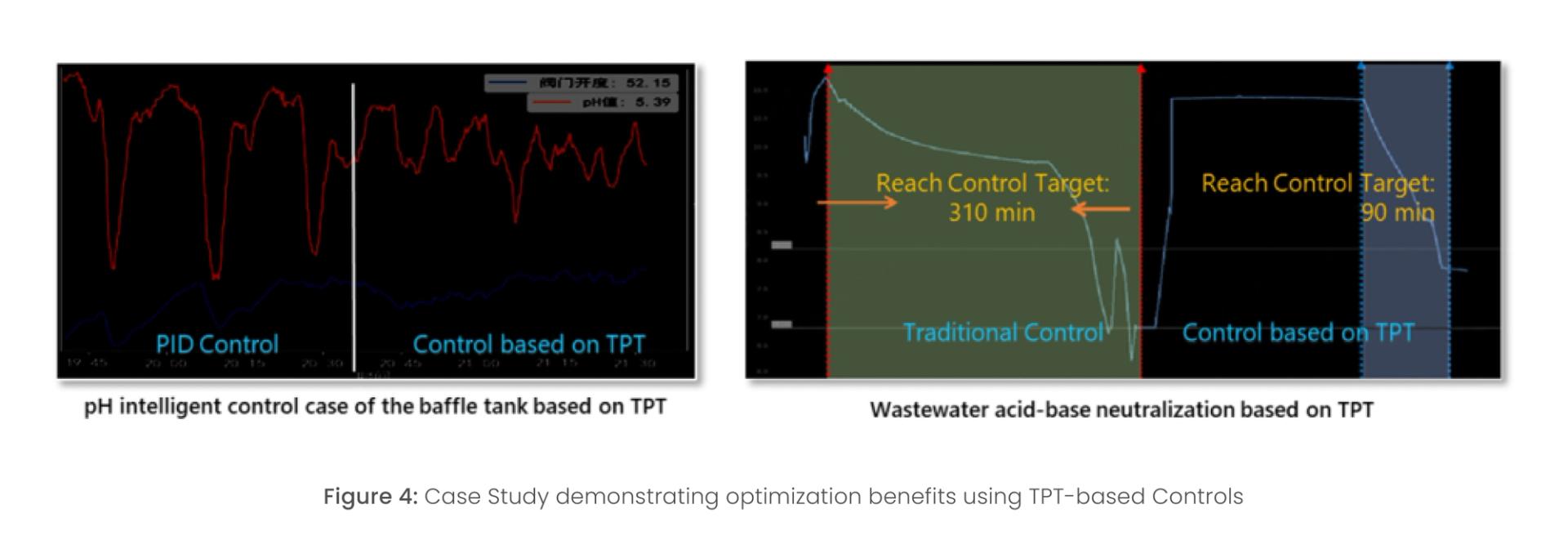
These examples highlight how AI-based control approaches can improve response times, stabilize processes more effectively, and enhance overall operational efficiency compared to traditional control methods.
Edge systems are becoming increasingly important in supporting Industrial AI. Technologies such as online analyzers are evolving from monitoring tools into critical data sources that feed real-time inputs into optimization models.
At the same time, advancements in industrial networking are enabling more reliable data flow across edge, control, and cloud environments.
The conversations at the ARC Industry Leadership Forum suggest that the industry has moved beyond conceptual discussions of autonomy. The focus is now on how quickly organizations can build the foundations required to support autonomous operations.
That foundation includes open architectures, software-defined control systems, robust data infrastructure, and Industrial AI models grounded in domain expertise.
As SUPCON and others continue to develop these capabilities, the transition toward autonomous operating plants is likely to accelerate. The journey remains complex, but the building blocks are increasingly in place.
Read SUPCON's blog: Towards Autonomous Operating Plants
Watch the full discussion on YouTube or view it here: