Representative End User Clients







Representative Automation Clients







Representative Software Clients








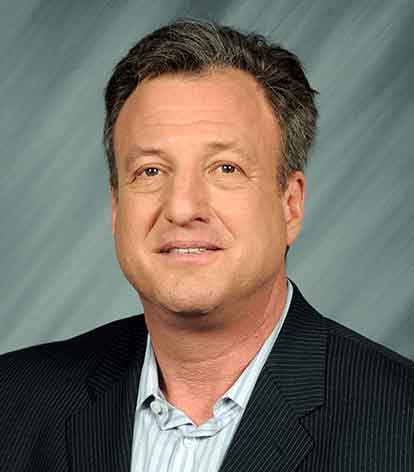
At the ARC Industry Forum 2026, Craig Resnick spoke with Elias Panasuik of Schneider Electric about how software-defined automation (SDA) is addressing persistent challenges in distributed control systems (DCS) and enabling more flexible industrial operations.
A central theme was the limitation of traditional DCS architectures. These systems have historically been tightly coupled to vendor-specific hardware cycles, where software upgrades depend on hardware availability and supply chain conditions. This creates ongoing challenges in change management, spare parts planning, and upgrade execution—often requiring planned downtime. As Panasuik noted when asked where current systems struggle, “the simple answer… is yes, all of the above.”
Schneider Electric’s approach focuses on rethinking this model from the ground up. Instead of incrementally evolving legacy systems, the emphasis is on decoupling software from hardware, enabling greater flexibility in how control applications are deployed and managed.
The discussion also explored the role of SDA in supporting IT-OT convergence. While virtualization and containerization have improved flexibility, they have not fully addressed challenges such as orchestrating data across systems or integrating equipment from multiple vendors. “We’ve really… thought this through from the ground up,” Panasuik said, highlighting a shift toward open, software-centric architectures.
This open approach allows applications to be deployed across multiple hardware targets, including third-party devices, while maintaining native connectivity to IT ecosystems. Support for widely used programming languages such as Python and Java also aligns with the broader engineering talent pool, reflecting a shift toward IT-centric development models.
Flexibility across operational environments is another key advantage. Industrial facilities often span remote assets, discrete manufacturing, and continuous processes. A common runtime across these contexts enables consistent orchestration without translation between systems. It also supports capabilities such as dynamic workload distribution, where control functions can shift across devices in the event of a failure, improving resilience.
At the same time, the operator experience remains consistent. Existing graphics, alarm systems, and workflows can be preserved, minimizing retraining. Behind the scenes, however, the system evolves from a tag-based structure to an object-oriented, event-driven model, providing greater flexibility in how logic and data are managed.
Cybersecurity was also highlighted as a critical consideration. Schneider Electric’s approach incorporates security by design, including alignment with standards such as IEC 62443. However, many risks extend beyond the control system itself, including access management, patching, and third-party device integration. To address this, the company has developed cybersecurity advisory services that focus on managing risks across the broader operational environment.
Looking ahead, openness and flexibility are expected to play a key role in enabling emerging technologies such as AI. As organizations seek to apply advanced analytics and agentic systems to operational data, seamless integration between OT and IT systems becomes increasingly important. “What excites me the most is this open flexibility that we’ve built… by design,” Panasuik said.
The discussion reflects a broader shift in industrial automation, where systems are expected to operate more like IT infrastructure—connected, interoperable, and adaptable—while continuing to meet the reliability and safety requirements of industrial environments.
Watch the full discussion on YouTube or here: