Representative End User Clients







Representative Automation Clients







Representative Software Clients








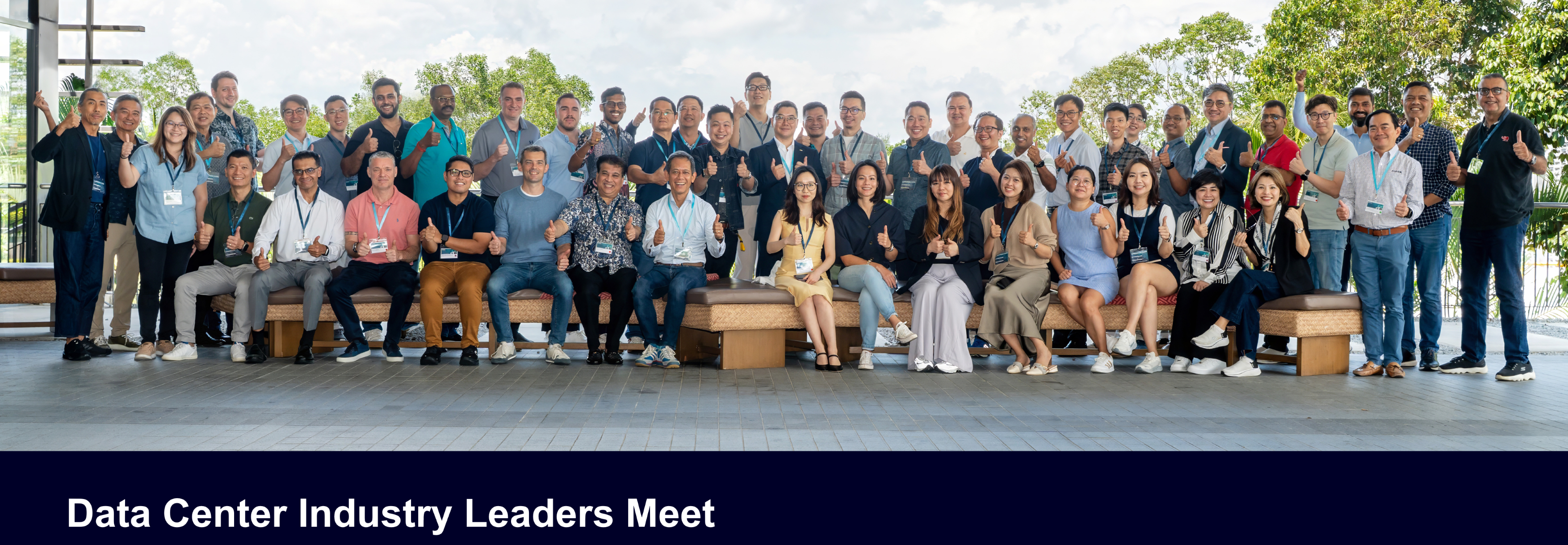
The rapid evolution of data centers across Southeast Asia was at the center of discussions at the 2nd Siemens Data Center Industry Leaders Meet, held this year in Desaru, Malaysia. Consultants, contractors, policymakers, financiers, and technology suppliers came together to explore what lies ahead for this critical digital infrastructure sector.
Through presentations, panels, and networking sessions, the event brought together and facilitated discussion of several essential perspectives, including:
Siemens’ transformation and technology offerings.
Market and policy context from a development finance lens.
Practical go‑to‑market execution for data centers in Asia.
Together, these viewpoints painted a compelling picture of an industry entering a decisive phase of growth against a backdrop of burgeoning demand.
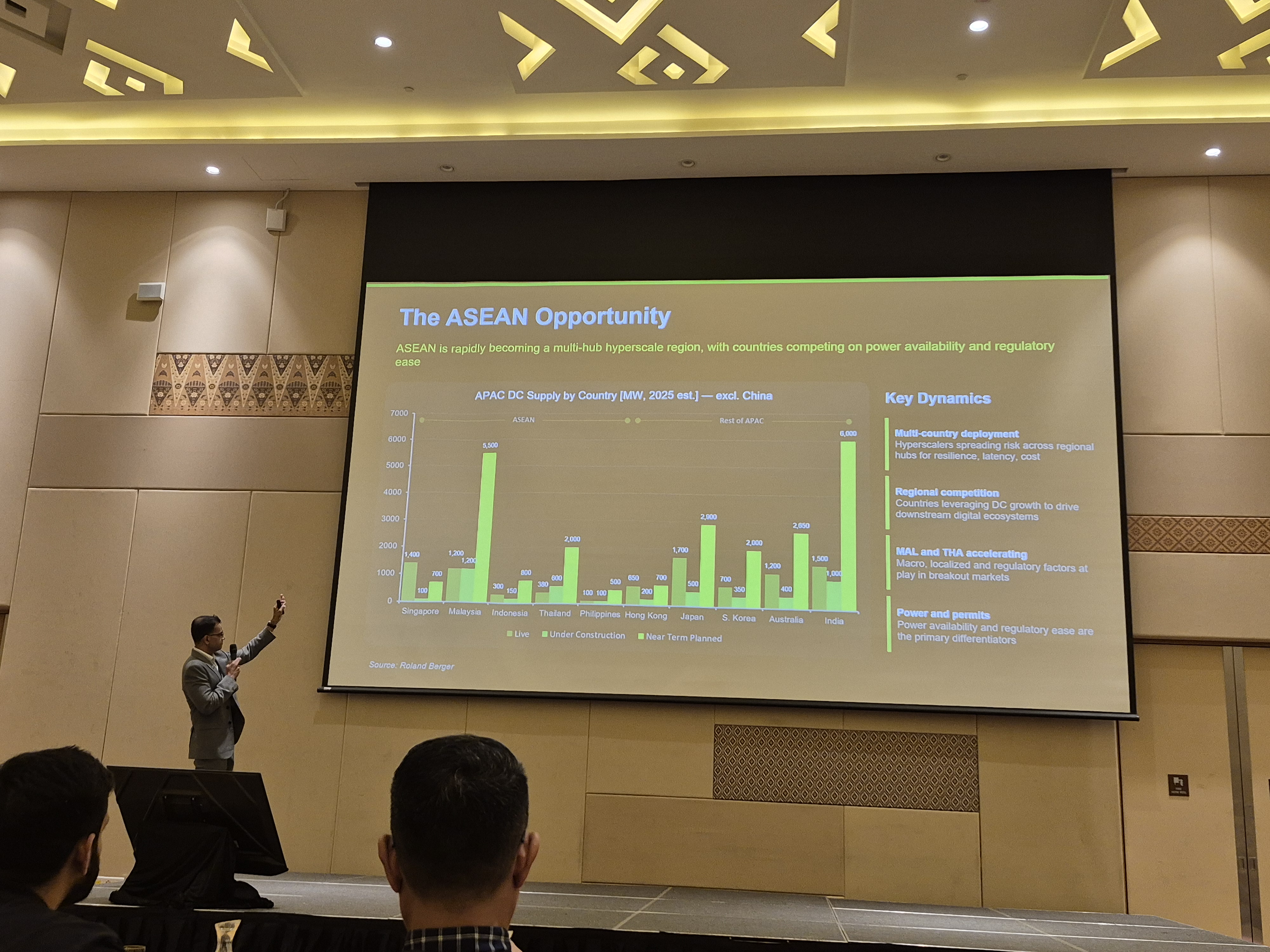
Focusing on data center investment across Southeast Asia, the presentation from Pratish Halady, Regional Head, Asian Development Bank (ADB), made it clear that the market is accelerating at an unprecedented pace.
In several key markets, including Malaysia, Indonesia, Thailand, Vietnam, and the Philippines, planned capacity over the near term is estimated to be up to four times current installed levels.
This growth is being driven by several converging forces:
The continued migration to cloud-based services
The rapid emergence of AI workloads
A growing push for data localization and sovereign digital capabilities
Proactive government policies positioning data centers as strategic national infrastructure
At the same time, as Halady emphasized, the industry faces persistent challenges, with power availability, grid readiness, and permitting processes remaining binding constraints in several markets. While power pricing itself is often workable, the mismatch between highly concentrated data center demand and distributed generation infrastructure creates bottlenecks at the local level. Permit timelines, which can extend to two years, materially impact project economics in a sector where technology cycles are shortening rapidly.
Despite these challenges, the overall outlook remains strongly positive. Governments across Southeast Asia are increasingly aligning their policy frameworks to attract digital infrastructure investment, while regional cooperation initiatives promise to reduce macro-level risk over time.
Perhaps not surprisingly, the subject of sustainability featured prominently at the Siemens Data Center Leaders Event, and not as a future aspiration, but as an immediate commercial and regulatory consideration. Energy efficiency, renewable power procurement, advanced cooling, and digital optimization are rapidly becoming baseline expectations for new data center developments.
However, advanced sustainability technologies often increase upfront capital expenditure, particularly in emerging markets, creating tension between long-term environmental performance and near-term bankability. This is where development finance institutions like the Asian Development Bank play a catalytic role.
“When we look at data centers from a development perspective, we're looking at the digital economy as a whole and how in Southeast Asia can we really help to accelerate that in a sustainable and inclusive kind of way?” said Pratish Halady.
“Renewable power sources, liquid cooling, AI-enabled optimization—we are seeing more of these in the market. But these technologies are expensive, and they can push a project from being bankable to not being bankable. Now those are areas where we can potentially help out by trying to rebalance the bankability.”
By supporting policy reform, blended finance, risk mitigation tools, and early market creation, the ADB can help bridge gaps that the commercial market cannot address alone. These interventions can unlock private capital, accelerate deployment of efficient technologies, and de-risk investment at both the macro and project level in the region.
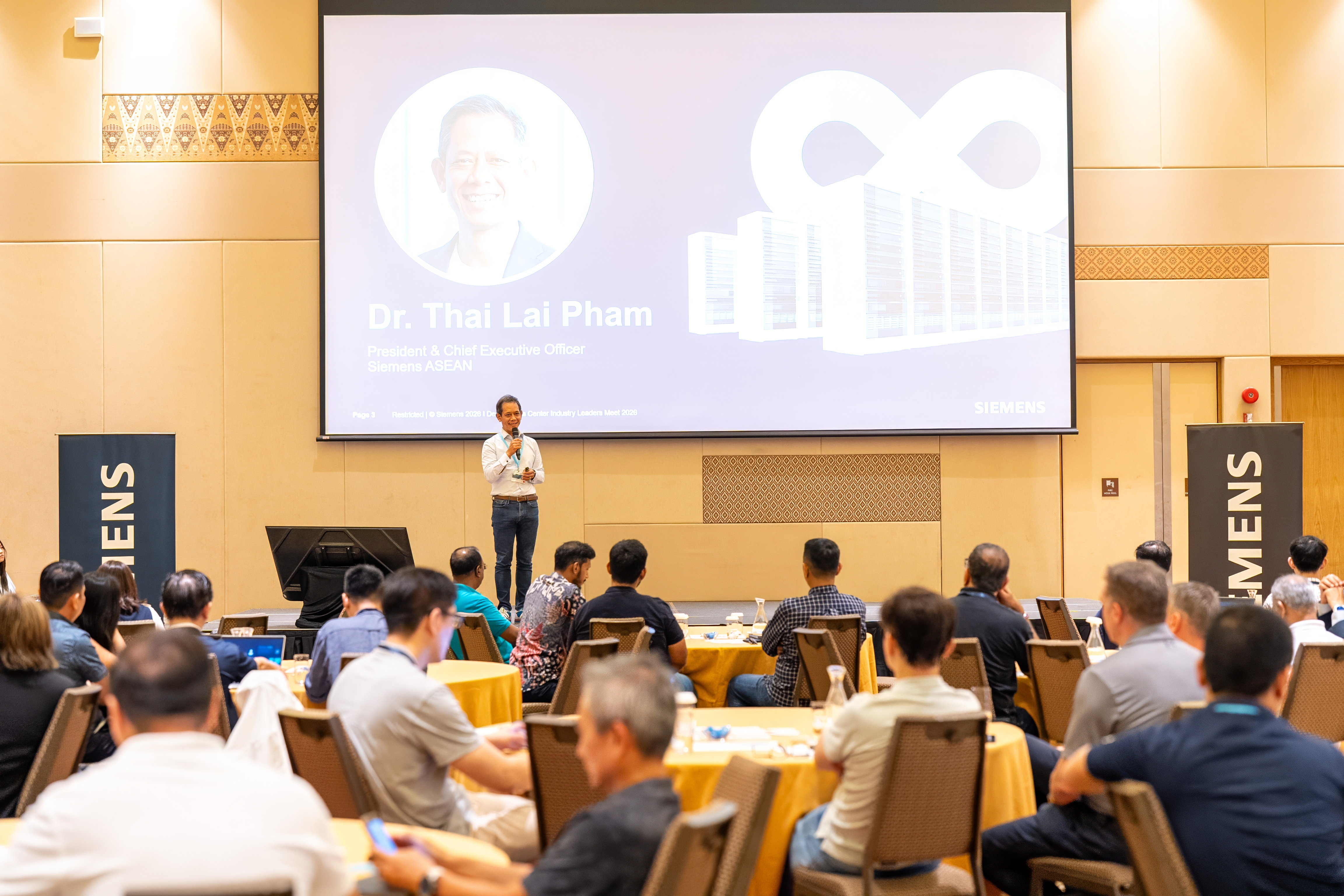
Before his Siemens colleagues took a deeper dive into Siemens’ approach and offerings for the data center industry, Dr. Thai Lai Pham, President & CEO, Siemens ASEAN, shared how over the last few years global technology giant has transformed itself into a uniquely positioned partner for the data center ecosystem.
As Dr. Lai outlined, through deliberate portfolio reshaping, including the spin-off of Siemens Healthineers and Siemens Energy, Siemens has sharpened its focus on combining the physical and digital worlds and today is a focused technology company operating across the three core businesses of Digital Industries, Smart Infrastructure, and Mobility.
This transformation is underpinned by scale and capability:
Approximately 300,000 employees globally.
Around €80 billion in annual revenue.
Among the top 10 industrial software companies worldwide.
Over €30 billion invested in digital and software capabilities since 2007.
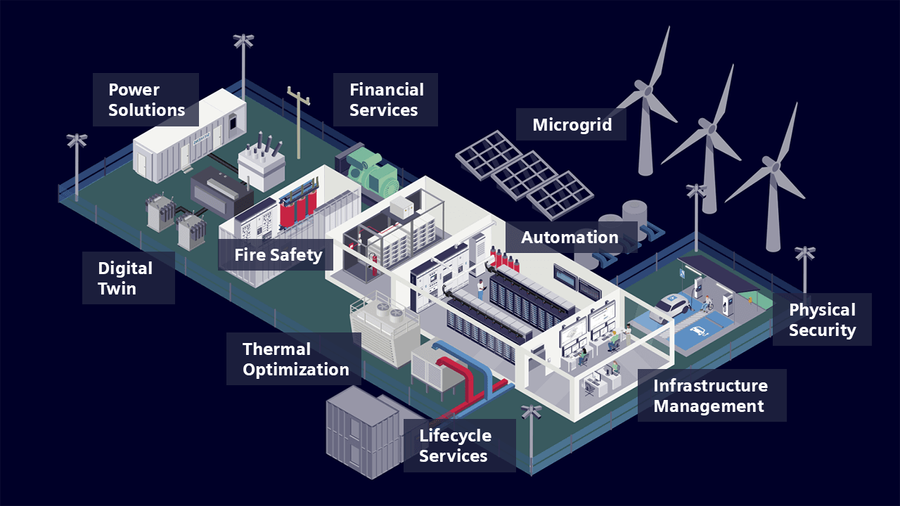
For data centers, this means Siemens brings together electrification, automation, building systems, industrial software, AI, as well as deep domain expertise. And all within a single integrated portfolio.
A key theme of the event was how AI is redefining data center design and operation. Facilities are evolving rapidly—from traditional cloud-focused architectures to AI‑enabled environments that require higher power density, advanced cooling, modularity, and sophisticated digital control.
Siemens’ strength, as articulated by Dr. Lai, lies in its ability to address this complexity holistically:
Electrification and grid connection.
Automation and building management.
Simulation, digital twins, and lifecycle optimization.
AI-driven operational intelligence.
With over 1,000 AI specialists and decades of experience applying AI in industrial contexts, Siemens views generative AI and large language models as accelerators—not disruptions—of a much longer digital journey.
Given the breadth of the company’s portfolio, which uniquely includes Siemens Financial Services alongside the technology offerings, engagement with customers and partners was previously quite complex.
“One challenge we heard repeatedly was confusion about where to engage Siemens. They told us: ‘I call one person who handles electrification but not automation, and then another person handles software but not financing’,” explained Samir Borkar, Senior Vice President & Regional Head of Data Centre Vertical Market.
To solve this, Siemens created a dedicated Data Center Capture Team – a single point of contact that coordinates internally across electrification, automation, software, and financing as a single aligned engagement model. The benefits include clear ownership and faster responses to customer specifications and project requirements.
“With our approach to data centers is built around this One Siemens model, we are prepared today to confidently engage EPCs, consultants, developers, and operators across the full data center lifecycle,“ said Borkar.
It is clear that significant data center investments are flowing into Southeast Asia, while at the same time, the region’s governments increasingly view data centers as strategic national infrastructure. The hyperscaler model is also evolving, with some companies becoming more cautious about building and owning data centers themselves, and instead, shifting back towards colocation and outsourcing models.
This trend plays well into Southeast Asia’s strengths. While this region may not yet be the world’s largest hyperscale market, it has always been a strategic one, and Siemens expects that importance to increase.
With AI on everyone’s agenda, it should be no surprise that the momentum is behind AI-enabled data centers that not only support external AI workloads with powerful hardware and infrastructure but also use AI themselves to optimize operations, making them faster, smarter, and more energy-efficient.
The presentations and discussions during this year’s Siemens Data Center Industry Leaders Meet confirm that the AI wave is real and that data center growth in the region will be strong, although not necessarily automatic. Rather, sustained success will depend on factors such as:
Power and grid readiness.
Policy and permit reform.
Sustainable design becoming standard practice.
Deep collaboration across the data center ecosystem.
By moving to a fully strategic data center engagement model and combining a broad technology portfolio, digital innovation, financial services, and strong ecosystem partnerships, Siemens aims to play a central role in shaping the next generation of resilient, efficient, and sustainable data centers in Southeast Asia. And as AI accelerates and digital economies expand, data centers will provide the foundation, which means that the conversations started at the Siemens Data Center Industry Leaders Meet 2026 are really only the beginning.