Representative End User Clients







Representative Automation Clients







Representative Software Clients








I came back from the Automate show in Chicago convinced that the automation landscape is changing. The energy was high, the crowds were dense, and there was a sense of urgency among many of the exhibitors. A strong feeling of “adapt or die.”
Over the next few posts, I’ll be sharing a series of recaps and perspectives from the show: what industrial leaders are getting right, where the hype still outruns reality, and how AI and automation are becoming central facets of the US automation strategy.
My main takeaway is simple: policy pressure, onshoring, manufacturing investment, labor constraints, and usable AI with more of the kinks worked out are now reinforcing each other instead of moving on separate tracks.

One of the strongest themes I heard, echoed in different ways by the presenters, is that manufacturing is being pushed into a new strategic posture. Onshoring is not just a political talking point; it is tied to real investment decisions, supply chain strategy, and the hard reality that manufacturers in North America need a better way to compete.
Andre Marino from Schneider put it well: The US is not going to compete with major manufacturing centers such as China on capacity or labor cost alone. If there is to be a “manufacturing renaissance” in the US, it has to win on efficiency, connectivity, and innovation. But let’s be real: a renaissance is not just more factories bolstered by federal investment. It must be better factories. If the next wave of investment only recreates yesterday’s production models in a US postal code, it will fall short.
Mike Cicco’s point added to the argument. The barrier to automation is coming down at the same time that AI is making systems easier to deploy and use. Add North American onshoring pressure to that mix, and everything starts to line up. The forces are not theoretical anymore; they are practical, visible, and increasingly urgent.
Matt Moschner offered another description of why this shift feels so consequential: the complex, brittle systems of the past were only as good as the day they were deployed. That has been the dirty secret of industrial automation for a long time. We built highly engineered systems that worked beautifully right up until the environment changed, the product changed, the labor model changed, or the market changed. Then there was an expensive rip-and-replace standing in the way of your factory and competitiveness.
Now the promise is different. Systems are becoming simpler, more robust, and able to learn and improve over time. AI makes incremental training possible. Models can be refined without turning every change into a massive reintegration exercise. That does not mean industrial automation suddenly becomes easy, as we’ve all witnessed from the first few years of AI trials and adoption. It does mean the old tradeoff between capability and flexibility is starting to break down.
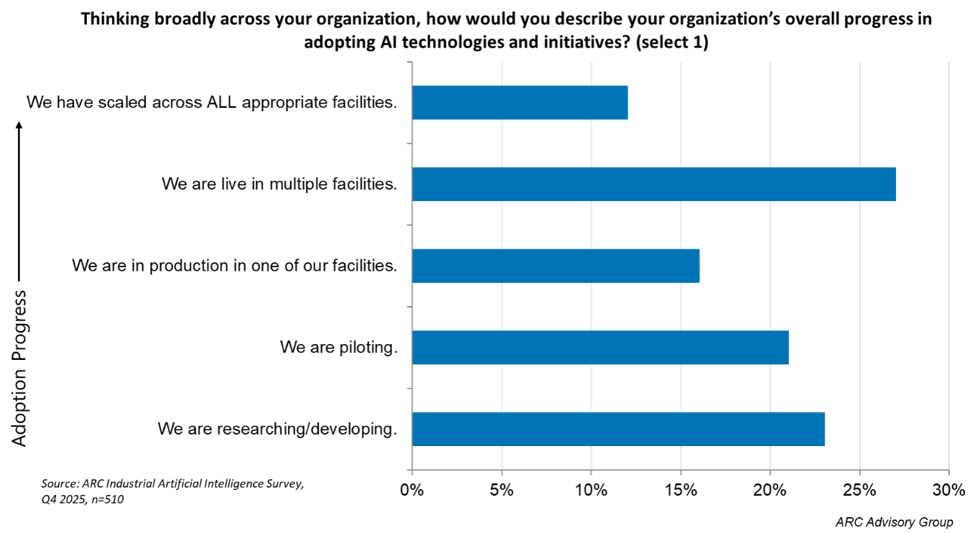
This is why I think the industry needs to stop treating AI as just another software feature. It is increasingly becoming a way to make automation less static. The real shift is not that machines are becoming more “intelligent” in the abstract. It is that automation is becoming more adaptable in practice.
If there was one phrase that kept resurfacing in different forms throughout the event, it was software-defined.
Wendy Tan’s framing was not whether AI matters, but how to make it useful in production. For a long time, the industry struggled to move from AI discussion to industrial impact. Her argument is that the time has finally come for software to leverage the assets and investments manufacturers already have and make hardware do things it could not do before. That is the essence of software-defined manufacturing: not replacing the physical world but expanding what the physical world can do.
Wendy also made another point that I think deserves more attention. The clunky user experience of traditional industrial automation systems needs to change. If industrial automation is going to scale broadly, it cannot remain an expert-only craft built on obscure workflows and heroic engineering effort. I feel her comparison to smartphones is exactly right. The next phase of adoption depends on simple workflows, ease of use, and a more standardized, software-driven path from intent to execution.
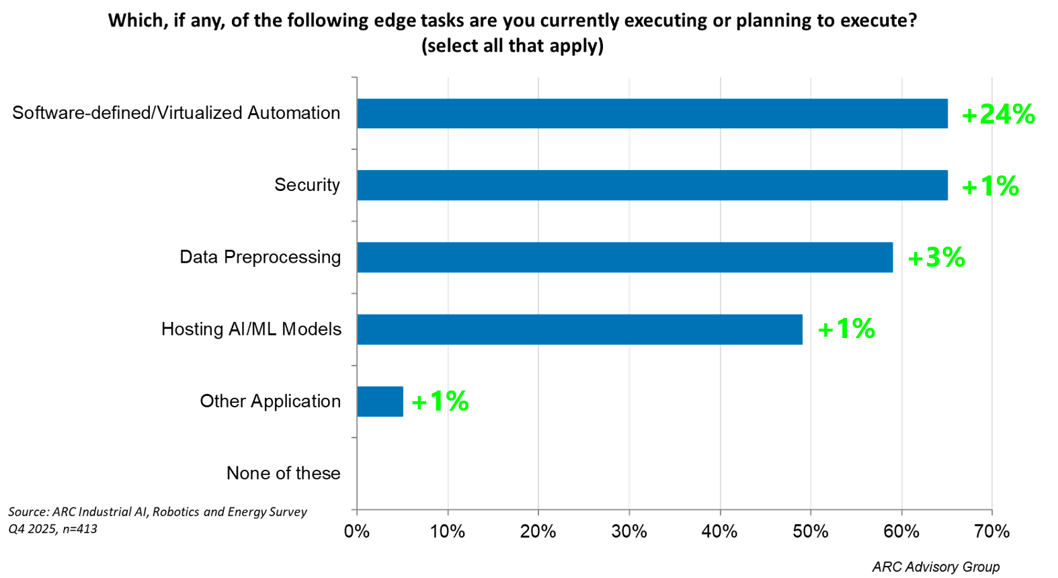
The panel described a clear sense of urgency driven by tariffs, trade disruption, workforce shortages, and general economic instability. Their response? The best way to mitigate risk is to become more agile and to automate what can be automated. In other words, uncertainty is not a reason to wait out the storm; it is a reason to move now before it’s too late.
The old model tolerated long pilots, year-long science projects, and endless experimentation because the operating environment felt more stable. If the market is moving fast, if policy is changing fast, and if supply chains remain volatile, then speed and flexibility become part of the value proposition.
Andre Marino warned against the other side of that equation: the risk of underinvesting. There is still plenty of hype in the market, and caution is healthy. But waiting too long now carries its own strategic cost.
The big questions about AI are the right ones: trust, reliability, safety, and lifecycle validation. Mike Cicco’s version of the issue is blunt: does it solve the problem, and does it work? The time to develop AI solutions may be collapsing from months to hours, but the most important question is still trust and validation across long industrial lifecycles. I love a convention floor demo as much as the next analyst, but industry adoption is a marathon, not a sprint.
Mike Cicco’s thesis is that AI should be combined with the hardcoded, reliable systems industry already trusts. This is not retreating from innovation but utilizing the most likely path to scale. Industrial AI will not win by replacing the deterministic systems in place everywhere. It will win by adding learning where learning helps and keeping hard rules where hard rules still matter.
In the posts ahead, I’ll dig deeper into several of these themes, including software-defined manufacturing, how organizations are operationalizing AI, and the future of industrial robotics.
For discussions on physical intelligence and the new wave of industrial robotics, or to offer feedback on this article, contact Patrick Arnold at [email protected].
Set up a meeting with myself and the analysts at ARC Advisory Group to find out more about our Executive Insights Service for industrial organizations, MarketMap efforts, and more.