Representative End User Clients







Representative Automation Clients







Representative Software Clients









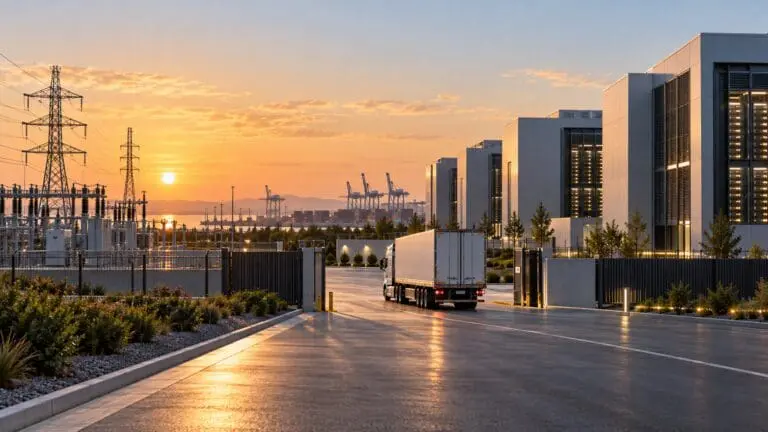
For much of the past four years, the artificial intelligence (AI) race has been framed as a competition over models, benchmarks, reasoning capabilities, and software performance. Increasingly, however, the real constraints sit beneath the software layer. AI depends on a vast physical infrastructure of semiconductors, memory, servers, networking equipment, cooling systems, transformers, power generation, transmission capacity, construction labor, and data centers. As demand grows, bottlenecks are shifting from processors to packaging, memory, power, grid access, and geography.
This makes the AI buildout increasingly resemble a logistics and network-design challenge. Compute capacity depends on many interdependent resources arriving in the right place, in the right sequence, and at sufficient scale. At the same time, enterprises are beginning to route workloads across frontier, specialized, and open models based on cost, latency, reliability, and capability—much like transportation networks match service levels to specific requirements.