Representative End User Clients







Representative Automation Clients







Representative Software Clients









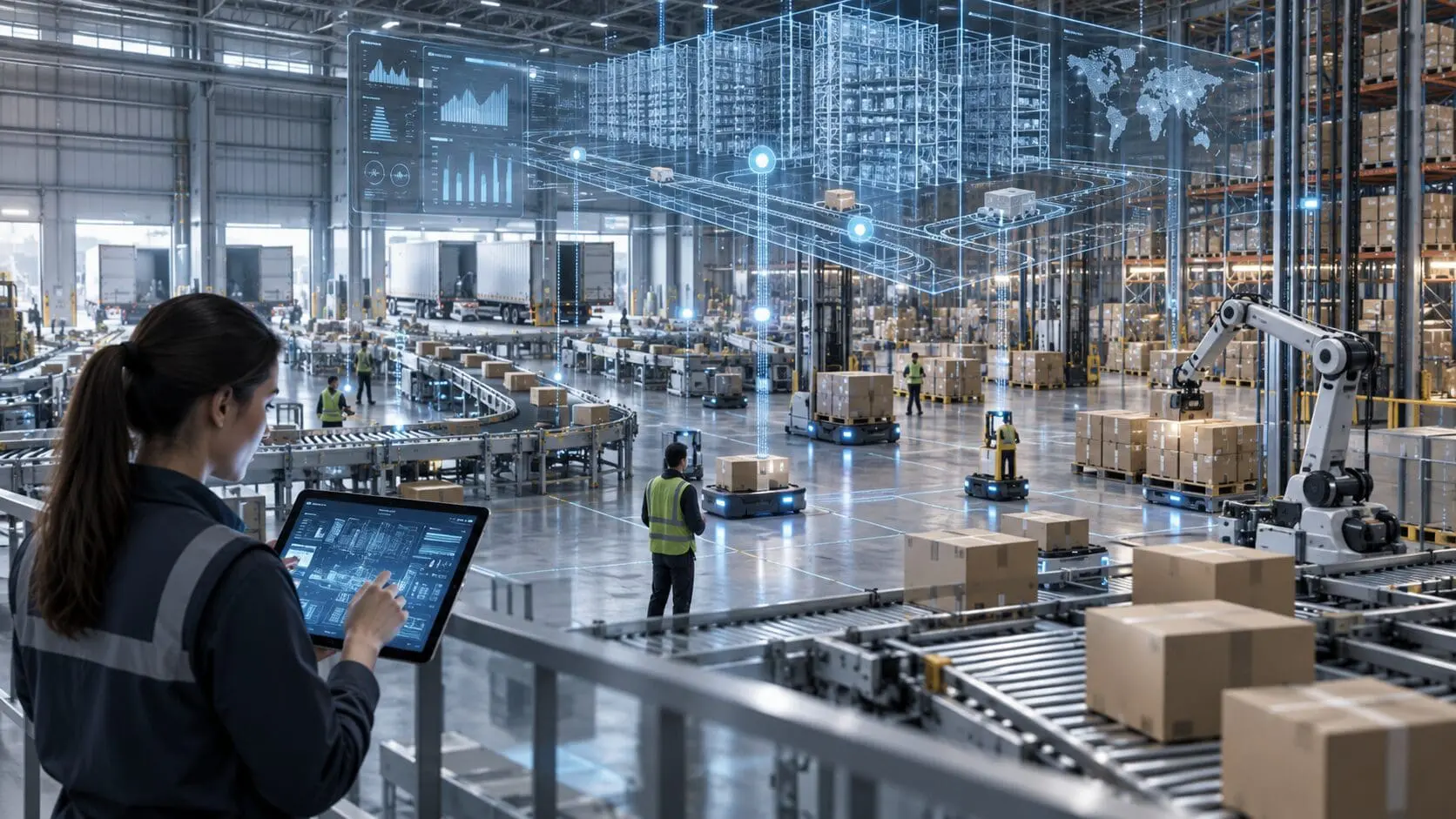
Logistics is becoming a cyber-physical system in which software, automation, sensors, machine controls, vehicles, inventory, labor, and infrastructure increasingly operate as a connected decision environment. As physical operations become more observable through scans, telematics, equipment data, and real-time events, organizations can coordinate flow, capacity, constraints, and exceptions more closely with actual operating conditions.
The strategic opportunity is not simply to add automation, but to engineer a closed loop between observation, decision-making, and execution. Digital twins, optimization, AI, WMS, TMS, and automation controls can improve asset productivity when they are designed as an integrated architecture rather than as separate technology projects.