Representative End User Clients







Representative Automation Clients







Representative Software Clients








The global valve market, a critical backbone of industrial infrastructure, is undergoing a significant transformation. While often perceived as a traditional sector, the industry is experiencing a wave of innovation driven by digitization, sustainability mandates, and the demand for operational intelligence.
Once valued strictly for their mechanical resilience, modern valves are now strategic assets capable of generating data, optimizing performance, and mitigating environmental risk. For industry leaders, utility managers, and investors, understanding these emerging trends is essential for navigating the evolving market landscape.
Here are the key forces redefining the global valve market.
The most significant shift is the digital integration of valve technology, moving from simple mechanical components to "smart" nodes within the Industrial IoT.
Smart valves are equipped with sophisticated sensors and integrated microprocessors that do far more than open and close. They continuously monitor critical parameters such as upstream and downstream pressure, flow rate, temperature, and acoustic signatures and transmit this data in real time to centralized control systems.
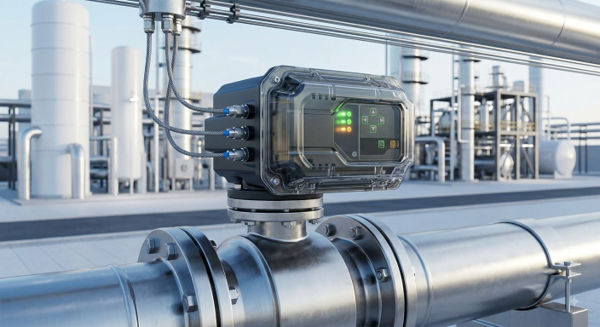
Traditional maintenance schedules are often reactive, addressing failures after they occur, or preventive, performing maintenance according to a fixed schedule. Both approaches can be inefficient. Smart valves enable predictive maintenance. By analyzing vibration and pressure anomalies, the system can predict a packing leak or actuator failure before it occurs. This can significantly reduce costly unscheduled downtime and extend the asset lifecycle.
Furthermore, real-time data allows operators to fine-tune processes for maximum energy efficiency, optimizing flow dynamics across an entire plant.
Globally, industrial operators are facing stricter environmental regulations concerning fugitive emissions. Methane leaks, volatile organic compounds (VOCs), and hazardous fluid releases are under increasing regulatory scrutiny. This pressure is a major driver shaping valve design and selection.
The valve industry has responded with the development of low-emission (Low-E) valves. These designs often utilize advanced packing systems, such as live-loaded PTFE or graphite, and improved stem finishes to minimize leakage over extended operating cycles. Specialized double-block-and-bleed systems and bellows-sealed valves are increasingly common in critical applications, serving as additional barriers between the process media and the environment.
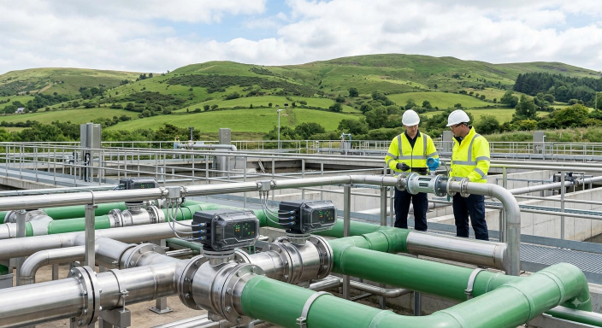
Sustainability also extends to resource management. In the water and wastewater sector, the market is shifting toward high-efficiency control valves. These are designed not just to move water, but to minimize head loss, reduce energy consumption, and manage pressure zones to help prevent pipe bursts, thereby helping address the global challenge of non-revenue water (NRW) loss.
The global valve market is also adapting to geopolitical shifts. Recent global supply chain disruptions have highlighted the vulnerability of relying on single-source, long-distance logistics. This is driving a broader trend toward regionalization and localization.
Major manufacturers are increasing investments in local casting, machining, and assembly facilities in key growth markets. By establishing "local for local" supply chains, companies can reduce lead times, mitigate tariff risks, and improve service responsiveness. This trend benefits regions such as Southeast Asia, India, and parts of the Middle East, which are expanding their localized industrial manufacturing bases.
As industrial processes push the boundaries of temperature, pressure, and chemical corrosion, standard materials are proving insufficient. Emerging trends emphasize the use of advanced engineered alloys and specialized coatings for severe-service applications.
Industries such as mining, chemical processing, and critical power generation demand valves that can survive environments where abrasion, cavitation, and extreme corrosion are routine.
The industry is seeing increased adoption of exotic materials, super-austenitic stainless steels, and ceramic linings. Innovation is particularly strong in the development of specialized coatings, such as HVOF thermal sprays or laser cladding, that can significantly improve surface hardness and chemical resistance. These materials help ensure that low-leakage performance required for environmental safety is maintained even in highly demanding operating conditions.
The global valve market is no longer a static commodity business. It is becoming a more technology-driven sector defined by digital connectivity, advanced materials science, and environmental accountability.
The emerging trends discussed here—smart monitoring, severe-service materials, low-emission designs, and localized production—are interlinked. Together, they are shifting the market's value proposition from initial purchase price toward total cost of ownership (TCO) and operational intelligence.
These ARC insights provide additional perspectives on control valves, smart industrial valves, valve actuators, and modernization across process industries.
Together, these resources provide broader context on how valve technologies are evolving to support digitalization, reliability, safety, and lifecycle performance across industrial operations.