Representative End User Clients







Representative Automation Clients







Representative Software Clients









On July 8, 2026, Nature published a study evaluating the feasibility of using general-purpose humanoid robots for minimally invasive surgery. Led by Zekai Liang, the first and corresponding author from the Jacobs School of Engineering at the University of California San Diego, the research team conducted remote teleoperation experiments using Unitree G1 humanoid robots.
The team completed laparoscopic cholecystectomy procedures in live porcine models, demonstrating the feasibility of using commercially available humanoid platforms for in vivo minimally invasive surgical tasks. The study provides an initial basis for evaluating general-purpose humanoid robots in surgical applications and offers a technical comparison with purpose-built systems such as the da Vinci Surgical System.
The research also demonstrates the potential for physical AI platforms built on general-purpose hardware to enter highly specialized medical robotics applications. However, the study remains an early-stage feasibility assessment involving animal models rather than human clinical use.
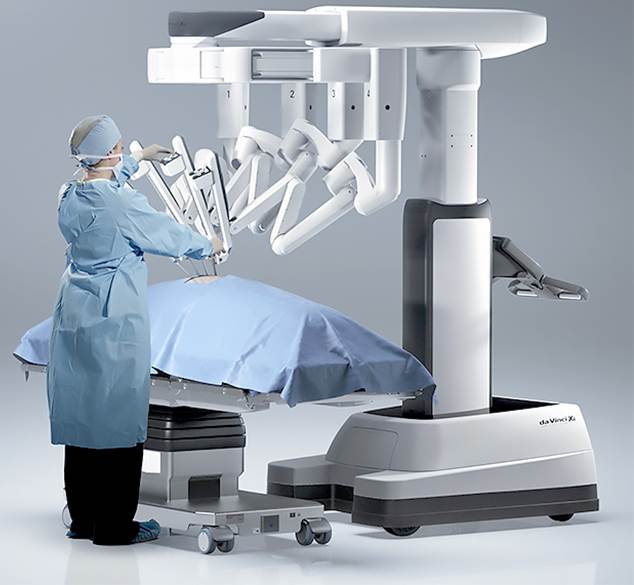
Commercialized for more than two decades, Intuitive Surgical’s da Vinci Surgical System is an established platform for robot-assisted minimally invasive surgery.
The system consists of a surgeon console, a multiarm patient cart, and a three-dimensional imaging system. Its purpose-built design includes a mechanical remote center of motion (RCM), which constrains the movement of surgical instruments around the incision point and helps reduce the risk of injury to surrounding tissue.
The system’s wristed instruments provide seven degrees of freedom and a wide range of motion. Three-dimensional magnification, motion scaling, and tremor-filtering capabilities support precise manipulation during complex surgical procedures. The seated console can also reduce physical strain on surgeons during lengthy operations.
However, the da Vinci platform uses a tightly integrated hardware and software architecture. Hospitals must account for equipment acquisition, maintenance, training, operating room requirements, and instrument and consumable costs.
The fixed system is also designed specifically for surgery and cannot readily be reassigned to unrelated hospital activities. These characteristics can limit deployment outside large medical centers with the infrastructure, personnel, and financial resources needed to support the platform.
Unlike the custom-designed hardware used by the da Vinci system, the research team selected commercially available Unitree G1 humanoid robots as the experimental platform.
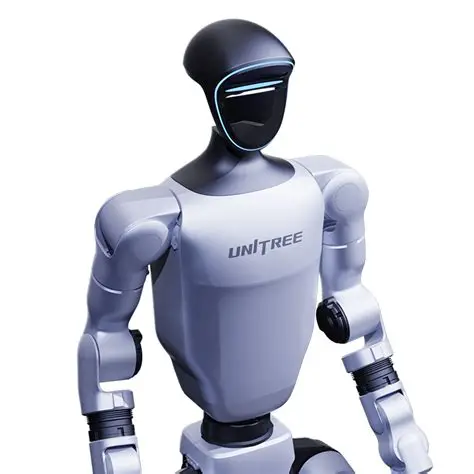
The G1 weighs approximately 35 kilograms, depending on its configuration, and stands roughly 1.3 meters tall. The researchers adapted the robots to hold standard laparoscopic instruments rather than developing an entirely proprietary surgical instrument ecosystem.
The team also developed the LapSurgie teleoperation system, which maps a surgeon’s movements to the humanoid robots using a stereoscopic head-mounted display and hand-operated controllers.
Two configurations were evaluated in live porcine procedures:
A single-humanoid configuration completed the procedure in 56 minutes.
A dual-humanoid configuration completed the procedure in 32 minutes.
The research team reported that minor bleeding and bile leakage encountered during the procedures were managed without conversion to another surgical approach. These results demonstrate technical feasibility, but they do not establish clinical safety or equivalence to an approved surgical robot.
Humanoid robots are designed to operate in spaces and interact with equipment created for people. This form factor could reduce the need to redesign every operating environment around a specialized robotic platform.
In principle, a general-purpose humanoid could also support different hospital workflows if the required manipulation, mobility, safety, and infection-control capabilities are developed and validated. These possible applications remain developmental and were not demonstrated in the surgical study.
Using a mass-produced humanoid platform could reduce dependence on highly specialized robotic hardware. The ability to work with standard laparoscopic instruments may also offer greater flexibility than systems tied exclusively to proprietary instruments.
However, the study does not establish the total cost of adapting, validating, maintaining, and regulating a humanoid platform for clinical use.
A general-purpose platform could allow researchers to experiment with different control systems, sensors, interfaces, and surgical tools.
This flexibility may support faster development and broader collaboration than closed, vertically integrated surgical robotics environments. Nevertheless, any clinical implementation would still require rigorous cybersecurity, software validation, risk management, and regulatory controls.
The study documented several limitations of the humanoid platform.
Unlike the da Vinci system, the experimental configuration did not have a native mechanical RCM structure. It instead relied on software-based virtual constraints to control instrument movement around the access point.
Additional limitations included:
Mechanical backlash in the robot’s joints.
Restricted or obstructed camera views.
Teleoperation latency.
Slower movement and lower repeatability than a dedicated surgical platform.
The absence of integrated force feedback.
Challenges associated with sterilization and infection control.
Thermal and reliability concerns during extended operation.
These limitations are particularly important in surgery, where small positioning errors, unexpected movement, delayed feedback, or equipment failure can have serious consequences.
The work has so far been limited to laboratory testing and live animal procedures. Further engineering development, verification, clinical studies, and medical device regulatory approval would be required before the technology could be considered for human use.
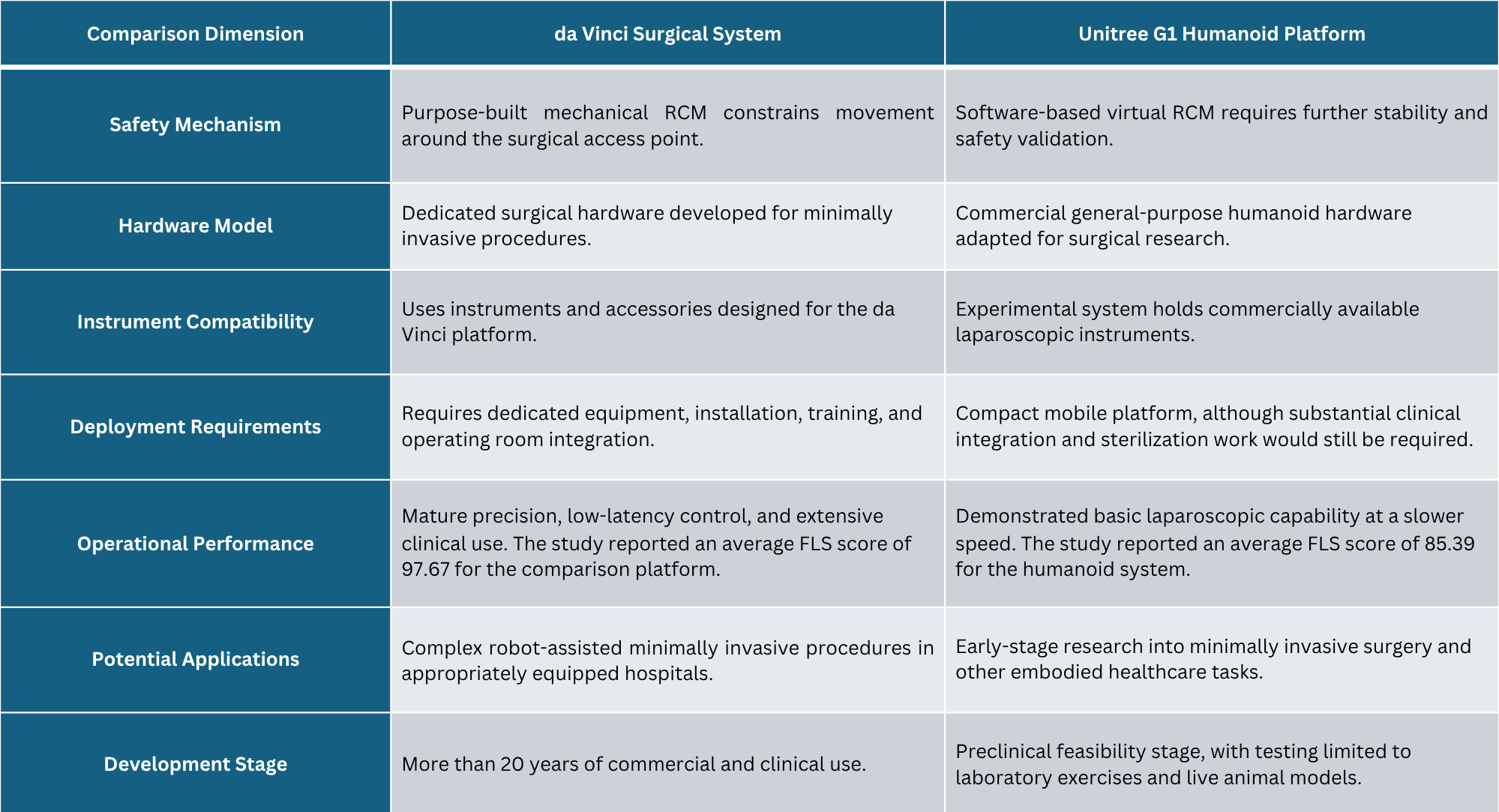
Data Source Note: The technical comparisons and Fundamentals of Laparoscopic Surgery scores are based on the July 2026 Nature study and the sources referenced by its authors. The scores represent the experimental comparison presented in that research and should not be interpreted as a comprehensive evaluation of all da Vinci or Unitree G1 configurations.
Purpose-built surgical robots and general-purpose humanoid systems currently occupy very different stages of technological and clinical maturity.
The da Vinci system remains an established platform designed specifically for robot-assisted minimally invasive surgery. Its mechanical architecture, instruments, controls, and clinical workflows have been developed and refined for surgical use.
General-purpose humanoid robots offer a different research direction. Their potential value lies in their adaptability, commercially available hardware, and ability to operate in environments designed for people. In the future, these characteristics could support a wider range of clinical and nonclinical hospital activities.
However, the Unitree G1 experiment does not demonstrate that humanoid platforms can replace dedicated surgical robots in the short terms. Instead, it shows that contemporary humanoid hardware can achieve sufficient teleoperated manipulation to perform selected minimally invasive tasks under tightly controlled experimental conditions.
The research reflects a wider transition in physical AI as humanoid systems move beyond demonstrations and begin entering structured, high-value application environments.
Relevant ARC analysis includes:
Humanoid Robots vs. Industrial Reality: What Actually Matters, which examines why cognition, reliability, integration, and business value matter more than the humanoid form alone.
Why Humanoids? Why Now?, which explores the flexibility, safety, workforce, and operational factors driving interest in humanoid robotics.
From Proof of Concept to Industrial Reality: Physical AI at CES 2026, which discusses the movement of physical AI from experimental prototypes toward real-world applications.
Navigating the Ecosystem of Industrial Humanoids: Early Movers and Key Partnerships, which examines the emerging technology and supplier ecosystem around humanoid deployment.
The surgical study represents an important feasibility milestone, but its larger significance lies in demonstrating how general-purpose physical AI platforms may eventually complement specialized automation. Progress will depend not only on improved robot intelligence and dexterity but also on safety engineering, human oversight, sterilization, reliability, cybersecurity, and regulatory approval.