Representative End User Clients







Representative Automation Clients







Representative Software Clients








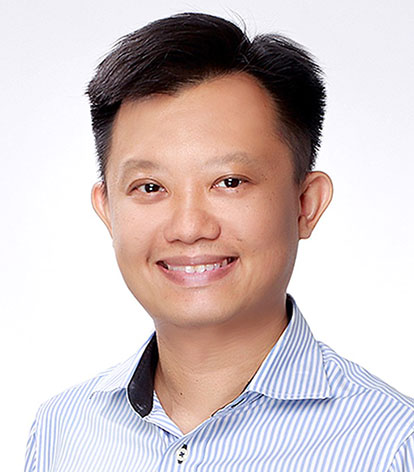

Schneider Electric Innovation Day 2025, held on February 25th in Singapore, was a dynamic event that drew participants from both industry and the public sector. The exhibition showcased Schneider Electric’s key innovations, including EcoStruxure solutions, data center technologies, industry-specific offerings, cloud solutions, software, and consulting services. The lively atmosphere reflected the strong interest in leveraging these technologies to enhance efficiency and support sustainability.
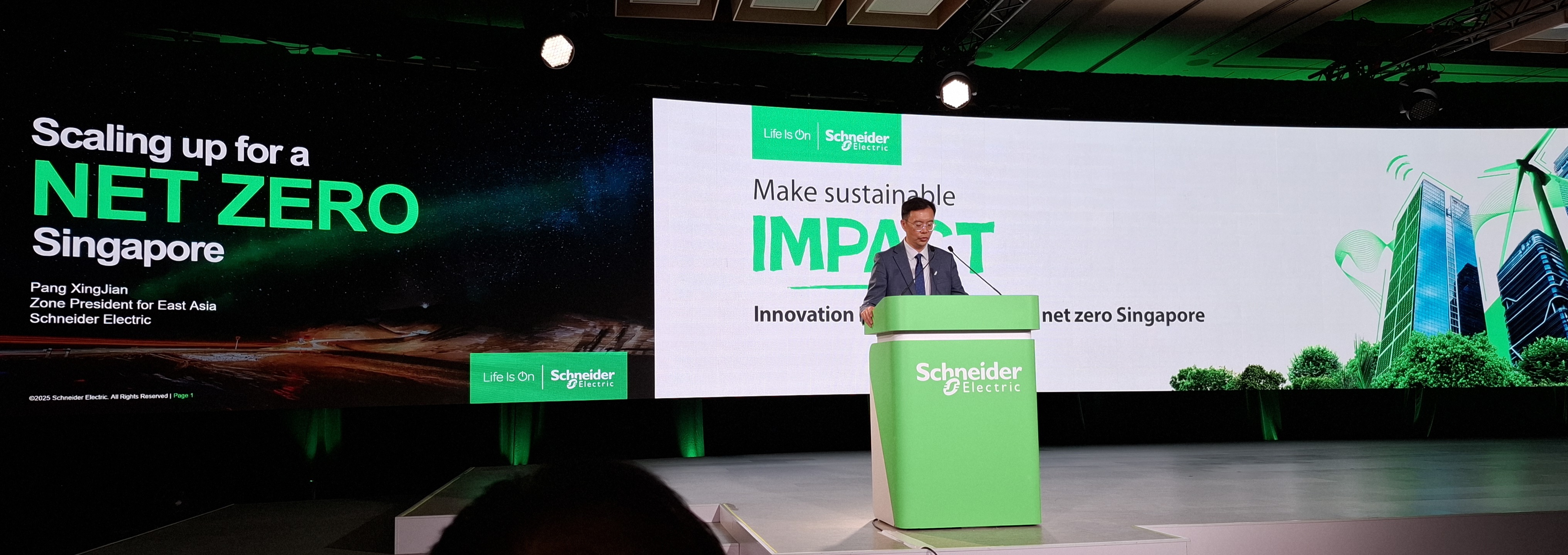
This year's theme, Scaling up for a Net Zero Singapore, set the stage for key discussions. Pang Xingjian, Zone President for East Asia, opened the event by emphasizing how digital and smart technologies can help create a more resilient, efficient, and sustainable future. He explained how digital solutions are transforming energy management, from optimizing consumption to improving decision-making with artificial intelligence (AI). Pang also emphasized Schneider Electric’s leadership in sustainability, noting its recognition as the most sustainable corporation in 2024 by Time magazine and Statista. To advance Singapore’s Net Zero goals, Pang outlined four essential actions: making bold and immediate commitments, harnessing advanced technologies, strengthening cross-sector partnerships, and investing in green talent.
Yoon Young Kim, Cluster President (Singapore, and Brunei) at Schneider Electric, further emphasized the company’s focus on sustainability and digital transformation through five key strategies: the ecosystem & partner model, a multi-hub model, a global balanced footprint, a commitment to sustainability, and fostering a culture-driven workforce. Echoing Pang’s earlier points, Yoon noted that business leaders are increasingly focusing not only on renewable energy investments, such as solar power, but also on emerging energy efficiency technologies. He shared that nearly 80 percent of CO2 reductions could be attributed to specific Schneider Electric solutions, including the use of digital twins to optimize energy use in buildings. In his concluding remarks, Yoon outlined four essential points: the role of AI and digital technologies in reducing emissions, Singapore’s ongoing infrastructure funding, the need for businesses to invest in the future, and the shared responsibility of decarbonization.
Beyond the main sessions, discussions in other theatres offered deeper insights into how technology is driving sustainability in industrial space, with presentations from several Schneider Electric representatives. K.R. Lim, East Asia Vice President of Industrial Automation, highlighted five key trends shaping the industry: climate change, shifts in global economies and supply chains, rapid digitalization and AI adoption, the transition to cleaner energy sources, and growing energy demands in regions like Asia and the Middle East. He explained how Schneider Electric’s technology portfolio is strategically positioned to address these trends, focusing on digitalization solutions that optimize energy management, improve operational efficiency, and support the global transition toward sustainability.
In a fireside chat, Kishore Natarajan, Partner/Senior Director of Digital Transformation Consulting at Schneider Electric, joined Micron representatives to discuss the energy-intensive nature of the semiconductor industry and the importance of optimizing energy usage. A Micron representative pointed out that while conventional energy-saving technologies are useful for identifying quick wins, achieving substantial long-term savings requires more advanced solutions. These technologies offer deeper insights into energy usage, optimize consumption across facilities, and drive significant cost reductions, making energy efficiency a crucial factor in enhancing overall operational profitability. Given the semiconductor industry’s high energy demands, optimizing energy use can substantially reduce operating costs, supporting both sustainability and economic efficiency.
Speaking on AI, Brian Lim, Principal Consultant, delivered a presentation on Achieving Operational Efficiency with Artificial Intelligence, emphasizing AI’s impact on decision-making, downtime reduction, and overall efficiency in manufacturing and energy management. The AVEVA industrial AI assistant was also showcased, demonstrating how generative AI enhances real-time decision-making, optimizes workflows, and drives more efficient, sustainable operations.