Representative End User Clients







Representative Automation Clients







Representative Software Clients









The ARC Advisory Group Singapore Forum took place on 7 August 2025 under the theme “Winning in the Industrial AI Era.” UniversalAutomation.Org participated as a Global Sponsor. The event drew more than 180 attendees from across the industrial automation community and highlighted the increasing role of AI and emerging technologies in the sector.
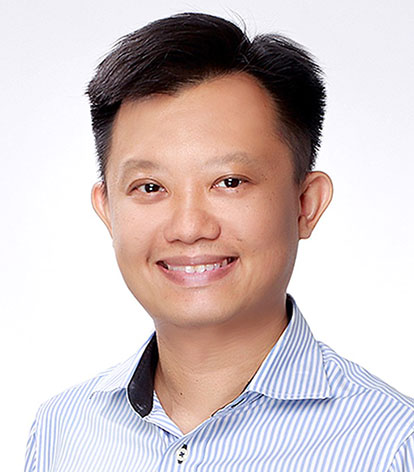
Megat Shamshul Arif, General Manager at Trisystems Engineering, delivered an insightful session on the application of IEC 61499 in offshore operations. Drawing on over two decades of experience in the automation industry, he shared a system integrator’s perspective through a detailed case study. The full presentation is available on YouTube, or you can watch it here:

UniversalAutomation.Org (UAO) is a non-profit association with 109 members, including technology vendors, end users, and academic institutions, focused on advancing software-defined industrial automation. The organization supports the IEC 61499 standard, which provides a modular, event-driven approach to distributed control, enabling flexible and interoperable automation systems. UAO’s key objective is to establish a unified runtime environment for IEC 61499-based automation, allowing members to deploy applications across different hardware platforms.
Megat shared that Trisystems Engineering has been a member of UAO for the past two to three years:
"The reason why we joined UniversalAutomation.Org is that we feel—or we know—it’s something the market will pick up. I think it’s going to be the DCS of the future—the control system of the future."

Megat shared a project involving a 30-year-old offshore platform, where Trisystems Engineering had earlier implemented a system based on IEC 61131 standards. The system—which included PLCs, RTUs, and integrated I/O modules—operated reliably for over a decade under very limited power and bandwidth in hazardous zones.
As the hardware aged, Trisystems Engineering proposed an upgrade to IEC 61499, introducing a more modern and flexible automation system. The upgrade was designed to be future-proof, supporting ongoing operational needs while improving interoperability and enabling safer deployment in hazardous areas.
The updated system includes:
Event-driven control, which reduces bandwidth usage compared with traditional scan-based PLC systems.
Edge computing for on-site data processing, enabling autonomous operation, real-time decision-making, and predictive maintenance while conserving energy and bandwidth.
Critical data for processes such as intelligent gas injection for enhanced oil recovery is processed locally at the edge, enabling real-time decision-making and predictive maintenance. Deploying model predictive control (MPC) on IEC 61499 edge devices supports local process optimization and reduces communication traffic, which is particularly valuable for offshore operations with limited power and bandwidth.
Megat also highlighted a project related to power management on a barge. The legacy system relied on decentralized, manual operations. The upgraded IEC 61499 architecture manages six diesel generator sets and I/O modules, with an HMI included for operational monitoring.
Reflecting on his early experiences, Megat recalled the days when a simple service task required a four-hour boat ride for just 15 minutes of work. “That was the technology at the time,” he said. Today, with automation technologies such as IEC 61499, systems can operate intelligently, autonomously, and support remote operations even in hazardous or hard-to-access locations. IEC 61499 provides a framework that supports interoperability and allows industrial operators to upgrade legacy systems—particularly relevant for offshore platforms where accessibility is limited and servicing is challenging.