Representative End User Clients







Representative Automation Clients







Representative Software Clients








Yokogawa Electric Corporation announced that it has entered into a distribution agreement with France-based BuyCo, a provider of a software as a service (SaaS) solution for the management of the transport of shipping containers. Under this agreement, Yokogawa will offer BuyCo’s Transportation Management System (TMS) to companies primarily in the materials industry. Through such initiatives, Yokogawa will leverage its extensive expertise in supporting manufacturing operations to optimize entire supply chains.
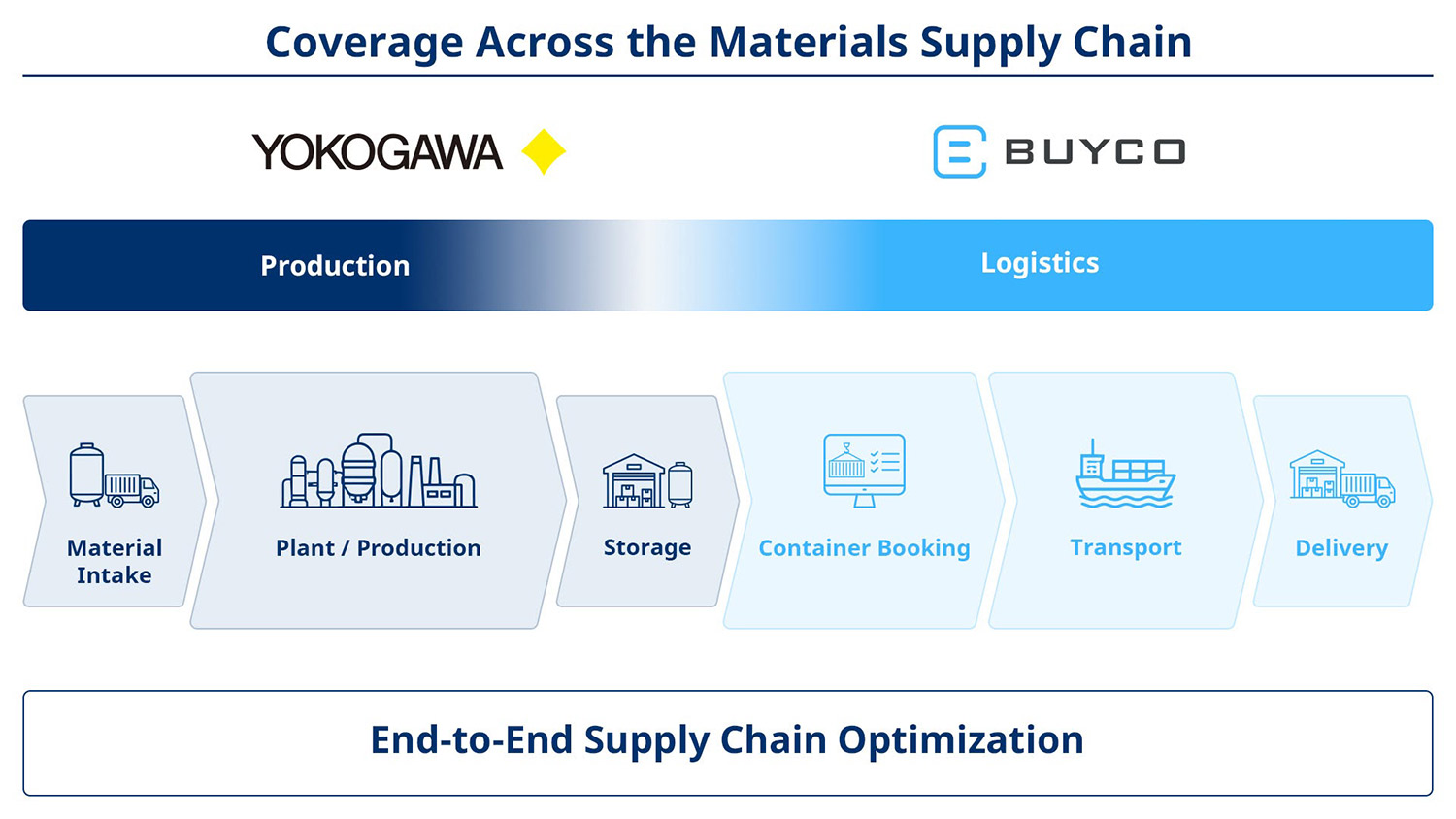
In recent years, the materials sector has had to contend with rising complexity in global supply chains, heightened geopolitical risks, and stricter environmental regulations, especially in the chemicals industry. Rising transportation costs, the need to manage and reduce greenhouse gas emissions, and the need to respond to fluctuations in demand have become key management concerns. However, in many cases, companies in these industries have not taken an integrated approach to optimize their production and logistics operations. This, combined with the need to comply with regulations on hazardous materials and handle diverse cargo types, has made it difficult to manage entire supply chains in an integrated and holistic fashion.
While Yokogawa has focused on supporting the automation and optimization of operations at individual plants in the process industries, the company is expanding the scope of its support through consulting services and digital solutions that address challenges across end-to-end supply chains connecting multiple facilities. This agreement with BuyCo represents a major step in that direction, focused on container transport management.
In developing its container transport management platform, BuyCo makes use of its extensive experience in the maritime industry. This SaaS solution enables the centralized management of container transport data, supports shipment planning and booking, visualizes shipping operations in real time, and facilitates information sharing among stakeholders. Based on cargo data, it assists in selecting shipping lines and transport routes and allows real-time door-to-door tracking.
By adopting this platform, companies can reduce logistics costs and inventory levels while improving their on-time delivery performance. It also helps mitigate the risk of cargo quality deterioration and contributes to the visualization and reduction of CO₂ emissions. Currently, over 12,000 users around the world rely on this platform.
ARC Advisory Group research and analysis continue to examine how digital technologies are reshaping transportation management, logistics execution, and end-to-end supply chain operations. Related ARC insights include:
This Week in Logistics: Freight Tightens, AI Moves into Execution, and Networks Get More Strategic
Oil and Gas Supply Chain Resilience: Protecting LNG, Refined Products, and Critical Flows
These insights provide additional context on the growing role of transportation technology, supply chain visibility, and integrated logistics management as organizations respond to increasingly complex and volatile global supply chains.