Representative End User Clients







Representative Automation Clients







Representative Software Clients








The last decade overall has been very tumultuous for the global upstream oil and gas industry, with crude oil prices per barrel nose-diving from $135 USD at its highest in 2011 to under $20 USD at its lowest in 2020. The culmination of overproduction and decline in demand due to the COVID-19 pandemic led to severe market volatility, especially in the last half. The crunch has led the oil and gas producers to actively look for opportunities to cut down operational costs and optimize plant performance.
The last decade has also been transcending with disruptions and breakthroughs from conventional technology and practices. There is a growing emphasis on operational data-driven decision-making amongst process plant operators, especially in plant maintenance for asset condition monitoring and performance management. This digital transformation wave across process plants has also led to the migration from conventional mechanical and electro-mechanical technology to advanced electronic field devices with operational data transmission and storage capability.
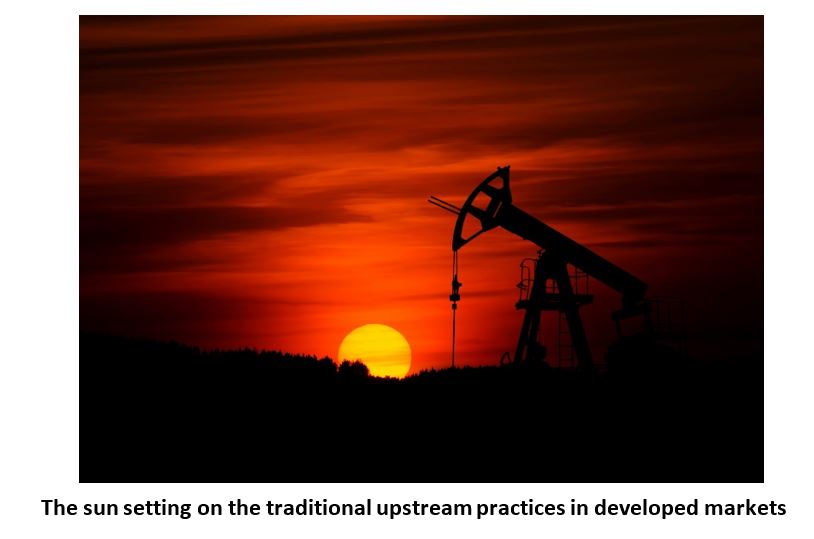
Historically, the global upstream sector has been very traditional and hesitant to embrace new technology, unlike other process industries. This is also because the upstream sector is riddled with challenges, such as sensitive media, extreme temperature and pressure, remote locations with harsh environmental conditions, filed standardization issues, and an ageing existing plant base and workforce, to name a few. The upstream flow control actuation requirements range from heavy-duty isolation in Xmas trees and kill rigs in extraction application to continuous modulation in choke and dump valves for separation and processing applications. Traditionally, pneumatic and hydraulic actuators are widely used for valve actuation in upstream field operations. Although fluid power actuators have improved over time, the data being monitored is still basic, such as valve status, pressure, and flow conditions, resulting in reactive maintenance techniques
There is an increasing level of automation in process fields among upstream users/operators to monitor and control field operations from a central location. With the concept of digital oilfields and digital twins gaining popularity amongst users/operators, there is an increasing need for operational data being captured from field assets for well production optimization, forecasting, asset condition monitoring and performance management. Retrofitting a digital positioner on an existing modulating fluid-powered actuator may address the precision control and operational data transmission-related requirements. However, this comes at the higher expense for an additional product with a digital positioner costing close to the price of a new electric actuator in several instances. This substitute might be a feasible option for the existing base. However, for greenfield applications or new actuator purchases, a new age electric actuator with brushless dc motors, operational data storage and transmission and other advanced functionalities, would make a stark difference in operational benefits and total cost of ownership.
Few of the key benefits of new-age electric actuators are: