Representative End User Clients







Representative Automation Clients







Representative Software Clients









ARC Advisory Group recently completed an update to our ongoing coverage of the industrial Ethernet switch (IES) marketplace. These findings reveal that the IES business experienced tremendous growth in 2022 and 2023, with some individual suppliers achieving historic revenue highs. Forecast prospects foretell a significant change, however.
The IES business experienced annual growth of over 20 percent in both 2022 and 2023 as both customers and channel partners padded inventories due to fear of continued supply chain-driven product scarcities. Most IES suppliers likewise witnessed historic growth in either 2022 or 2023, depending on the timeline of impact for component scarcity, ultimate ability to fulfill multi-month order backlogs, and successful implementation of concurrent price increases.
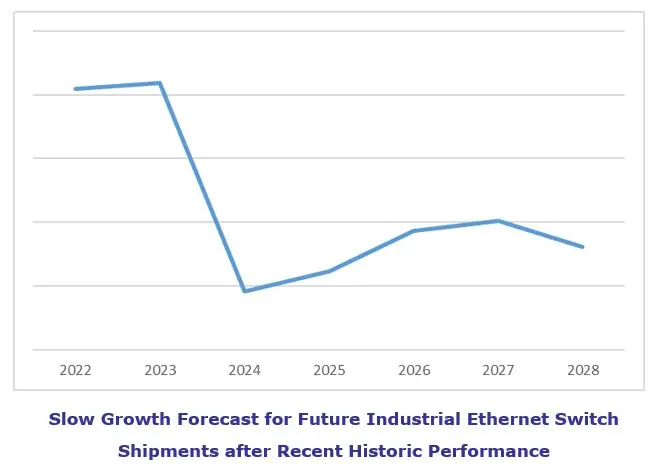
This growth was short-lived, however, with the order pipeline drying up starting in the second half of 2023 and now into 2024. Macroeconomic indicators, including production, order, and price indices, inflation, rising interest rates, a tight labor market, exchange rate fluctuations, ongoing geographic conflicts, and pending elections continue to impact growth prospects. Market headwinds driven by customer and channel inventory destocking and cautious investment by customers in key served markets faced with declining demand are also contributing to ongoing significant order slowdowns. Price increases previously driven by both supply chain constraints and inflation are likewise unsustainable in the current environment, further dampening prospects for near-term growth.
Material for this blog post was generated from ARC’s latest Industrial Ethernet Switches Market Outlook update that includes 2023 market size, shares, and forecast as well as shipments and forecasts by region, industry, switch type, hardware vs. software and services, and support for layer 2 versus layer 3. A more detailed market analysis covering media type, bandwidth, TSN, SPE, APL, PoE, protocols, form factor, and other segmentations is also available.
Further information on ARC’s coverage of the industrial network infrastructure marketplace and the industrial IoT edge hardware and software is available here.