Representative End User Clients







Representative Automation Clients







Representative Software Clients









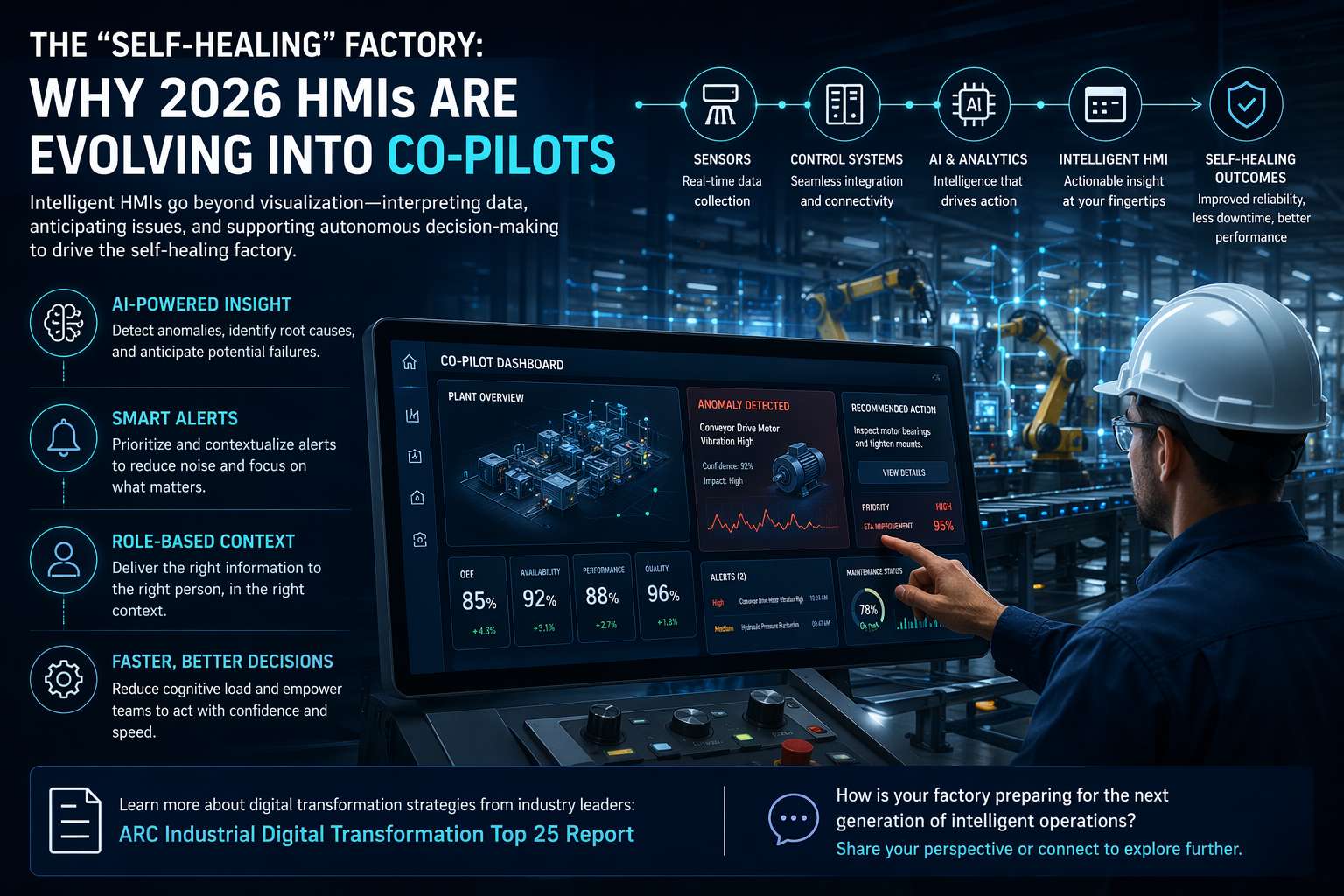
In today’s fast-paced industrial landscape, the cost of unexpected downtime can be significant—not only in lost production, but also in missed deliveries, strained customer relationships, and increased operational stress. Traditional human-machine interfaces (HMIs), once designed primarily for data visualization, are no longer sufficient to meet the demands of modern manufacturing.
In 2026, HMIs are undergoing a fundamental transformation. They are evolving into intelligent co-pilots—systems that not only display information but also interpret it, anticipate issues, and support autonomous decision-making. This shift is contributing to the emergence of what many refer to as the “self-healing” factory.
Modern HMIs are becoming increasingly intuitive and context-aware. By integrating with sensors, control systems, and AI algorithms, these interfaces can detect anomalies, prioritize alerts, and adapt displays based on the user’s role and operational context. This helps reduce cognitive load, improve responsiveness, and support faster, more informed decision-making on the shop floor.
As manufacturers continue their digital transformation initiatives, intelligent HMIs are playing an increasingly important role in improving equipment reliability, optimizing resource utilization, and enhancing workforce productivity. These systems can help reduce unplanned disruptions, streamline maintenance processes, and support broader continuous improvement efforts.
The evolution of HMIs into co-pilots represents more than a technological enhancement—it reflects a broader strategic shift in how manufacturers approach operations. In an environment where agility, resilience, and efficiency remain critical, organizations adopting intelligent interfaces may be better positioned to adapt to changing operational demands.
Learn more about digital transformation strategies from industry leaders in the ARC Industrial Digital Transformation Top 25 Report.