Representative End User Clients







Representative Automation Clients







Representative Software Clients








In today’s rapidly evolving industrial landscape, products are becoming increasingly complex, integrating mechanical, electrical, electronic, and software components into connected ecosystems. Organizations are no longer managing isolated product data. Instead, they are managing an end-to-end lifecycle that spans design, manufacturing, service, and eventual retirement.
At the center of this transformation is Product Lifecycle Management (PLM), a digital framework that manages product information, processes, and collaboration across the enterprise, from concept through end of life. PLM connects people, processes, and data, enabling organizations to improve decision-making and product development efficiency.
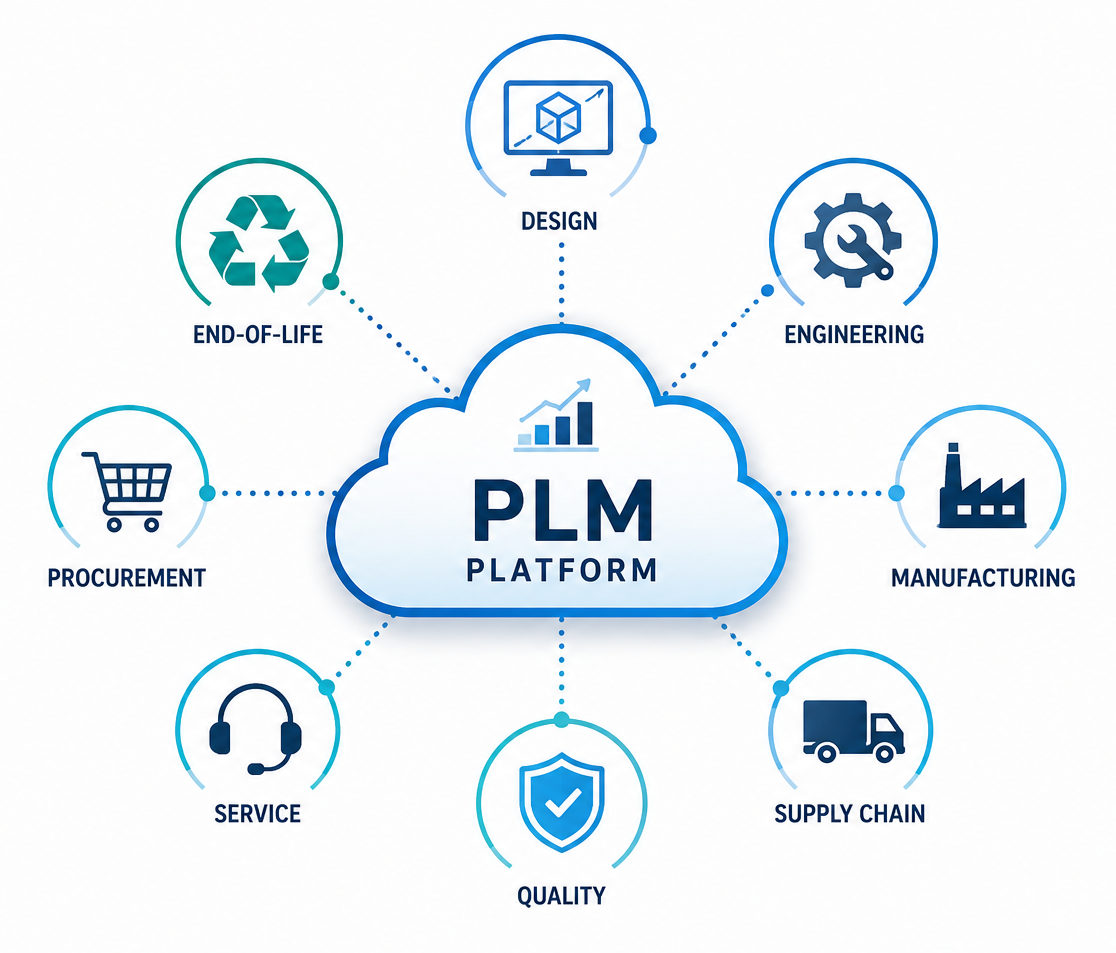
PLM has evolved significantly from its origins as an engineering data management tool. Today, it serves as a strategic enabler of enterprise-wide digital transformation by integrating cross-functional workflows and data into a unified environment.
Modern organizations increasingly use PLM as the foundation of the digital thread, ensuring continuity of information across engineering, manufacturing, supply chain, and service operations.
Increasing Product Complexity: Modern products combine hardware, software, electronics, and connectivity, requiring multidisciplinary development approaches such as systems engineering and model-based design.
Need for End-to-End Visibility: PLM provides a single source of truth by managing product information throughout the lifecycle, ensuring consistency, traceability, and better governance.
Accelerating Time to Market: By improving collaboration and reducing silos, PLM helps organizations shorten development cycles and respond more quickly to changing market demands.
Digital Transformation and Industry 4.0: PLM has become a foundational element of Industry 4.0 initiatives, supporting digital twins, connected manufacturing environments, and IoT-enabled products.
Centralized Product Data Management: PLM systems manage CAD models, product structures, bills of materials, engineering documents, and change records within a controlled environment.
Digital Thread Integration: Connected data enables continuity across design, simulation, manufacturing, and service functions, providing end-to-end lifecycle visibility.
Workflow and Change Management: Automated workflows improve traceability, reduce errors, accelerate approvals, and support compliance requirements.
Cloud-Based Deployment: Cloud PLM platforms offer scalability, flexibility, and lower infrastructure demands, enabling easier adoption across organizations.
Cross-Functional Collaboration: PLM facilitates collaboration among engineering, manufacturing, supply chain, quality, procurement, and service teams across global operations.
AI-Driven PLM: Artificial intelligence supports generative design, predictive insights, intelligent recommendations, and automation of routine activities.
Digital Twins and Simulation: Virtual representations of products enable simulation-driven development, performance evaluation, and continuous improvement.
PLM as a Product Intelligence Platform: PLM is evolving into a data-driven platform that connects design, manufacturing, and operational data to generate actionable insights.
Integration with IoT and Industrial IoT: Data from connected products feeds back into PLM environments, supporting lifecycle optimization and improved product performance.
Low-Code and Agile PLM Platforms: SaaS-based and low-code solutions allow organizations to adapt more quickly to changing business requirements.
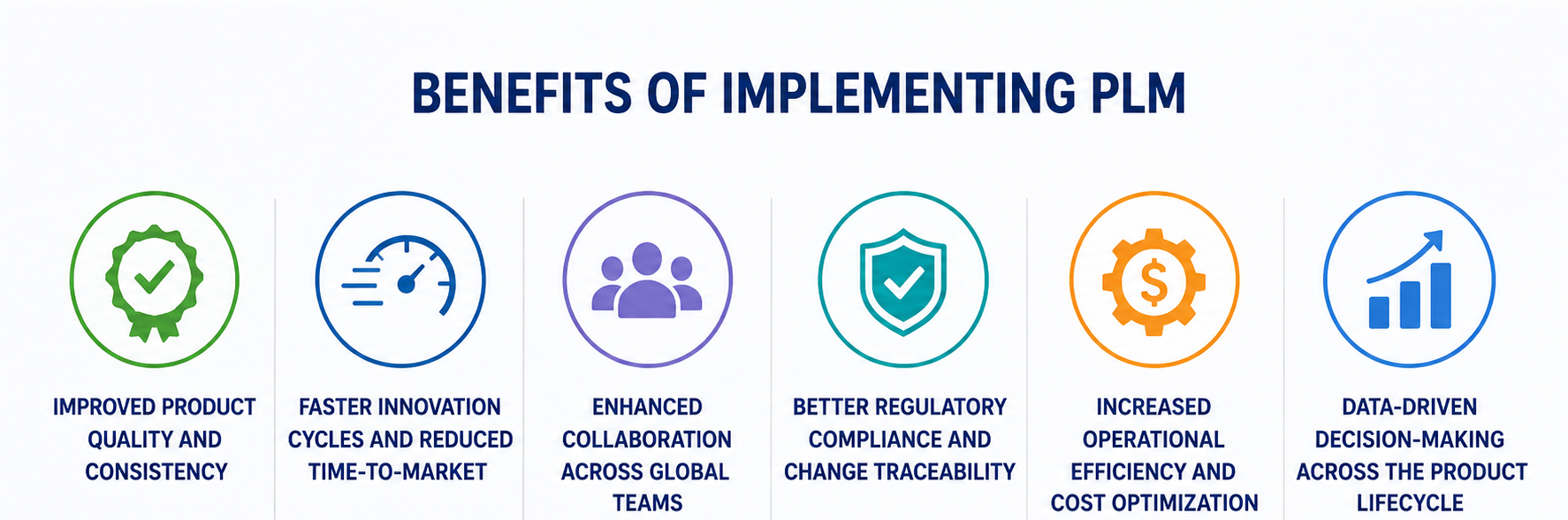
Looking ahead, PLM is expected to play an increasingly important role in digital enterprises. Emerging trends include AI-native PLM platforms, expanded use of digital twins, deeper integration with operational and supply chain data, and growing emphasis on sustainability and circular economy initiatives.
As products become smarter and more connected, PLM will continue to evolve from a lifecycle management tool into a strategic system of intelligence that supports innovation and business performance.
PLM is no longer just an engineering tool. It has become a strategic digital backbone for modern enterprises. By improving lifecycle visibility, enabling collaboration, and leveraging technologies such as AI and digital twins, PLM is reshaping how organizations design, build, and support products in an increasingly digital world.