Representative End User Clients







Representative Automation Clients







Representative Software Clients








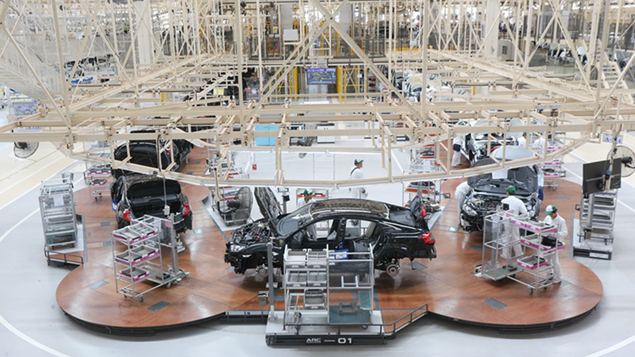
Change is in the DNA of the automotive industry and they are all good at it. Auto plants generally produce multiple vehicle models compounded by multiple versions of each. Periodic model redesign and introduction of additional models to Honda’s flexible factories requires adaptation of fixturing that enables machines to switch between new and old models while simultaneously maturing new manufacturing processes and training teams. Nothing unites the organization like a new model launch and there is no need to win buy-in for product change. In this industry, adaptation to continual change in both product and manufacturing technologies is not optional. It’s change or be left behind. The goal and path to such product driven changes are generally clear and well understood among the employee group.
Dealing with the unfamiliar can contribute to culture clash within an organization. Digital transformation is a technology-driven change that may require an accompanying cultural change as workforce engagements up and down the supply chain will also transform. Folks on the operations side must learn to speak the language of IT and vice versa. The role of the data scientist is increasing in importance. Team members must have a unique mindset to mentally bridge the gap between the existing and the mystery of the digital future to create a sound roadmap to get to the destination.
Digital Transformation is Different
Digital transformation is not the familiar product driven change common in the industry. The goal of digitization and the path to achieve it are not well defined. Yet the pervasiveness of digital transformation could cripple or sink an organization if not implemented and executed properly. While digital transformation success stories are emerging, strategies that scale well in discrete manufacturing have been few. However, the overall sentiment is that digital transformation is an inevitable change. Honda of America Mfg., Inc. System Engineer, Dale Malony, likened it to a yacht race in rough seas, stating, “Winning will give you an edge over your competitors. Losing will give competitors the edge.”
In the Digitization of Asset Performance Management workshop at ARC’s recent 22nd Annual Industry Forum, Malony suggested organizations employ a beam sea strategy to navigating digital change. Continuing with the sailing analogy, Malony’s best-case scenario is that despite rough seas your “ship” can maintain its heading. The more likely scenario is that multiple tacks or turns will be required to make progress. For readers who are not sailing enthusiasts, a ship is at the greatest risk for capsize in the middle of executing a turn into the wind when the beam is aligned with the waves and the sail is out of the wind. According to Malony, poor execution of such turns creates a vulnerability akin to neglecting your old strengths before new ones are fully developed. His advice is for organizations to maintain their present heading until fully confident in their new direction.
Winners and Losers
According to Malony, there will be winners and losers in the digital transformation race. He suggested the biggest winners will be those organizations that best time their “turns” when the team and technology are ready to make them. Winners will expect surprises and are prepared to attack their turns with confidence. Hopefully the losers will be the competition. However, organizations should also select their solution partners wisely as not all suppliers will be digital transformation winners either.
Selection of the appropriate internal digital strategy team is more critical for success. Current leaders may not be the best digital transformation navigators. Most companies have front line “dragon slayers” that may be better suited to leading plant floor transformation as they have demonstrated the ability to approach problems creatively. These innovators should be identified and engaged early. It is important to engage plant floor leaders, learn their pain points, and define a strategy that delivers value while providing relief to issues that may be overlooked in development of corporate data strategies. This wins allies and disarms potential opponents. Malony recommends corporate strategy be divided into two internal teams to attack digital transformation, front line and central, to provide a simultaneous bottom and top down approach. He further emphasizes that each team learn to respect the other.
Final Thoughts
An automotive industry veteran, Malony closed with a few digital transformation recommendations. The first and most critical step is to define the organizational goals and remaining true to those goals. He cautioned against acquiring solutions in search of a problem. Building the strategy around the strengths of the transformation team enables adjustment for skills and competencies as well as expose any gaps that must be filled. Avoid proprietary solutions as they create data silos. Select open solutions that enable data aggregation. Malony advices to expect failures. In addition, he recommends creating a post-game plan. For example, what value-added activities will workers perform with time made available by greater efficiency? How will changes impact hiring and advancement practices? In conclusion, Malony cautioned against over-engineering the solution to avoid an extensive and slowly processed, very expensive output.
This is the third in series of blogs dedicated to the Digitization of Asset Performance Management and MOC. Check back soon for more.