Representative End User Clients







Representative Automation Clients







Representative Software Clients








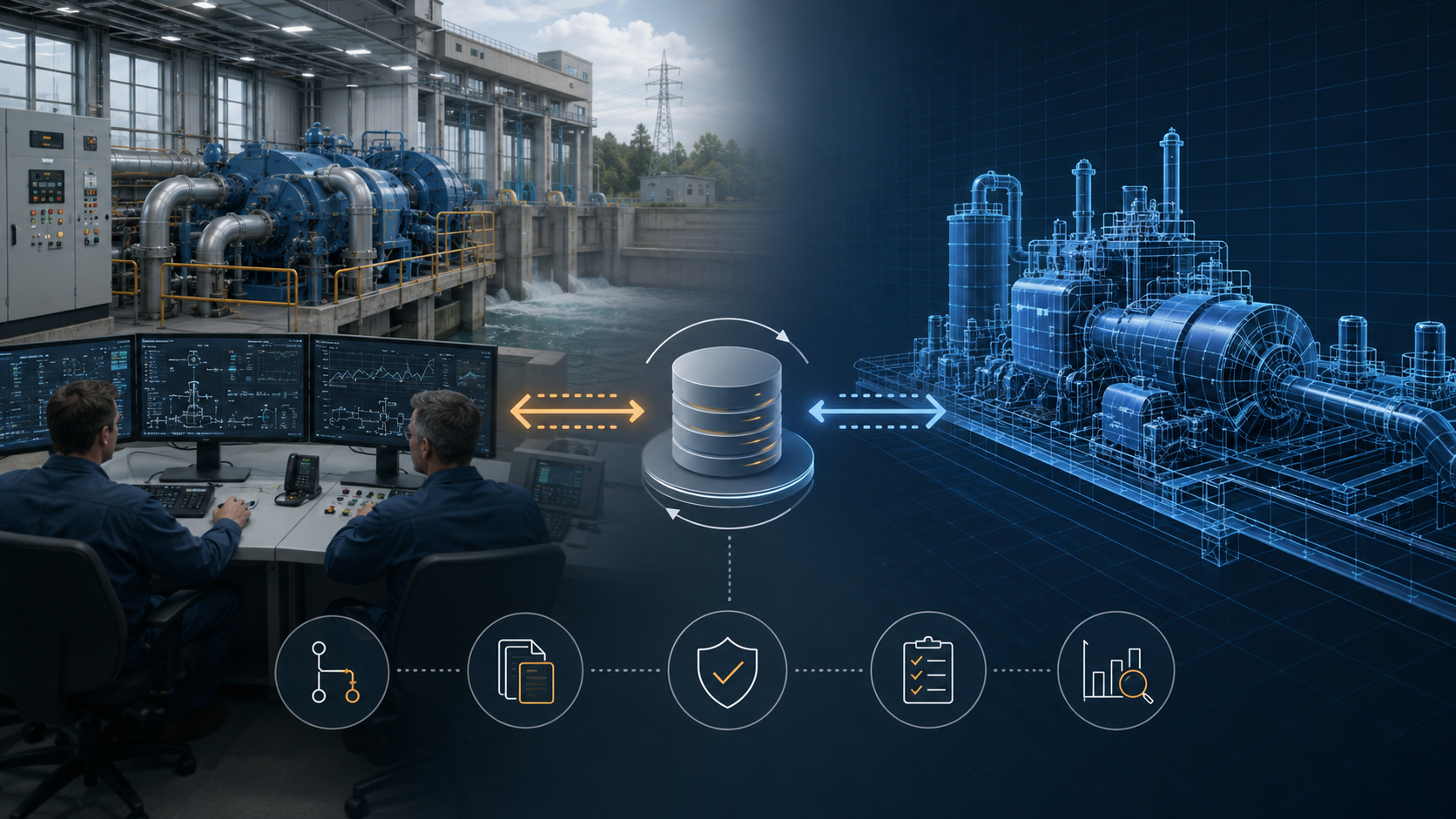

Emerson has introduced the Ovation Curation Tool, synchronization software designed to maintain version control and change history across Ovation control systems and digital twin simulations. The software automates the management of changes between production systems and their digital twins, supporting testing, training, troubleshooting, and governance activities in power and water operations.
Digital twins used for operator training, engineering, and testing depend on remaining aligned with the production systems they represent. However, operators and engineers regularly modify live control systems to address operational issues, improve performance, or implement new control strategies. Over time, these changes can create configuration differences between the production environment and the simulation model.
Keeping the two environments aligned can require engineers to manually identify, compare, and implement changes. Emerson’s Ovation Curation Tool is designed to automate this process by tracking changes to the control system and enabling validated updates to be deployed to other Ovation control systems and simulations.
“Keeping operator training simulators and digital twins synchronized with live control systems has been a challenge recognized by the industry for decades. Solutions that automate synchronization help organizations maintain the accuracy of training and testing environments while reducing the engineering burden of manual updates. As companies increasingly deploy AI and pursue autonomous operations strategies, trusted and continuously updated digital twins become an increasingly important foundation for success. This pain is one of the motivations behind the ARC Open Digital Ecosystem Working Group.” — Mark Sen Gupta, Director of Consulting, ARC Advisory Group
The Curation Tool can be configured to run weekly, monthly, or on an ad hoc basis. It automatically identifies and records changes made to the control system, providing users with a detailed audit history through a dashboard.
The change history records:
What was changed.
Who made the change.
When the change occurred.
This provides engineering and operations teams with a record of configuration changes and can help identify undocumented or unexpected modifications before they are transferred to another system or simulation environment.
Once changes have been reviewed and validated, users can initiate synchronization between the production system and the digital twin or between the digital twin and other Ovation control systems.
Before deployment, a simulation snapshot impact analysis capability identifies potential disruptions that changes may cause in the target system and suggests possible resolutions. This gives teams an opportunity to evaluate the effects of configuration changes before deployment.
The Curation Tool uses a repository-based approach to move data between production systems and simulators while maintaining synchronization. Multiple users can work on the same assets and merge their changes, supporting collaborative engineering workflows across control and simulation environments.
For organizations using digital twins for operator training, control strategy testing, engineering, and forecasting, maintaining alignment with the production environment is an ongoing lifecycle requirement. Automated change tracking, version history, impact analysis, and controlled synchronization can reduce the manual work involved in keeping simulation environments current as operational systems evolve.
The Ovation Curation Tool will be demonstrated at Emerson’s Ovation Users Group Conference 2026, taking place July 26–30 in Pittsburgh.
As industrial organizations expand the use of digital twins for operator training, testing, engineering, and AI-enabled operations, keeping these environments aligned with live operational systems becomes increasingly important. Explore related ARC Advisory Group research and initiatives:
These resources provide additional context on digital twin deployment, synchronization with real-world data, industrial AI, simulation, and the need for open and interoperable digital ecosystems.