Representative End User Clients







Representative Automation Clients







Representative Software Clients








Keywords: CapEx Volatility, Bullwhip Effect, Supply Chain Complexity, Investment Super Cycle
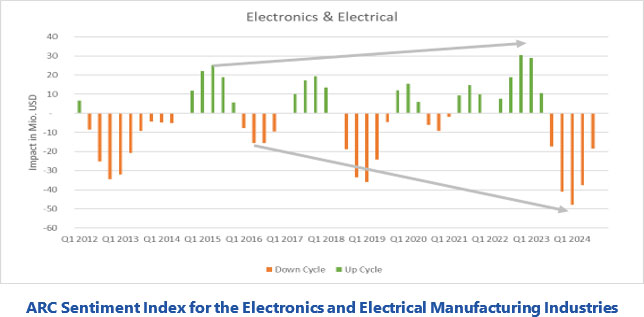
Well before 2020, we had a discussion that our data shows that the investment cycles in semiconductors are getting more extreme. We observed in our CapEx that the volatility increases as the peak periods of investments from individual companies move closer together. Nobody in the industry wants this. End users in this space strive towards a smoother and more predictable CapEx, and OEMs and EPCs struggle between work overload and business downtime.
The volatility increases from users to automation vendors, due to the so-called Bullwhip effect. The user increases spending by 5 percent, EPCs and OEMs start over-ordering with their distributors as they expect a larger upswing, distributors order even more with their suppliers. This effect was extreme during the COVID upswing leading to shortages and a big downturn in automation hardware and price decline starting in 2024. Looking at the numbers, we can conclude that external shocks have created more volatility and that we are probably facing the dawn of an investment super cycle.
Why is this happening? Is this an irreversible trend? An external shock impacts all companies in a similar manner. If there is a global financial crisis, a pandemic etc., investments freeze and there is a crisis situation. Governments launch support programs, and once uncertainty fades, major projects resume.
ARC Advisory Group clients can view the complete report at the ARC Client Portal.
Contact Us if you would like to speak with the author.
Obtain more ARC In-depth Research Market Analysis.