Representative End User Clients







Representative Automation Clients







Representative Software Clients








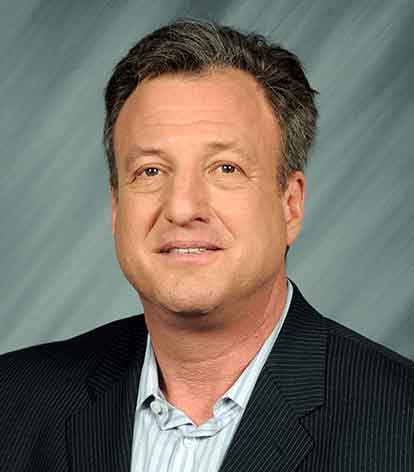
At the ARC Industry Forum 2026, Craig Resnick spoke with Ewa Michalowski of Schneider Electric about Foxboro SDA, the company’s next-generation distributed control system built on a software-defined automation architecture.
A central theme of the discussion was the need for a more flexible approach to modernizing control systems. Traditional architectures often require tightly coordinated hardware and software upgrades, creating challenges around downtime and long-term system evolution. Foxboro SDA is positioned as a way to address this, providing what Michalowski described as “a future-ready path that allows [customers] to modernize the controls and data management without disrupting their day-to-day operations.” At the same time, it maintains continuity for existing Foxboro users while outlining a structured roadmap forward.
The conversation also highlighted how software-defined automation extends operations beyond the traditional control room. Support for tablets, remote stations, and streamlined remote HMI access enables operators to interact with systems from multiple locations. This reflects a broader shift toward more distributed and flexible operating models, where access to control systems is no longer limited to a single physical environment. As noted during the discussion, this approach “gives operators the freedom to work wherever they're needed while keeping the system simple and secure.”
Integration and interoperability were also key themes. Demonstrations showcased a deployment model with tight integration into AVEVA System Platform, combining modern operator interfaces with enterprise-level data capture through AVEVA Historian. This supports more consistent data flow between operational and enterprise systems, which is increasingly important as organizations expand their digital transformation initiatives.
Flexibility in control strategies is another aspect of the architecture. Foxboro SDA supports configurations ranging from simplex to high-availability systems, along with self-healing capabilities that automatically assign available controllers based on predefined rules. This helps maintain continuity of operations while allowing users to adapt control strategies based on process requirements. Support for both Schneider Electric I/O and interoperable universal I/O further reinforces an open, software-defined approach.
From a broader perspective, the value of Foxboro SDA lies in reducing system complexity while enabling modernization through open standards and flexible hardware choices. As Michalowski summarized, the approach allows customers to “modernize without disruption… reducing complexity… and lowering lifecycle costs.”
The discussion reflects a broader shift in industrial automation, where distributed control systems are evolving toward more software-centric, interoperable architectures. As organizations continue to balance modernization with operational continuity, software-defined automation is emerging as a key enabler of more flexible, scalable, and resilient industrial environments.
Watch the full discussion on YouTube or here: