Representative End User Clients







Representative Automation Clients







Representative Software Clients








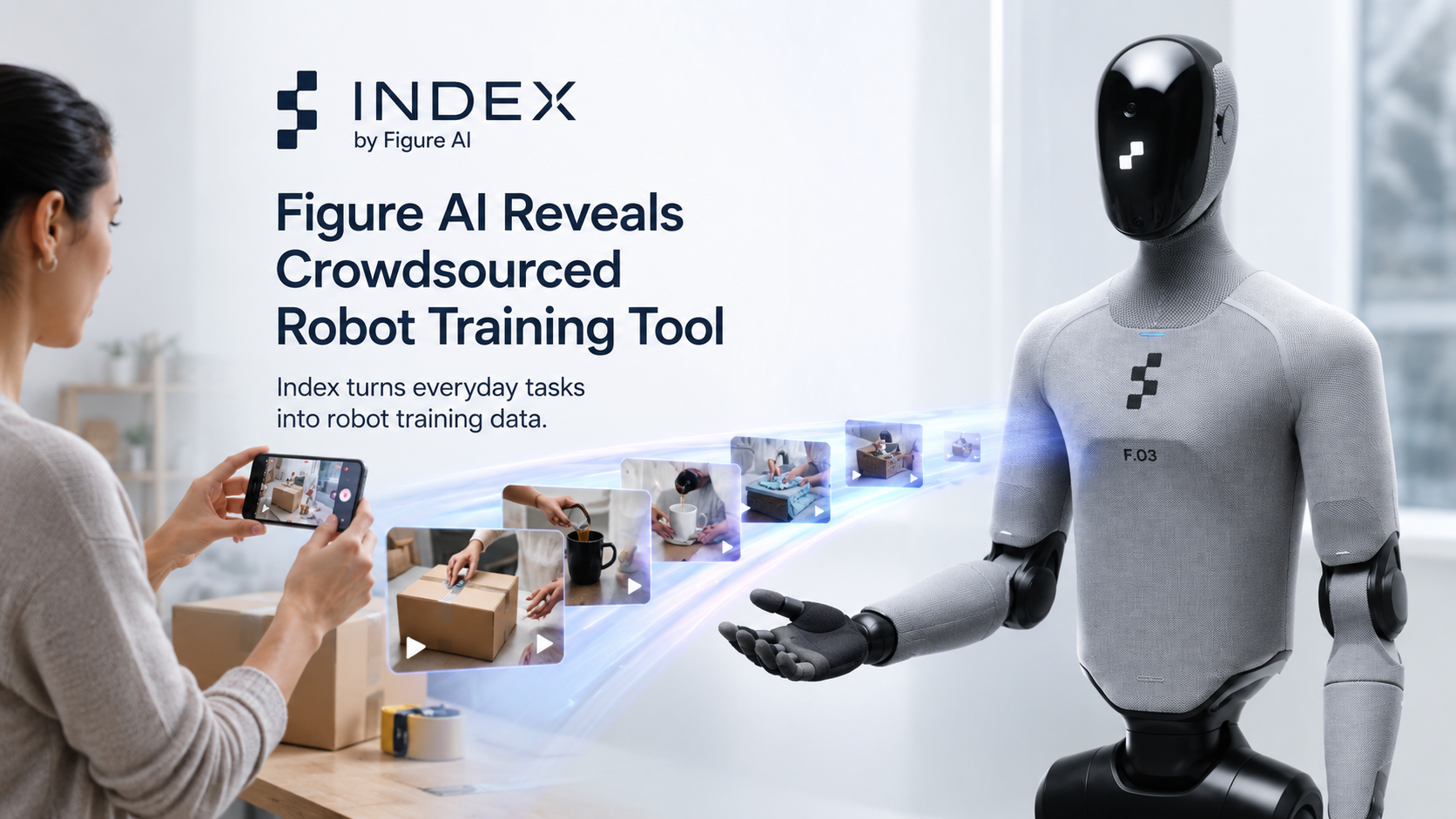
Figure AI has just revealed Index, a crowdsourced dataset generation platform that has already accumulated 16 million videos across more than 100 countries. This move will ultimately be remembered as a declaration that the next competitive battleground in Physical AI will be data operations. According to Figure, the platform has attracted more than 264,000 downloads, over 44,000 weekly active contributors, and processes approximately 30 minutes of uploaded video every second. The company intends to invest more than $1 billion in data and compute over the next year.
The significance of this announcement extends beyond Figure itself. Across the robotics and Physical AI landscape, suppliers agree that creating sufficiently large, diverse, and high-quality datasets capable of training robots to generalize across real-world tasks is a central challenge. This aligns closely with ARC's recent observations that foundation models, embodied reasoning, simulation, and data operations are becoming a decisive layer of competition among industrial robot suppliers.
Figure's core argument is straightforward. Large language models were able to scale rapidly because of the availability of internet-scale textual data. Robots do not have an equivalent source to draw from. Physical interaction data must be collected directly from the real world. Figure therefore created a crowdsourcing model in which individuals record themselves performing everyday physical tasks and upload the resulting videos for filtering, deduplication, annotation, and training.
From a machine learning perspective, this approach offers one significant advantage: diversity. Figure reports that every 1,000 hours of collected data contains hundreds of distinct tasks, thousands of manipulated objects, and more than one hundred unique environments. The long-tail variations generated by thousands of contributors may expose Helix to situations that would be difficult or impossible to predict in advance.
However, the broader industrial robotics market is pursuing several different routes toward the same destination.
Figure's Index program represents the most aggressive example of crowdsourced physical dataset generation currently visible in robotics.
The primary advantage is scale. Unlike traditional teleoperation programs or carefully managed pilot projects, crowdsourcing allows suppliers to source data from an enormous population distributed across thousands of environments. Every contributor introduces new objects, workflows, ergonomics, lighting conditions, and behavioral variations.
Finally, crowdsourcing may be particularly valuable for training robots intended to operate in homes, retail environments, hospitality settings, and light industrial tasks where environmental diversity is extraordinarily high.
Data quality remains difficult to control. Figure acknowledges the need for extensive filtering, fraud detection, deduplication, rebalancing, and annotation pipelines to maintain dataset usefulness.
Another concern is embodiment mismatch. Human actions are not robotic actions. The greater the difference between the human demonstrator and the target robot, the more difficult the transfer learning problem becomes.
For industrial robotics specifically, crowdsourcing is likely to play an important supporting role rather than become the sole data source. It may help teach general object understanding, manipulation concepts, and common-sense physical reasoning. However, domain-specific industrial skills will almost certainly require additional data sources.
A second strategy involves collecting data directly from deployed robots operating in customer environments.
Several humanoid robot suppliers are pursuing this path. Figure itself has highlighted deployment experience with BMW.
Pilot-generated data has exceptionally high relevance. Every sample originates from the exact industrial processes the supplier hopes to automate.
The data also captures operational realities that are difficult to model synthetically, including shift changes, variability in inventory, equipment wear, worker interactions, safety constraints, and recovery scenarios.
Scale is limited. Even a highly successful pilot may generate only a tiny fraction of the data volume that a consumer crowdsourcing program can produce.
Data collection is also dependent on customer willingness, deployment success, safety approvals, and operational uptime.
For industrial humanoids, pilot-derived data remains one of the most valuable forms of training data because it directly reflects customer workflows and operational constraints. Its main limitation is throughput rather than quality.
Many embodied AI companies increasingly rely on synthetic data, simulation environments, digital twins, and world models.
Synthetic generation can scale nearly infinitely. Millions of scenarios can be generated rapidly, and dangerous or rare edge cases can be safely explored.
Simulation also provides perfect labels, ground truth measurements, and reproducible conditions.
The persistent challenge remains sim-to-real transfer. Factories contain countless variables that simulations do not perfectly capture: damaged packaging, unusual human behavior, sensor noise, lighting changes, equipment degradation, and unforeseen process variations.
Synthetic data is likely indispensable for pretraining foundation models and generating rare corner cases. However, industrial users should remain skeptical of suppliers relying exclusively on simulated environments without significant real-world validation.
One emerging strategy receives comparatively little attention but may prove extremely important: using deployed inspection robots, AMRs, drones, and mobile perception systems to continuously collect industrial data.
Suppliers such as Boston Dynamics already have large installed bases of mobile robots traversing factories, warehouses, power facilities, and infrastructure assets. These platforms continuously observe equipment, materials, workers, workflows, and environmental conditions.
Inspection robots naturally generate industrially relevant datasets. Unlike crowdsourced consumer data, these observations occur in actual production environments.
Inspection robots typically observe rather than manipulate. They excel at visual understanding but capture less information about dexterous actions and contact-rich manipulation tasks.
For industrial Physical AI, inspection robots may become an important source of perception, navigation, and situational awareness data, particularly when combined with manipulation datasets from humanoids and industrial robotic systems.
The most important takeaway from Figure's Index announcement is not that crowdsourcing will become the dominant model. Rather, it demonstrates that robotics companies increasingly recognize that data operations are becoming a core competency.
The likely winners will combine multiple dataset-generation strategies.
Companies that build the most effective physical data pipelines could establish advantages that are substantially harder to replicate than robot hardware alone. Figure's Index announcement suggests that leading humanoid suppliers already understand this reality, and the race to build the world's most valuable industrial dataset may now be fully underway.
What I saw at Automate 2026, Part 1: The US Manufacturing Renaissance
What I saw at Automate 2026, Part 2: The Future is Humanoid?
Humanoids for Industry Blog Part 1: Why Humanoids? Why Now?
Humanoids for Industry Blog Part 2: Navigating the Ecosystem
Humanoids for Industry Blog Part 3: A New Market on the Horizon
For discussions on physical intelligence and the new wave of industrial robotics, or to offer feedback on this article, contact Patrick Arnold at [email protected].
Set up a meeting with me and the analysts at ARC Advisory Group to find out more about our Executive Insights Service for industrial organizations, MarketMap efforts, and more.