Representative End User Clients







Representative Automation Clients







Representative Software Clients








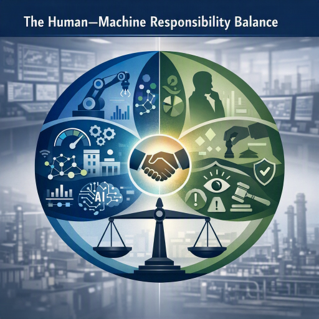
Industrial automation is entering a period in which technical capability is advancing faster than many organizations are redesigning work. The central management question is no longer only what automation can do. It is whether people understand it, can challenge it, know when to rely on it, and remain accountable when it acts.
This campaign examines that gap through a process-industry lens. It connects operator experience, decision authority, alarm quality, industrial AI, competency, knowledge capture, training, human performance, and measurement. The argument is simple: the road to autonomy is also a road to justified human reliance.
Process plants have automated control loops, sequences, safety functions, optimization, and information flows for decades. New industrial AI capabilities add recommendations, synthesis, prediction, and orchestration. Yet the operating model still depends on people to set intent, interpret context, manage exceptions, and own consequences.
The World Economic Forum describes a similar redistribution: machines increasingly handle speed, scale, consistency, and pattern recognition, while people concentrate on judgment, accountability, exception handling, and governance. For process industries, this is especially important because uncertainty can affect safety, production, quality, emissions, and asset integrity.
Technology creates capability. People determine whether that capability is trusted, used, and sustained.
Human factors are well researched, but industry discussions remain fragmented. Alarm management is discussed separately from AI governance. Training is separated from knowledge capture. Operator confidence is often treated as cultural resistance rather than as feedback about system quality or implementation practice. ARC can connect these disciplines around a practical question: what conditions let technical organizations delegate authority without losing judgment or accountability?
The series begins with distrust as operators experience it, then explains trust calibration and decision authority. It moves into justified trust in industrial AI and the daily credibility test created by alarm systems. The second half addresses competency, knowledge continuity, training, human performance, and finally the possibility of measuring justified reliance.
Each article stands alone, but the sequence is cumulative. Together, the articles treat the human side of automation as operational infrastructure rather than a soft supplement to technology.
Treat workforce design as part of automation design.
The first article begins where most automation programs encounter the issue: operators who do not fully trust the systems they are expected to use.
ARC’s research on autonomous operations, industrial AI, and digital transformation provides the broader management context for this campaign. Together, these research areas connect technology maturity with operating-model design, workforce readiness, governance, and the gradual delegation of decision authority.
For further information or to provide feedback, contact [email protected].