For data centers, managing energy efficiency is vital. Operations such as large server farms are typically limited by cooling system performance and total power consumption rather than processor capabilities. consequently, owners value performance per watt over peak performance (performance per unit cost) as the critical indicator of operational efficiency.

While the bulk of energy consumed by large data centers is used for processing power, it is common for a data center to expend 40-60% additional energy for cooling. Some companies attempt to mitigate this operating expense by setting up shop in colder climates. Facebook, for instance, constructed one of their data centers in Lulea Sweden just below the arctic circle. Recently,
Iceland initiated infrastructure improvements to accommodate server farms looking to benefit from its colder climate and surplus of geothermal "green" energy. The trending theme in server farm development is location, location, location! But how can businesses improve upon established operations? Google's answer is machine learning.
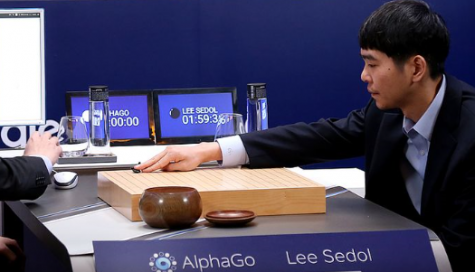
If you're a fan of board games, you may recall the somewhat historic
"Go" match between Googles DeepMind and world-class player Lee Se-dol that took place in March. While it may have lacked the fanfare of Kasparov vs. Deep Blue, DeepMind's victory indicated a significant advance in artificial intelligence. DeepMind utilized neural networks and deep learning to develop strategy through heuristic evaluation of millions of games rather than hard-coded rules. As an interesting consequence, not even the DeepMind developers could explain exactly how the computer evaluated the game states during competition. While DeepMind's victory over the gaming world was being publicized, Google had already turned its attention to solving the more economical problem of reducing cooling cost of its data centers.
In a summary of their project, Google provides three attributes of data centers that make them difficult to operate optimally:
- The complex, non-linear interactions between equipment, operating parameters, and environment are difficult to understand intuitively and cannot be modeled with traditional formula based engineering.
- Due to the dynamic nature of the systems internal and external environment (think weather), it would be impossible to develop hard-coded rules for every operating scenario.
- Every data center is a unique environment and architecture. While many engineering practices and rules of thumb can be applied across the board, a customized model for operation of one system will not guarantee success for another.
To address these problems, Google fed their DeepMind AI with historical data collected by thousands of sensors in their data center, which was used to train several neural networks using deep learning. The neural networks were designed to evaluate the incoming sensor data with respect to the average future Power Usage Effectiveness (PUE), the ratio of the total building energy usage to the IT energy usage. Another set of neural networks were then trained to predict future temperature and pressure characteristics of the system, to ensure conditions would remain within acceptable operating constraints. With both network types sufficiently develop they could simulate recommended actions based on the PUE model that would not violate operation limits.
After several months of this process Google deployed the model on a live data center resulting in a 40% reduction in energy used for cooling. The graph below, provided by Google, shows the effects of the machine-learning control system being turned on and off.

Google anticipates the general-purpose deep learning framework of their algorithm can be applied to similar challenges in other industries and continue to investigate opportunities to prove it so.




















