Representative End User Clients







Representative Automation Clients







Representative Software Clients








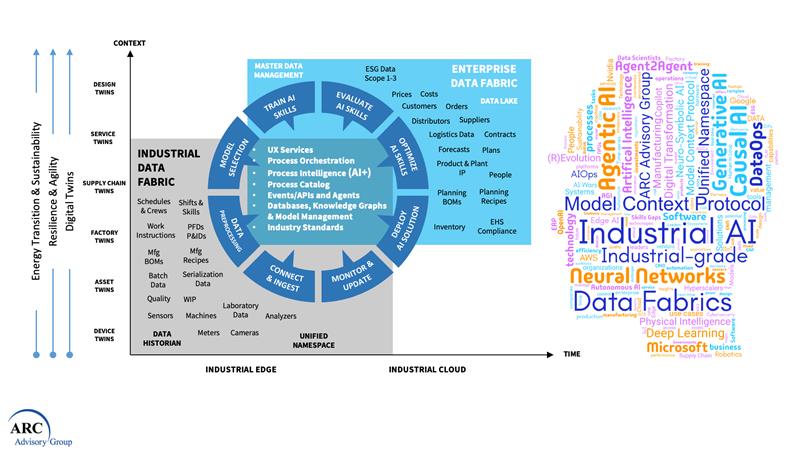
Welcome back to my journey into the evolving world of Industrial Data Fabrics! As Director of Research for Industrial AI at ARC Advisory Group, I spend much of my time exploring how organizations are putting data and AI to work on the plant floor and across operations. In my last post, I emphasized data quality as the Achilles' heel of Industrial AI and shared how our latest survey results reinforce the urgency of addressing this core issue. It’s clear that companies aren’t holding out for a silver bullet—they’re already piecing together their own data fabrics to confront this challenge and enable advanced capabilities like Industrial DataOps and AIOps.
Continuing this exploration, ARC’s ongoing research makes it increasingly clear that building a resilient, industrial-Grade data fabric isn’t about adopting a single, all-encompassing solution. Instead, it’s about strategically selecting and integrating the right “building blocks” from a diverse and evolving vendor ecosystem. As more industrial organizations realize the critical role a well-structured data fabric plays in advancing their Industrial AI goals—including the pursuit of operational excellence through DataOps and smarter automation via AIOps—knowing what capabilities to prioritize and how to assess potential solutions becomes essential. This assessment must also account for how modern architectural principles, open-source tools, and emerging industry standards contribute to the larger picture—one of the core themes of our upcoming Industrial Data Fabric market reports. Ultimately, the goal isn’t just better data access—it’s building the foundation for truly data-driven operations and intelligent automation.
Drawing directly from ARC Advisory Group’s in-depth research for these upcoming reports, this post highlights the key focus areas and considerations to guide you through the complex vendor landscape—and help you identify the right combination of solutions to build your own Industrial-Grade Data Fabric. These sections go beyond a basic RFI checklist; they offer a set of critical lenses to evaluate vendor capabilities in context, illustrating why each element is a foundational building block in today’s shifting industrial data environment. They also reflect real-world implementation trends and priorities we’re seeing in the market, especially the growing need to support modern approaches like Industrial DataOps and AIOps.
When evaluating the components that will form your Industrial Data Fabric, consider the following critical areas:
1. Vendor Foundation and Expertise
A crucial first step—one our survey data has strongly reinforced—is gaining a clear understanding of the providers behind the technology. It’s important to look beyond the feature set of any individual component and evaluate the vendor’s overall profile, track record, and domain expertise. Just as critical is, considering internal alignment: who within your organization wants to work with them, and why? This human element can often influence success as much as the technology itself.
Based on ARC's recent survey data, we see a distinct preference emerging:
IT, OT, and Business Decision Makers (BDMs) often gravitate toward established enterprise application providers and industrial automation or manufacturing software vendors. The reason is clear: these vendors typically bring deep domain knowledge, a strong grasp of operational realities, and long-standing relationships within industrial settings. Their experience and familiarity with existing systems make them well-positioned to support the deployment of domain-specific DataOps and AIOps solutions effectively.
Data Scientists, by contrast, often lean toward working with Foundational AI leaders or vendors focused on core data science platforms and technologies. Their priorities typically center on advanced algorithms, flexible development environments, and high-performance data processing—capabilities that may be less tailored to industrial domain specifics at first, but are critical for powering the AI layer of AIOps.
This divergence in preference, which I've highlighted in previous posts discussing our survey findings, underscores why the "assembling" approach is prevalent. No single vendor is likely to meet all these varied needs and user preferences equally. That’s why it’s important to assess each vendor’s background—looking at their history, scale, ownership, and long-term focus on the industrial sector—to evaluate how reliable and sustainable they’ll be as a partner in your data infrastructure journey. Equally important is how well they align with different stakeholder expectations. Industry certifications, active participation in open standards initiatives, and strategic partnerships can further signal their capability to integrate effectively within your broader ecosystem.
Experience: Does the vendor have a proven track record in providing solutions relevant to industrial data environments?
Industry Focus: Do they understand the unique challenges and requirements of the industrial sector, including the needs of Industrial DataOps and Industrial-Grade AIOps?
Stability and Support: Are they a reliable long-term partner with the resources to support your critical infrastructure?
Partnerships & Ecosystem: Do they collaborate with other technology providers and participate in relevant industry standards bodies or open-source communities?
2. Solution Capabilities and Architecture
Evaluating the core technical capabilities and architecture of a potential data fabric component is crucial to ensure it can handle the unique demands of industrial environments. It’s important to pinpoint what specific functions the solution offers—be it data integration, governance, cataloging, or processing—and examine how its architecture supports scalability, flexibility, and performance. Understanding its approach to data handling, including storage and transformation, is essential for managing the high volume and velocity of industrial data, particularly when enabling seamless data pipelines for Industrial DataOps and real-time monitoring for AIOps. Our research shows a growing shift toward modern architectures that embrace microservices, cloud-native design, and edge deployment. Just as important is how well the architecture supports modern patterns like data streaming (e.g., using Kafka) and offers flexible access via APIs or technologies like GraphQL—both critical for powering responsive, real-time DataOps and AIOps use cases.
Core Functionality: What specific data fabric functions does the solution provide (e.g., integration, governance, cataloging, processing)?
Architecture: Is the architecture scalable, flexible, and suitable for the demands of industrial data, incorporating modern patterns like streaming and distributed processing?
Data Handling: How does the component manage data storage, processing, and transformation, including support for various data models and access methods?
Performance: Can it handle the volume, velocity, and variety of your industrial data streams with the required performance, especially for real-time use cases, like those found in DataOps and AIOps?
3. Data Connectivity and Integration
The ability of a data fabric component to connect with and integrate a wide array of data sources is foundational to its effectiveness in industrial settings. These environments are defined by a complex mix of OT and IT systems, each using different protocols and data formats. For a data fabric to support Industrial DataOps and AIOps effectively, it must bridge this divide seamlessly. This means providing robust support for industrial protocols, deep connectivity to OT systems like historians, PLCs, and DCS, and smooth integration with IT systems such as ERP and MES platforms.
Equally important is the component’s ability to transform raw data and apply context—creating a semantic layer that makes the data meaningful and actionable for analytics and AI. Key enablers include support for interoperability technologies like OPC UA and MQTT, the use of Unified Namespace structures to organize plant data, and alignment with initiatives like CESMII’s Smart Manufacturing Innovation Platform (SMIP), which emphasizes semantic interoperability. Emerging standards such as the Model Context Protocol (MCP) and Agent-to-Agent (A2A) communication patterns are also gaining traction, supporting the edge-to-enterprise data flow that modern distributed DataOps and AIOps deployments demand.
For more on MCP and A2A, check out my blog series on The Rise of A2A: Completing the Industrial AI Protocol Stack with OPC UA and MCP.
Industrial Protocol Support: Does it support common industrial protocols (e.g., OPC UA, MQTT) and connectivity methods?
OT System Integration: Can it seamlessly connect to critical OT systems like historians, PLCs, and DCS?
IT System Integration: Does it offer robust connectivity to IT systems such as ERP, MES, and enterprise databases?
Data Transformation & Contextualization: Can it transform raw data and add necessary context, potentially leveraging approaches like Unified Namespaces, standards for semantic modeling like MCP, or aligning with frameworks like CESMII's SMIP?
Real-time Processing & Messaging: Does it support real-time data streaming and processing requirements, potentially integrating with messaging systems like Kafka?
Interoperability Standards & Frameworks: Does it align with or support relevant interoperability standards and frameworks, including Unified Namespaces, MCP, A2A, and initiatives like CESMII SMIP?
4. Data Quality and Governance
As emphasized in our previous post—and echoed by our survey respondents—trusted, reliable data is foundational to Industrial AI success. That’s why the data quality and governance capabilities of any data fabric component are so critical. You need components that support robust data profiling and cleansing to assess and enhance accuracy, along with tools for standardization and validation to maintain consistency—core functions of an effective DataOps approach.
Strong metadata management is equally essential. Features like data cataloging and lineage tracking help ensure transparency and traceability across the fabric, particularly in complex streaming environments such as Kafka. This is key for troubleshooting issues in DataOps pipelines and understanding the inputs driving AIOps models.
Finally, the ability to define and enforce data governance policies—aligned with enterprise-wide frameworks—is crucial for ensuring compliance, responsible data usage, and operational efficiency. These governance features act as guardrails, enabling scalable and trustworthy DataOps.
Data Profiling & Cleansing: Does it offer tools to assess and improve data accuracy and consistency, supporting DataOps quality goals?
Standardization & Validation: Can it enforce data standards and validate data quality, enabling reliable DataOps pipelines?
Metadata Management: How does it handle metadata, data cataloging, and data lineage for traceability across diverse sources and data flows, critical for managing DataOps pipelines and understanding AIOps data?
Governance Mechanisms: Does it support the implementation and enforcement of data governance policies across the fabric, providing the framework for secure and compliant DataOps?
5. Security and Compliance
Protecting sensitive operational and business data is a non-negotiable aspect of any Industrial Data Fabric. The security posture and compliance capabilities of each component must be rigorously assessed—there’s no room for compromise here. Key features to evaluate include data encryption both at rest and in transit, strong user authentication, role-based access controls, and comprehensive audit logging and monitoring.
It’s also essential to ensure the solution supports relevant industry standards and regulatory requirements, and that the vendor holds appropriate security certifications. These considerations must extend to modern architectures—covering communication patterns like Agent-to-Agent (A2A) and streaming technologies like Kafka—to ensure that Industrial DataOps pipelines and the data inputs powering AIOps are secured end to end.
Data Protection: Does it offer encryption for data at rest and in transit?
Access Control: How does the solution handle user authentication and role-based access control across the fabric to ensure that only authorized users and systems can access data used in DataOps or AIOps?
Monitoring & Auditing: Does it provide audit logging and monitoring capabilities for data access and usage, vital for security and compliance within DataOps and AIOps workflows?
Compliance: Does it help meet relevant industry standards and regulatory requirements?
Certifications: Does the vendor hold relevant security certifications?
Secure Communication: Does it support secure communication protocols, including for agent-to-agent interactions (A2A), crucial for distributed DataOps and AIOps components?
6. Deployment and Integration Flexibility
Industrial organizations often operate in complex, distributed environments that combine on-premises legacy systems with modern cloud infrastructure. As a result, the deployment flexibility of a data fabric component—and its ability to integrate with both existing IT and OT systems—is a critical factor. ARC’s research consistently shows that hybrid and edge deployments are the norm for many industrial scenarios, especially those requiring real-time DataOps and edge-driven AIOps.
When evaluating a solution, consider whether it supports on-premises, cloud, and hybrid deployment models, and how easily it can be deployed, configured, and managed in your environment. Also assess its support for APIs (including standards like GraphQL for flexible data access) and modern deployment technologies such as containerization, which are key to enabling this kind of architectural adaptability.
Deployment Models: Does it support on-premise, cloud, or hybrid deployment models suitable for industrial environments, and the distributed nature of many DataOps and AIOps use cases?
Infrastructure Integration: How easily does it integrate with your existing IT and OT infrastructure, including legacy systems and modern cloud platforms?
Ease of Use: Is the component easy to deploy, configure, and manage?
API Availability & Flexibility: Does it offer robust APIs for integration, potentially supporting flexible query languages like GraphQL?
Modern Deployment: Does it support containerization and orchestration technologies, facilitating flexible DataOps and AIOps deployments?
7. Support for Industrial DataOps, AIOps and Analytics
Ultimately, one of the primary goals of building an Industrial Data Fabric is to enable and accelerate the adoption of Industrial AI and advanced analytics—the foundation of AIOps and a central focus of my work. As such, it’s essential to evaluate how well a component supports these capabilities. Key factors include its ability to integrate with popular AI/ML platforms, provide tools for data preparation and feature engineering, and support the deployment and operationalization of trained models within industrial environments—all of which are vital for implementing effective AIOps solutions.
Support for advanced analytics and visualization tools—and the availability of pre-built industrial AI or analytics solutions—can further enhance the value of a data fabric, particularly when focused on delivering operational insights or predictive capabilities (i.e., AIOps). Equally important is how easily data can be accessed and prepared for AI/ML workloads. This is often enabled by technologies like Kafka for real-time streaming or GraphQL for precise data queries, both of which play a crucial role in streamlining Industrial DataOps pipelines that feed AI models.
AI/ML Integration: Does it integrate with popular AI/ML platforms and tools?
Data Preparation: Does it offer features for data preparation and feature engineering?
Model Deployment: How does it support the operationalization of AI models within the industrial environment, including AIOps models that monitor operations?
Analytics Tools: Does it support advanced analytics and visualization tools?
Pre-Built Solutions: Are there any pre-built industrial AI/analytics solutions available such as those focused on AIOps use cases like anomaly detection or predictive maintenance?
Data Access for AI: How does it facilitate efficient and governed data access for AI/ML workloads, potentially via streaming or flexible APIs, supporting the data pipelines required for Industrial DataOps that feed AI and AIOps?
As noted in our previous post, survey responses confirm that many industrial organizations are actively assembling their Industrial Data Fabrics using a mix of components. It’s uncommon, based on our research, to find a single-vendor solution that effectively meets the full spectrum of data needs across IT, OT, and Data Science teams—especially when factoring in the collaborative demands of Industrial DataOps and the integrated insights required by AIOps (see Section 1). Forward-thinking organizations are taking a best-of-breed approach, building on existing core platforms and complementing them with specialized solutions. This strategy increasingly involves open-source technologies and alignment with emerging industry standards to ensure interoperability and long-term flexibility.
Crucially—and this remains a key point for successful adoption—the assembled Industrial-Grade Data Fabric must support a broad range of users, each with distinct skill sets, domain knowledge, and data usage requirements. This is where the principles of Industrial DataOps become essential, facilitating collaboration and automating data flows across teams. From OT engineers accessing real-time operational data for monitoring and control—often via MQTT or A2A interactions at the edge (a common method for collecting AIOps data)—to data scientists developing AI models that require large volumes of historical and streaming data from sources like Kafka, to IT professionals responsible for enforcing enterprise-wide governance and security (the backbone of reliable DataOps and AIOps), the fabric must offer secure, tailored access and functionality based on user roles and tool preferences. Selecting the right components means evaluating how each contributes to supporting this diverse ecosystem—ensuring that all users can access the data, tools, and context they need, with support for emerging semantic frameworks like MCP to enable full participation in Industrial DataOps and unlock AIOps-driven insights.
Building an Industrial-Grade Data Fabric isn’t just a technical initiative—it’s a strategic priority for thriving in the AI era and enabling modern operational practices like Industrial DataOps and AIOps. By thoughtfully assessing potential components across critical dimensions—vendor expertise (and internal stakeholder preferences), core capabilities, connectivity, governance, security, deployment flexibility, and AI readiness—organizations can identify the right building blocks. Aligning these with modern architectural principles, open-source technologies, and emerging standards ensures the resulting fabric is tailored to both operational realities and the diverse needs of users across the enterprise.
Remember, the data fabric must ultimately empower a diverse group of users across IT, OT, and Data Science by delivering the right data, in the right format, with the appropriate context and governance. It should support the most effective tools and standards available, laying the foundation for robust Industrial DataOps and turning the promise of AIOps into a practical reality.
For ARC Advisory Group recommendations for Navigating the AI Wars, Closing the Digital Divide by Embracing Industrial AI, assembling your Industrial-Grade Data Fabric, and governing and guiding major decisions about enterprise, cloud, industrial edge, and AI software, please contact Colin Masson at [email protected] or set up a meeting with me, or my fellow Analysts at ARC Advisory Group.