Representative End User Clients







Representative Automation Clients







Representative Software Clients








So, it actually happened. The United Kingdom has voted to exit the European Union (“Brexit”). This ARC Advisory Group Insight  addresses the potential impacts this will have on automation markets in the UK, the EU, Switzerland, and elsewhere.
While some pundits believe that the impacts for European companies could exceed that of the 2009 crisis, ARC is less pessimistic. However, we think that the Brexit will hinder growth in 2016, 2017, and 2018. Overall, it is a difficult and challenging task to identify all the dynamics and even more so to quantify them. Here, we attempt to analyze the potential effects by geographic region, subject, and time frame (short- to long-term) using the scenario methodology -- “worst case,” “best case,” and “most likely” (or ARC Scenario”) -- developed for our ongoing ARC Automation Index.
Without doubt, the UK will suffer the most severe consequences. This is true for all aspects: political, economic, and social.
Social and political decisions have broad impact on all markets, either directly or indirectly.
In the short term, the obvious impact is that all politicians will be too busy dealing with the Brexit to focus on other important issues such as the refugee crisis. While necessary reforms are likely to be delayed, this should have limited impact on automation markets.
In the mid-term, there are two big questions:
The rising power of the UKIP will undoubted lead to more protectionist politics in the UK, a country that depends heavily on trade. Large system integrators in the UK do much of their business abroad. Should tariffs and trade barriers increase, their competitiveness will suffer, significantly reducing the volume of the British automation business. For the same reason, investments in the UK may decline as manufacturing plants are typically set up to serve customers in multiple countries.
Brexit’s effect on immigration will also impact the automation industry in the UK. Immigrants represent an innovative resource for any country. They tend to be more mobile and start more business than locals. Second-generation immigrants are often university graduates and, in Britain, a net positive contributor to the welfare system.
People in both Scotland and Northern Ireland strongly favor the EU, and a majority voted for the UK to remain in the EU during the referendum. The Scottish have already discussed a second referendum for independence and the Sinn Fein party in Northern Ireland has brought up a referendum to re-unite Ireland. If Scotland should vote for independence, it is likely that it would then join the EU, reducing the size of the internal market (and GDP) drastically and lowering the UK’s negotiating power with the EU.
We’re already seeing extreme pressure on the pound sterling and the London Stock Exchange. The Bank of England estimates that the pound sterling may lose up to 20 percent of its value. While in normal times, a currency depreciation would increase competitiveness, this mainly affects the manufacturing sector, where the uncertainty is likely to hinder investment in production plants. This means that, at best, we should see a small short-term boost in exports. Also, as a net importer, a devaluation of the pound will do the UK more harm than good.
On the financial markets, British commercial banks will suffer and the central bank will need to step in to support them as the inter-banking market dried up after the Lehman crisis and never recovered. It appears that the era of low interest rates in the UK will continue for some time.
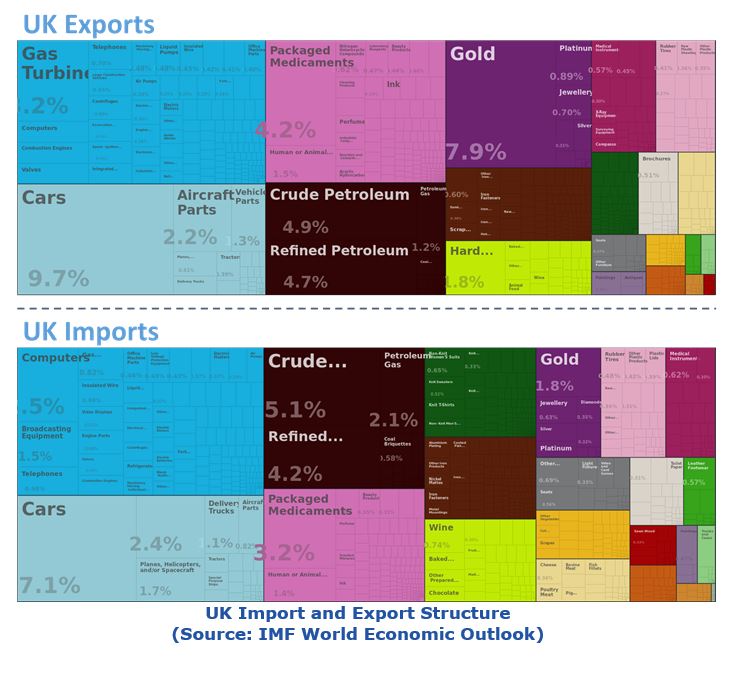
In the mid-term, the Bank of England estimates that UK GDP may drop by 6 percent and that around 800,000 jobs are in danger, the British treasury is more optimistic with 3.5 percent GDP drop and half a million of lost jobs. Many of these jobs are probably linked to foreign direct investments (FDI) in the UK and foreign companies manufacturing in the UK. German companies provide around 1 percent of all British jobs (~370,000) and it is not unlikely that they will withdraw at least some of them. (That most iconic British car, the Mini, may no longer be manufactured in UK!) This could also lead to the UK’s exports shifting towards industries that are the 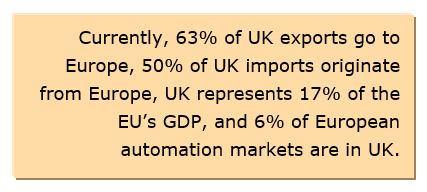 least dependent on bilateral standardization, such as raw materials and defense products.
We’ve already seen headlines proclaiming that the dominance of London as a financial trading place is in danger, with much of this activity likely to shift to Paris, Dublin, and Frankfurt. In fact, many international banks already announced job cuts in London.
Negotiations between the UK and EU and between the UK and individual states will shape the long-term perspective. Switzerland and Norway both provide examples of how collaborations could work without full EU membership. These negotiations have been going on for generations and were often bilateral. At best, the UK may be able to establish a status quo ante (i.e., the way things were before), but without voting rights. However, it is unlikely to be able to negotiate trade agreements with all member states in two years, so significant frictions are likely. The EU is likely to make it as costly as possible, largely to avoid a domino effect.
In addition to the negotiations with the EU, the UK will need to re-negotiate all 33 trade agreements it is part of because of its EU membership.
Best Case: Short-term frictions and market downturn with a resume to the status quo ante, but with higher costs.
Worst Case: The UK is reduced to just England and Wales with a large-scale exodus of manufacturing and the London Stock Exchange following the initial period of friction.
Most Likely: Short-term friction followed by three to four years of struggling. Manufacturing partly exits and moves to Europe. UK growth is slowed down. Scotland stays within the UK but gets more rights.
Switzerland, one of the world’s most important machinery-building countries, has already been affected. The Swiss franc has increased in value again, pressuring the Swiss central bank to flood the market with money to avoid a further appreciation and loss of competitiveness.
It is hard to forecast whether this will be successful in the long run. It’s likely that the Swiss franc will appreciate further, leading to a loss of competitiveness for Swiss machine manufacturers.
Clearly, next to the UK, Brexit will have its greatest, short-term, mid-term, and long-term impacts on the EU.
Initially, it’s likely that, as an organization, the EU will react in an uncoordinated and chaotic manner, with too much energy spent on dealing with the Brexit rather than with other work, such as completing the proposed Transatlantic Trade and Partnership (TTIP). This needs to be finalized while President Obama is still in the US White House. This would represent a missed opportunity for more growth, especially for European OEMs.
In the short term, it’s likely that the euro will lose value relative to the US dollar and gain value relative to the pound sterling. We’ve already seen a major sell off on global stock exchanges.
While shrinking stock markets will initially have limited effect on automation markets and manufacturing, increased risk avoidance will make it even more challenging for companies to get financing for capital investments. This will impact automation markets strongly. The devaluation of the euro should provide a positive boost by increasing competitiveness against trading partners, but this effect is limited and has only small impact on automation.
The financial markets remain the big question mark, since the commercial banks could face financing problems that the European Central Bank will have to deal with. With interest rates already low, direct intervention may be necessary.
With the uncertainty in regulation, standards, and trade barriers, we expect investment from European companies to move from the UK to mainland Europe. It is likely that much manufacturing will move back to the home countries. We expect a stronger positive impact on Germany, Italy, France, and perhaps Spain, as many Eastern European countries are not considered safe havens for investments.
The most significant negative Brexit impact on growth will likely occur during the mid-term. The UK represents around 17 percent of the EU’s GDP. The situation should be less severe for automation markets, since the UK only accounts for 6 percent of the European automation market (excluding Russia). The role of the UK is even less significant when you look at the automation market from a “point of stay,” rather than point of sales perspective, since many UK-based system integrators export plants and equipment. We could even see SIs and EPCs moving to other European countries to benefit from the local framework. For example, many Chinese companies use the UK as an entrance to the EU, but reports indicate that these investments are going down.
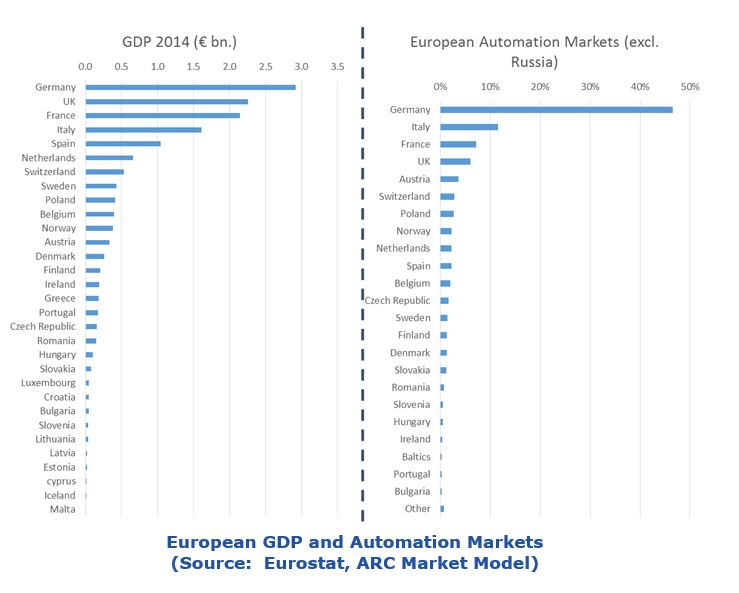
In the mid-term, UK payments to the EU will drop and other countries, mainly Germany, France, Italy, and Spain will need to step in to help make up the difference. However, while EU payments seem high in absolute terms, these typically only represents a small share of a nation’s GDP.
After the mid-term struggles while the regulatory, political, and trade framework is re-constructed; a long-term framework will need to be negotiated. Again, the most likely scenario is that the UK reestablishes the status quo ante but will have to do so by paying a higher price for the EU benefits (similar to Norway).
The higher costs for its imports and exports alike will make business more challenging for the UK and, in the long run, will benefit EU members. But they’ll also have to make up for the missed EU payments by the UK.
We believe that the long-term effect as a whole will be:
Best Case: Short-term negative impact on stock and financial markets. Long-run effects favor manufacturing in the EU. After the UK re-establishes the status quo ante, no negative impacts.
Worst Case: A full-blown economic recession follows a financial crisis. In the long run, companies suffer from trade hurdles. A domino effect kicks in and the EU shrinks to a core with only a few countries left, basically focusing on economic collaboration.
Most Likely: Short-term frictions will be slightly higher and longer. However, ARC believes that the EU will continue to exist and a full recession avoided.
Basically, the scenarios for the rest of the world are similar to the one for Europe, but less in degree. A few special dynamics are worth mentioning:
The price of gold price will increase (already happening). As always, when financial markets are jittery, the knee-jerk reaction is to start investing in gold and commodities.
Seeking safe havens, private and institutional investors alike will withdraw money from emerging economies. This familiar, if somewhat illogical behavior, negatively impacts the manufacturing market and may reduce automation growth in Latin America, South East Asia, and Africa.
The likely increased value of the US dollar vs. the euro will lead to reduced competitiveness for that country.
Best Case: The price of gold price will increase, and that’s it.
Worst Case: A full-blown global financial crisis will emerge, as money moves into safe havens and banks are unable to re-finance themselves. Governments need to step in again to save systemic-relevant banks. Manufacturing plants in emerging countries have trouble financing investments, leading to a downturn. Oil prices will drop further as demand lowers. We enter a full- blown global recession.
Most Likely: Short-term increase in the price of gold and limited effects in emerging markets, particularly those with strong links to the UK, such as Malaysia.
Since we think that the global impact of Brexit will be very limited, following, we provide more detailed quantification for our possible scenarios for the European automation markets.
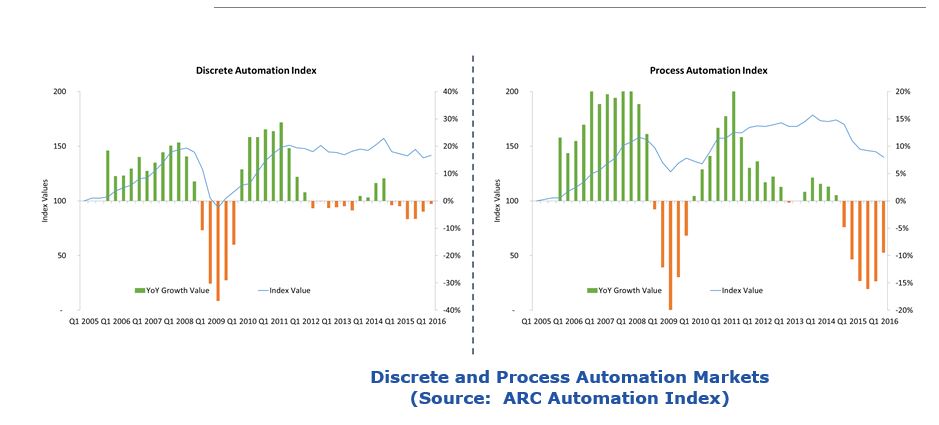
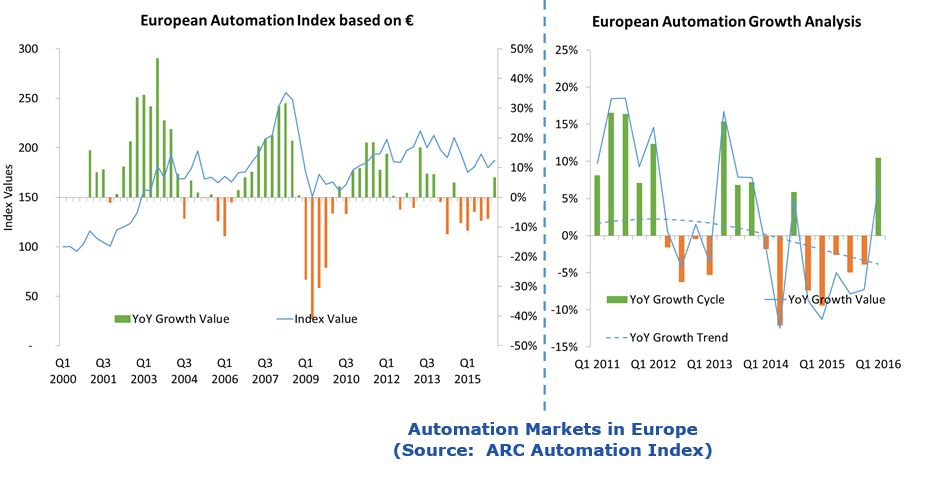
We are currently in a phase in which the European markets just had their first quarter of positive year-over-year growth). The market suffered strongly from exchange rate effects, so an important part of the downturn shown in the following charts does not reflect the true market performance in terms of organic growth. While discrete manufacturing is rather robust right now, the oil & gas and the process industries are contracting strongly.
Using ARC’s standard scenario methodology, we quantified the individual factors as discussed above. The very negative worst case scenario considers the potential of the domino effects, which could ultimately lead to a dissilience of the EU. The best case on the other hand, shows that the Brexit has little impact on automation in Europe overall, though it will have a negative impact in Britain. It will be interesting to see how the automation markets actually behave in 2018 when the UK actually exits the EU.
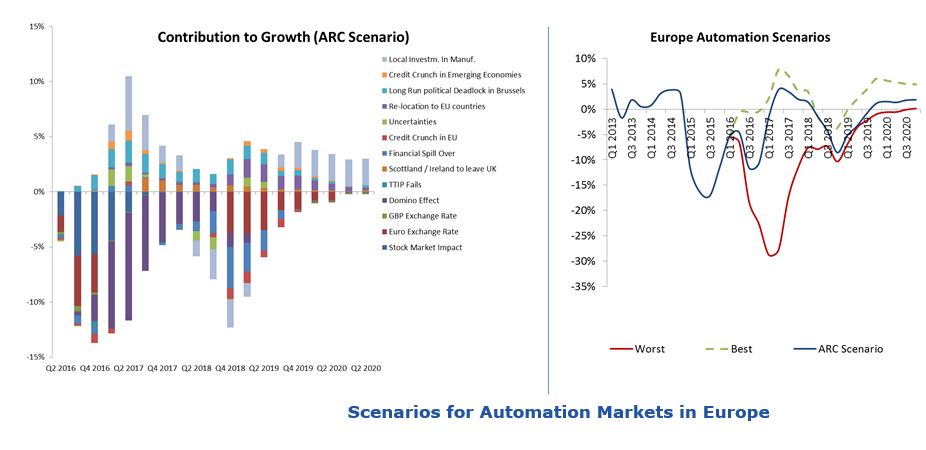
The scenarios given here focus on the Brexit. They do not reflect other potential impacts on automation markets, such as oil prices, developments in China, and the brain drain in manufacturing. While there’s certainly a possibility that a Brexit could push the EU automation markets into recession exceeding the 2009 crisis; this would require a lot of things to go wrong. It appears that remaining calm and cautiously watchful might be the best recourse for industry participants in the UK, EU, and elsewhere.
If you would like to buy this report or obtain information about how to become a client, please Contact Us.
Keywords: Brexit, Automation Index, Scenarios, ARC Advisory Group.